As We See It

Sort By:  Post Date TitlePublish Date

R.I.P., Audiophilia. It Was Nice Knowing You.
Audiophilia is dead.

Actually, it retired to an exclusive country club in the sky—but as far as the enduring, salt-of-the-earth audio hobbyist is concerned, it may as well be dead. The reason is simple: The old audiophile paradigm used to be mostly about when we were going to get that top-shelf component we had our eye on; it was rarely an if proposition. That's because, if you were an average, determined audiophile, it wasn't prohibitively expensive to buy top-shelf equipment. That's what made our hobby so exciting back then: the idea that you could actually own the best sound around. Damn!

What's New?

Do you remember your very first record? I started with the Hollywood Argyles' "Alley Oop" in 1960, and played that silly 45 on repeat until my mother begged me to stop. My tastes quickly evolved, thanks to WWRL AM radio's steady diet of tunes by Jackie Wilson, Bobby Bland, Etta James, and Gary U.S. Bonds. It didn't take me long to gather a sizable collection of singles, but I switched to LPs with Meet the Beatles! in 1964, and since then the craving for new sounds has never let up.

A Year of Dueling Shows

This year is not only one of fallout from the most divisive political campaigns of our time, but will also one of competing audio shows too close for comfort. Southern California will see dueling audio shows three months and 35 miles apart, and New York City and Washington, DC will host shows on consecutive weekends. While a proliferation of audio shows potentially presents plenty of opportunities for audiophiles to hear new gear, such conflicts ultimately limit which manufacturers can exhibit where, and can render some shows a poor value.

The Price Event Horizon

Last July and September I made two loudspeaker-related road trips: first to Rockport Technologies, in Maine, to audition their new Lyra; and then to high-end dealer-distributor GTT Audio, in deepest, darkest New Jersey, to audition YG Acoustics' new Sonja XV. Both speakers offer innovative, proprietary drive-units and heroic audio engineering, especially regarding their enclosures, which are constructed from aluminum. Both experiences took place in superbly well-designed and optimized listening rooms with front-end and amplification components that were beyond reproach. The sound quality offered by the Rockport and YGA speakers was simply superb, both stepping entirely out of the way to offer maximum communion with the music.

Merry Christmas Indeed

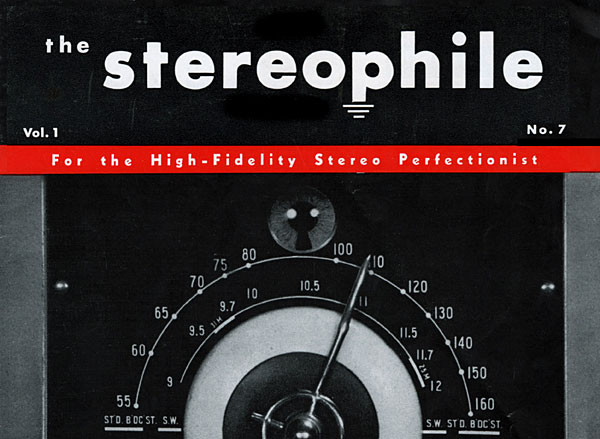
Editor's Note: The editorial leader for the seventh issue of what was then called The Stereophile, cover-dated April 1964, was the first to introduce a recurring theme to the magazine's first 20 years of publication: an apology to subscribers for being late.—John Atkinson

Those of you who have a mind for dates may have noticed that this issue of The Stereophile is very, very late. This, the seventh issue, was supposed to have been a Merry Christmas November–December issue, but as things worked out, it doesn't even deserve the title of January–February issue. So, we think a few words of explanation are in order.

The Sound of the Human Heart

Not everything that can be counted counts, and not everything that counts can be counted.—William Bruce Cameron, Informal Sociology: A Casual Introduction to Sociological Thinking (1963)

I hear not the volumes of sound merely, I am moved by the exquisite meanings.—Walt Whitman, "That Music Always Round Me," from Leaves of Grass

These two statements, to me, express the core perspective shared by Stereophile's contributors. When I encountered both of them within a span of 30 days, they spoke so strongly that I felt impelled to hook up the biggest, baddest loudspeakers I could find and broadcast them to the world, without distortion. Failing in that quest, and having not yet attained the status of the Edward R. Murrows and Walter Cronkites of eras past, I share them here.

Do It Yourself!

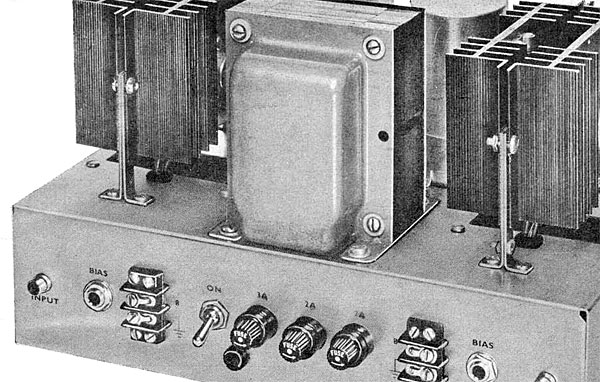
Editor's Note: in the main, Stereophile has steered clear of DIY audio projects, leaving them to magazines like The Audio Amateur, which was published by the late Edward T. Dell. But one of the exceptions was this 1967 article on the "Brute," a tube amplifier design by none other than Ed Dell. Note that the DIY competition mentioned by Gordon Holt is long closed to entries.—John Atkinson

There's a platitude to the effect that the road to Hell is strewn with good intentions. Well, we don't see ourselves as headed for perdition, but we must admit that we are surveying a rather impressive-looking junk pile of good intentions at this point.

Take Two Grateful Deads and Call Me in the Morning

My friend was in dire straits. What had been rare occurrences of panic attacks—one every year or so—had turned into a full-blown panic disorder that made it impossible for him to enjoy peace of mind..

If you've never suffered a panic attack, the idea of one—of being, in the absence of any real threat, suddenly overwhelmed by fear—can seem inconceivably strange. Try to imagine fear flooding your mind with such fierce momentum that you struggle to catch your breath, so convincing is the sensation that everything is spinning horribly out of control. Once that happens and the fear has taken over, it doesn't matter if the threat is real or not.

Don't Just Sit There!

Like every sensible publication, The Stereophile keeps track of the questions raised by readers who write to us, so we can get some idea of what most of you would like to see in future issues of the magazine. To date, the list looks like this, in order of diminishing interest: transistor amps and preamps, loudspeakers, pickups, tape equipment, tuners and, way at the bottom of the list, recordings. We are devoting most of the August 1964 issue to a discussion of commercial recording practices.

Steve Guttenberg's 116th Dream

I'm at Dan D'Agostino's house listening to his triamped Apogee full-range ribbon speakers. It's 1985. His listening room is immense, easily 30' by 45', and we're rocking out to Led Zeppelin and Bonzo Dog Band records. The sound is light-years better than anything I've heard—dynamic as hell, beyond vivid, and the soundstage has infinite depth—and Dan's obviously loving that I'm blown away by his system. We get to talking. He has three pairs of Krell KMA-160 monoblocks and Reference KRS preamps for me. Thanks, I say, but how can I get them home? No problem—Dan has a van.
Advertisement
Advertisement
Advertisement