As We See It

Sort By:  Post Date TitlePublish Date

The Goodness of Your Heart: A Tragedy in One Act

Note: All dialogue quoted verbatim from e-mail exchanges to which I am privy; the stage directions are imaginary.

Dramatis Personae:

bill, director of marketing for PS Audio

randy, amateur reviewer for a commercial audiophile website

dick, professional reviewer for an established audio magazine (not Stereophile)
Observations and Prognostications for 1965

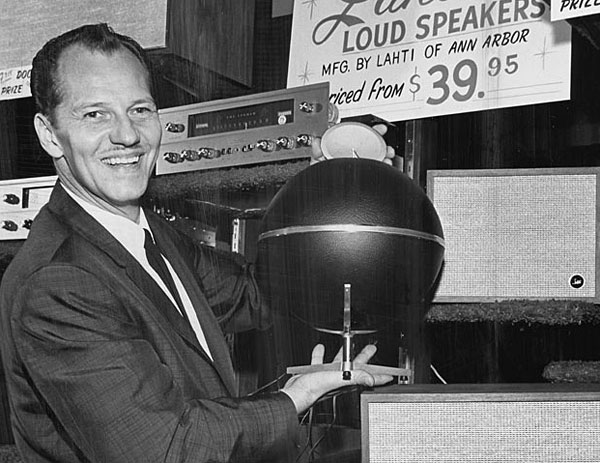
Well, the New York Hi-Fi wingding has come and gone once again, and now is the time when audio editors dutifully adopt the role of oracle, divining the future of high fidelity, and generally sketching out The Big Picture for those of us too blind to see the graffiti on the wall. So, who are we to shirk our duty? Herewith, The Stereophile's audio observations and predictions for 1965.

The Fallacy of Accuracy

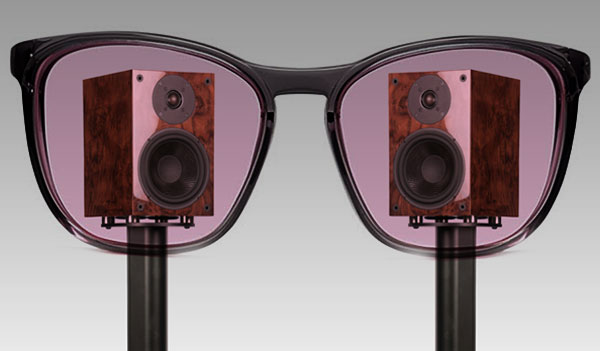
I was in a strange mood last January when I posted this on Facebook: "Do speaker designers strive for accuracy, or for a 'sound' they think potential buyers want?" I doubted that any designer with two working ears would even attempt to design speakers that merely measured well—there must be at least some subjectivity in their process. I also assumed that few designers would go on record about where they stand on the accuracy question, so I was thrilled when Elac Americas' speaker designer, Andrew Jones, responded...

Upward and (Hopefully) Onward

Editor's Note from 1974: As you can read in the following "As We See It," the last issue of Vol.1 No.12 (cover dated "Spring 1966") was perhaps not as "strong" as it might have been. If we had been doing things according to Proper Business Practice, we should have held back our best articles and our gutsiest reports until that issue, as a high-powered incentive for our subscribers to renew their subs. We didn't. There were better articles and a greater variety of topics covered in earlier issues, but Issue 12 was significant in that it set the pattern of topic emphasis, and the balance of reports versus other editorial material, that was to continue more or less unchanged for the next 7 years.

Nowhere to Go?

Our mail, in recent months, has brought a number of comments (some of them printed in this issue) from professional audio men who decry the fact that developments in the audio field seem to have come to a screeching halt.

There would seem to be some justification for believing this, too. There hasn't been a new kind of loudspeaker, amplifier, pickup, or tuner for the past five years or so. The professional engineering journals, once loaded with juicy articles about research and developments in music reproduction, are now devoted largely to public-address techniques and new methods for the "creation" of electronic music.

The Kids Are Alright

It's one of audiophiledom's eternal questions: What can we do to draw more music lovers into the audiophile fold?

Of the proposals bandied about on audio forums, two seem predominant: a) sell stuff more people can afford, and b) sit your neighbor or the cable guy in front of your stereo, cross your fingers, and let 'er rip—the theory behind b) being that the experience will be so epic as to transform the reluctant participant into an audiophile butterfly. As if.

Why Argue?

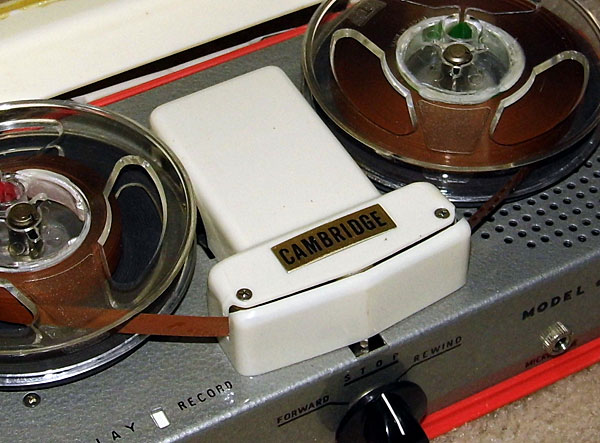
While we were preparing our list of specifications for our perfectionist's tape recorder discussed elsewhere in this issue, we suddenly came to a screeching halt at the spec which started "Scrape flutter less than . . ."

What, we wondered, was the scrape flutter percentage in a recorder in which scrape flutter is audible? Would it be 0.5%? Or 1%? Or even 5%? We perused the readily available literature, and were informed that "scrape flutter is caused by the tape's tendency to move past the heads in a series of tiny jerks in stead of in a smooth gliding motion." We were also told that scrape flutter is due to friction between the tape and the head surfaces, plus the slight elasticity of the tape that allows it to stretch slightly before being dragged along by another silly millimeter, and that it sounds like a rough edge riding on all signal frequencies between about 3kHz and 8kHz.

When Caruso Was King

One of the benefits of belonging to the Institute of Electrical and Electronics Engineers (IEEE) is a subscription to their monthly magazine, IEEE Spectrum. Superbly written and edited, this journal keeps me up to date on emerging technology, and entertains me with things like reprints, on the final page, of vintage advertisements. Their January 2016 issue, for example, featured an ad from December 1920, promoting the Victor Talking Machine Company's Victrola: "By all means get a Victrola this Christmas, but be sure it is a Victrola and not some other instrument made in imitation. $25 to $1500. Victor dealers everywhere."

The Weakest Link

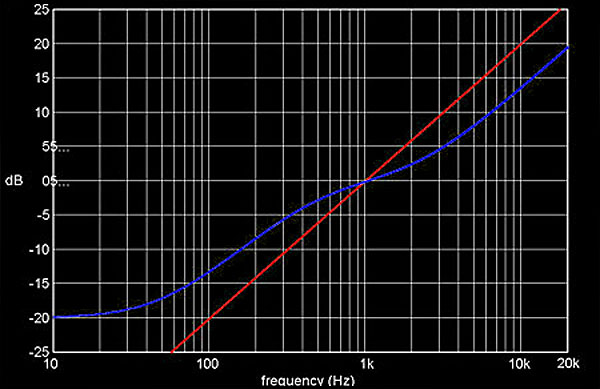
When the Record Industry Association of America adopted its standard disc playback equalization curve in 1954, hi-fi enthusiasts heaved a sigh of relief and bade fond farewell to years of confusion, doubt and virtual pandemonium. Before the RIAA curve there were six "standard" curves in use, and since nobody seemed to know who was using what, getting flat response from a disc was often more a matter of luck than anything else. The adoption of the RIAA standard playback curve heralded an end to all this.

Letter From Japan

How many advertisements for hi-fi or head-fi hardware do you see on your morning commute? Two? Three? If you live in Los Angeles, Sydney, or Paris, most likely it'll be zero.

Not so in Tokyo, where commuters, tourists, and shoppers moving through the Shinjuku or Shibuya subway stations will find it almost impossible to ignore Sony's latest advertising campaign, which colorfully announces a new range of affordable portable audio players (né Walkmans). Inside, banners suspended from the cars' ceilings promote Panasonic's latest headphones and shoebox-sized stereo system. Many of the bigger Japanese manufacturers treat audio gear as a mainstream concern.

Advertisement
Advertisement
Advertisement