Signal Processors
A
BSG qøl Signal Completion Stage: $2395
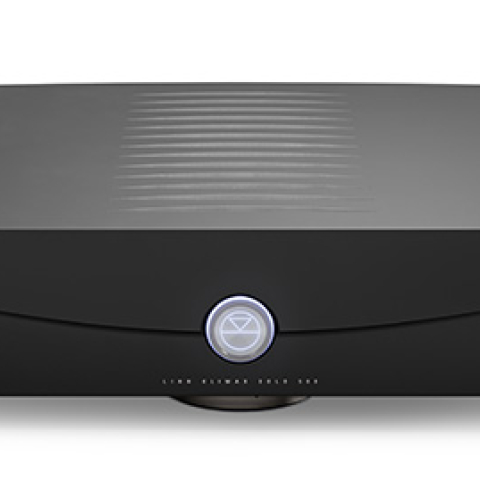
"The qøl Signal Completion Stage is a remote-controlled, solid-state signal processor with four pairs each of RCA and XLR analog inputs and two pairs each of RCA and XLR outputs. With the qøl activated, JA invariably noted a larger overall sound, with a greater impression of the ambience surrounding performers, increased image depth, and better layering within that depth. From JA's measurements, it appeared the qøl process is basically a variant of the well-known Blumlein Shuffler technique. "You must audition the effects of qøl yourself," he cautioned. Sold direct with a 30-day, money-back guarantee. (Vol.36 No.2 WWW) DSPeaker Anti-Mode 2.0 Dual Core digital room equalizer: $1099
DSPeaker's Anti-Mode 2.0 Dual Core is a highly versatile, remote-controllable, two-channel room/system equalizer for full-range loudspeakers. It has two VS8053 IceDragon processor chips, a small color display, XLR and RCA analog inputs and outputs, a datalink connector for linking multiple Anti-Mode 2.0 units, and a USB connector for USB audio mode, firmware updates, and data downloads. By default, the Anti-Mode 2.0 measures and automatically corrects from 16 to 150Hz, but can be configured to work from 16Hz to an upper limit ranging from 80 to 500Hz. In addition, it provides a large array of filter and configuration options, and can store up to four different sound profiles. "The DSPeaker Anti-Mode 2.0 may be a small and unprepossessing black box, but its performance and power are huge," summed up KR. (Vol.35 No.11 WWW) Paradigm PBK: $99 ✩
An adaption of the formidable Anthem Room Correction system used in Anthem's Statement D2 processor, the PBK includes USB cables and a microphone, and will work with up to four Paradigm subwoofers. While easier to use and considerably less expensive than either the SVSound or Audyssey devices, the PBK's subjective results were "no better or worse," said Kal. The PBK provided "a huge improvement" in the bass performance of the Paradigm Reference SUB 15, however. "The PBK, the SUB 15's obvious mate, is a bargain," KR concluded. (Vol.33 No.1 WWW)
Rives Audio sub-PARC: $5000 ✩
The sub-PARC adds a 1200W power amplifier to an analog three-band parametric EQ, making it "eminently suitable for use with a passive subwoofer," said Kal. It includes RCA and XLR inputs for the left, right, and LFE channels; RCA and XLR output jacks for left, right, and subwoofer; and a pair of speaker terminals. Partnered with the XTZ Room Analyzer, the sub-PARC helped KR achieve a sound that was "clean and tight and powerful." (Vol.31 No.11 WWW) Rives Audio PARC analog parametric equalizer: $4000 ✩
Of this two-channel, three-band parametric equalizer with Parametric Adaptive Room Compensation (PARC), KR said, "the PARC was completely transparent in both the critical midrange and the revealing treble range," while in the lower midrange and bass, "the PARC was changing the sound, as intended." Deep male voices were "always firmer, better defined harmonically and spatially, and easier to distinguish musically." Large and complex passages of music were also improved: "I realized that, although there was no sapping of energy, there was a greatly enhanced facility to hear more of what was going on within the orchestra. PRaT (Pace, Rhythm, and Timing) fans will appreciate what PARC does to delineate the pulse and meter of the music." One of Stereophile's 2003 "Joint Accessories." (Vol.26 No.7 WWW) Trinnov MC Processor: $13,599 as reviewed
This digital audio processor includes Trinnov's powerful Optimizer room-correction software and has a modular architecture for customized arrays of inputs and outputs. The review sample was configured so that KR could feed it eight channels of balanced analog input and three S/PDIF digital inputs, and get from it eight channels of balanced analog output. The Optimizer measures each speaker's responses of frequency, phase, and impulse, and its relative volume level and distance from the calibration microphone; computes a digital filter set to correct for the frequency response, distance, and level of each speaker; and provides a 31-band graphic equalizer and level and delay controls for on-the-fly adjustments. Expensive but worth it, concluded Kal: "The superior abilities of Trinnov Audio's Optimizer to measure and equalize my surround system and correct for imperfect speaker placements were revelations." (Vol.36 No.9 WWW)
B
DSPeaker Anti-Mode 8033C bass equalizer: $395 $$$ ✩
The Anti-Mode 8033C is a plug-and-play, DSP-based, single-channel bass equalizer with up to 24 Infinite Impulse Response digital filters. Its tiny chassis is powered by a 9V wall wart and has an RCA input jack and two RCA outputs. Kal noted tighter, cleaner low-end performance. "The DSPeaker Anti-Mode 8033 is a dandy little device for taking care of the major influences of room modes." Price includes shipping. The S version operate on stereo signals. (Vol.32 No.1 WWW) miniDSP 10x10Hd: $599 $$$
Made in Hong Kong, the 10x10Hd has eight analog inputs and outputs (both balanced and unbalanced), and a stereo digital input and output (TosLink, S/PDIF, AES/EBU). It allows the user to set high- and low-pass filters for each output channel in increments of 1Hz; control gain, phase, delay, and compression for each channel; implement up to six parametric EQ filters per input and/or output channel; and select and store all options in up to four independent configuration presets. A simple front-panel push knob selects inputs and allows for nearly instantaneous A/B comparisons. Setup was simple and operation flawless. "The miniDSP 10x10Hd gave me the tools to do what I want in order to get the sound that I want," praised Kal. (Vol.37 No.1 WWW) C Atlantic Technology WA-5030: $399
The WA-5030 wireless audio system comprises the WA-50-t, a transmitter module with USB and two-channel analog inputs; the WA-5030-r, a 30Wpc receiver with two-channel speaker terminals; a remote control; and miscellaneous connectors and power supplies. The only control on the transmitter permits the selection of one of three zones, allowing multiple WA-5030-r receivers to send signals to speaker pairs in different rooms. The WA-5030's success varied with the sensitivity of the speakers used, but produced a clean, balanced sound with decent bass extension when driving KR's small Paradigm Studio/20 surround speakers. Additional WA-5030-r receivers: $199 each. (Vol.35 No.11 WWW)
Behringer DEQ2496: $524.99 $$$
Behringer's professional, rack-mount DEQ2496 offers a suite of signal-processing functions, including dynamic EQ, reverb, and digital room correction. It has AES/EBU and TosLink inputs but lacks a USB input. The sound was clear, fast, and lean, with good bass and dynamics, said JM. "If the idea of digital EQ doesn't make you run screaming from the room, the DEQ2496 is an amazing bargain, and might very well be the cheapest way to solve some problems in system matching or room acoustics," he decided. (Vol.35 No.4 WWW) K
BSG reveel, DEQX-Mate.
"The qøl Signal Completion Stage is a remote-controlled, solid-state signal processor with four pairs each of RCA and XLR analog inputs and two pairs each of RCA and XLR outputs. With the qøl activated, JA invariably noted a larger overall sound, with a greater impression of the ambience surrounding performers, increased image depth, and better layering within that depth. From JA's measurements, it appeared the qøl process is basically a variant of the well-known Blumlein Shuffler technique. "You must audition the effects of qøl yourself," he cautioned. Sold direct with a 30-day, money-back guarantee. (Vol.36 No.2 WWW) DSPeaker Anti-Mode 2.0 Dual Core digital room equalizer: $1099
DSPeaker's Anti-Mode 2.0 Dual Core is a highly versatile, remote-controllable, two-channel room/system equalizer for full-range loudspeakers. It has two VS8053 IceDragon processor chips, a small color display, XLR and RCA analog inputs and outputs, a datalink connector for linking multiple Anti-Mode 2.0 units, and a USB connector for USB audio mode, firmware updates, and data downloads. By default, the Anti-Mode 2.0 measures and automatically corrects from 16 to 150Hz, but can be configured to work from 16Hz to an upper limit ranging from 80 to 500Hz. In addition, it provides a large array of filter and configuration options, and can store up to four different sound profiles. "The DSPeaker Anti-Mode 2.0 may be a small and unprepossessing black box, but its performance and power are huge," summed up KR. (Vol.35 No.11 WWW) Paradigm PBK: $99 ✩
An adaption of the formidable Anthem Room Correction system used in Anthem's Statement D2 processor, the PBK includes USB cables and a microphone, and will work with up to four Paradigm subwoofers. While easier to use and considerably less expensive than either the SVSound or Audyssey devices, the PBK's subjective results were "no better or worse," said Kal. The PBK provided "a huge improvement" in the bass performance of the Paradigm Reference SUB 15, however. "The PBK, the SUB 15's obvious mate, is a bargain," KR concluded. (Vol.33 No.1 WWW)
The sub-PARC adds a 1200W power amplifier to an analog three-band parametric EQ, making it "eminently suitable for use with a passive subwoofer," said Kal. It includes RCA and XLR inputs for the left, right, and LFE channels; RCA and XLR output jacks for left, right, and subwoofer; and a pair of speaker terminals. Partnered with the XTZ Room Analyzer, the sub-PARC helped KR achieve a sound that was "clean and tight and powerful." (Vol.31 No.11 WWW) Rives Audio PARC analog parametric equalizer: $4000 ✩
Of this two-channel, three-band parametric equalizer with Parametric Adaptive Room Compensation (PARC), KR said, "the PARC was completely transparent in both the critical midrange and the revealing treble range," while in the lower midrange and bass, "the PARC was changing the sound, as intended." Deep male voices were "always firmer, better defined harmonically and spatially, and easier to distinguish musically." Large and complex passages of music were also improved: "I realized that, although there was no sapping of energy, there was a greatly enhanced facility to hear more of what was going on within the orchestra. PRaT (Pace, Rhythm, and Timing) fans will appreciate what PARC does to delineate the pulse and meter of the music." One of Stereophile's 2003 "Joint Accessories." (Vol.26 No.7 WWW) Trinnov MC Processor: $13,599 as reviewed
This digital audio processor includes Trinnov's powerful Optimizer room-correction software and has a modular architecture for customized arrays of inputs and outputs. The review sample was configured so that KR could feed it eight channels of balanced analog input and three S/PDIF digital inputs, and get from it eight channels of balanced analog output. The Optimizer measures each speaker's responses of frequency, phase, and impulse, and its relative volume level and distance from the calibration microphone; computes a digital filter set to correct for the frequency response, distance, and level of each speaker; and provides a 31-band graphic equalizer and level and delay controls for on-the-fly adjustments. Expensive but worth it, concluded Kal: "The superior abilities of Trinnov Audio's Optimizer to measure and equalize my surround system and correct for imperfect speaker placements were revelations." (Vol.36 No.9 WWW)
The Anti-Mode 8033C is a plug-and-play, DSP-based, single-channel bass equalizer with up to 24 Infinite Impulse Response digital filters. Its tiny chassis is powered by a 9V wall wart and has an RCA input jack and two RCA outputs. Kal noted tighter, cleaner low-end performance. "The DSPeaker Anti-Mode 8033 is a dandy little device for taking care of the major influences of room modes." Price includes shipping. The S version operate on stereo signals. (Vol.32 No.1 WWW) miniDSP 10x10Hd: $599 $$$
Made in Hong Kong, the 10x10Hd has eight analog inputs and outputs (both balanced and unbalanced), and a stereo digital input and output (TosLink, S/PDIF, AES/EBU). It allows the user to set high- and low-pass filters for each output channel in increments of 1Hz; control gain, phase, delay, and compression for each channel; implement up to six parametric EQ filters per input and/or output channel; and select and store all options in up to four independent configuration presets. A simple front-panel push knob selects inputs and allows for nearly instantaneous A/B comparisons. Setup was simple and operation flawless. "The miniDSP 10x10Hd gave me the tools to do what I want in order to get the sound that I want," praised Kal. (Vol.37 No.1 WWW) C Atlantic Technology WA-5030: $399
The WA-5030 wireless audio system comprises the WA-50-t, a transmitter module with USB and two-channel analog inputs; the WA-5030-r, a 30Wpc receiver with two-channel speaker terminals; a remote control; and miscellaneous connectors and power supplies. The only control on the transmitter permits the selection of one of three zones, allowing multiple WA-5030-r receivers to send signals to speaker pairs in different rooms. The WA-5030's success varied with the sensitivity of the speakers used, but produced a clean, balanced sound with decent bass extension when driving KR's small Paradigm Studio/20 surround speakers. Additional WA-5030-r receivers: $199 each. (Vol.35 No.11 WWW)
Behringer's professional, rack-mount DEQ2496 offers a suite of signal-processing functions, including dynamic EQ, reverb, and digital room correction. It has AES/EBU and TosLink inputs but lacks a USB input. The sound was clear, fast, and lean, with good bass and dynamics, said JM. "If the idea of digital EQ doesn't make you run screaming from the room, the DEQ2496 is an amazing bargain, and might very well be the cheapest way to solve some problems in system matching or room acoustics," he decided. (Vol.35 No.4 WWW) K
BSG reveel, DEQX-Mate.