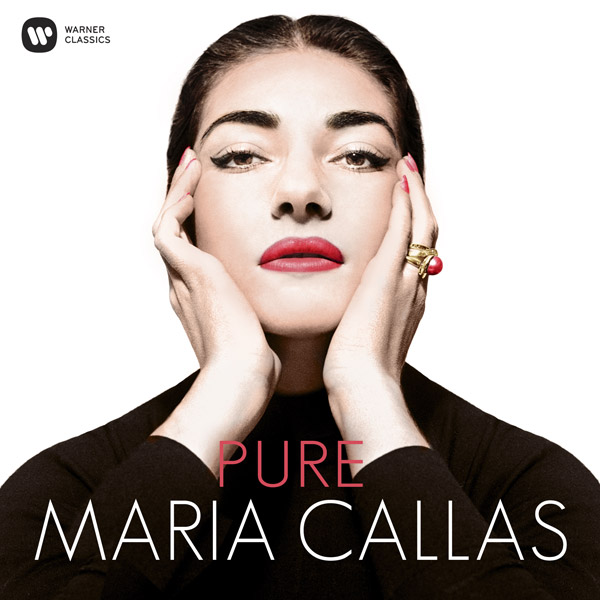
Move over John, George, Ringo, and Paul. There's another remastering that's come on the scene, and it's every bit as important as the Beatles Mono Edition. It's Warner Classics' high-resolution, 24/96 digital remastering of soprano Maria Callas' entire studio-sourced discography. Consisting of arias, recitals and complete operas recorded 1949–1969, the remasterings reach the international public on September 22, and US music lovers on September 23. Their sound, whether in the 69-CD box set of her entire studio recordings, or HDtracks' 24/96 downloads of its individual components, is revelatory.
Ever since their initial issue on LP, Callas' analog recordings have suffered through numerous digital reissues. Although the last set of her complete studio recordings, which became available in 2007, was touted as definitive, it was only achieved in 16/44.1 sound. In addition, it doctored the mono and stereo originals with the noise-suppressing ART processes, compressed dynamics, and attempted to improve the sound of some of the drier analog originals via the application of artificial reverb.
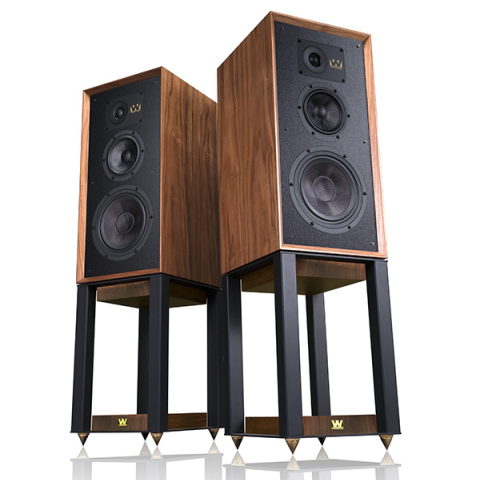
For this definitive 24/96 remastering, accomplished at the famed Abbey Road Studios with monitoring performed on Bowers & Wilkins 800 series loudspeakers, Warner Classics' three sound engineers returned, whenever possible, to the original master tapes. Though re-equalization was occasionally employed—Robert Gooch, balance engineer for the original LPs of Callas' Il barbiere di Siviglia and stereo Norma recordings, acknowledges that the mastering monitors he used at the time were "rubbish...some commercial speakers"—virtually all of the post-production digital doctoring that degraded previous remasterings was jettisoned. Where mastering instructions were included with the original tapes (often concerning the reduction of overly intrusive street noise), they were respected. [You can view a video that includes Gooch and remastering engineers Andy Walter, Allan Ramsey, and Simon Gibson here .
The results are ear-opening. In advance of the 69-disc box set's release, and staggered release of its individual components, Warner supplied members of the press with a CD that compares the last 16/44.1 remastering of five arias with the new 24/96 versions downsampled to 16/44.1. Even on the Liebestod from Wagner's Tristan und Isolde, released on 78 shellac in 1949 when Callas was not yet 26 years old, the change of source results in far better sound. Callas may not have sung Wagner onstage past 1950, but when you hear the core of her voice open fully toward the end of Isolde's rapture, you will experience as never before the unforgettable fusion of love and suffering that was Callas' art and life.
Once we get to material remastered from the analog tape masters, the restoration of the treble edge of Callas' voice and high-frequency extension of the orchestra, combined with palpably greater richness and body, sounds as though a previously clouded window on Callas' artistry has been scrubbed clean. The differences are astoundingly evident on an excerpt from the 1952 recording of Ponchielli's La Gioconda, and quite noticeable on her 1953 Tosca (one of the greatest opera recordings ever made), 1954 I Pagliacci, and even the 1961 stereo Callas à Paris recital.
Need I even say that the 24/96 downloads of the box set's contents, which appear on HDtracks in three batches (September 23, October 21, and November 11), are the best we're going to get? (Yes, Warner could have chosen to remaster in 24/192 or DSD, but that is not the case, and it's not likely to come to pass, period.) Depending upon the decisions made when the analog masters were first transferred to LP, some of these new remasterings are likely more faithful to the engineers' intentions than the original issues.