

Jim Austin wrote about the CH Precision M1.1 in March 2024 (Vol.47 No.3):
At Stereophile, every reviewer takes a different approach to reviewing, and so they inevitably reach varied conclusions. Our work, though, is partly based on shared principles. As in reviewing wine, for example, our own tastes matter—a lot—but certain universal (though subjective) principles matter, too. This fact becomes especially interesting in follow-up reviews, in which shared principles hold even as personal preferences collide.
As long as it's done by a different reviewer, a follow-up review always adds one new thing: another reviewer's perspective. Usually there are other differences, too: a different reviewing system, for example, and a different room. With complex products—including the CH Precision M1.1 power amplifier (footnote 1), which I'm reviewing here—it may be used in a completely different way. A re-review may result in some new sonic insight—a new perspective on how the product sounds, something the original reviewer overlooked.
Sometimes there's an ulterior motive for doing a follow-up review—something other than a desire to present a different perspective. That is the case here. The CH Precision M1.1 power amplifier was first reviewed in our July 2019 issue. It is now 2024, more than four years later, and the M1.1, despite its merits and despite still being a current product, has fallen off our Recommended Components list (footnote 2).
Assuming the product didn't somehow get worse over the last four years and that the state of the art of audio amplification hasn't lately advanced very fast, the M1.1 belongs on the list. To be confident, though, a Stereophile writer must listen to it again. That onerous task fell to me (footnote 3).
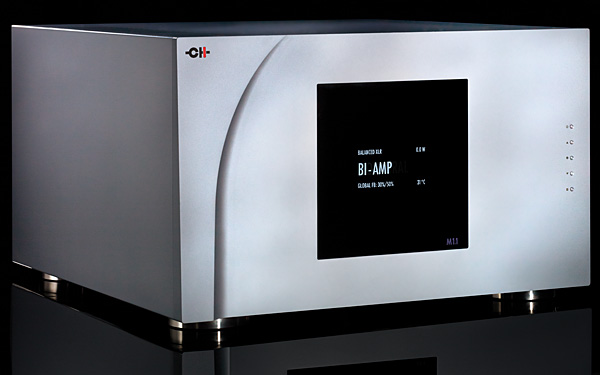 Michael Fremer wrote that original review, in the context of a different system, and he used the amplifier differently. His speakers were very similar: He reviewed the M1.1 with the Wilson Alexx. Coincidentally, I am using the Alexx's successor, the Alexx V. Mikey used a dCS digital front-end and a darTZeel preamplifier. I'm using a CH Precision front-end—specifically the C1.2 D/A processor—and two preamplifiers: the CH L1 (review forthcoming) and my reference Pass Laboratories XP-32.
The rooms and setups were also different. Mikey listened relatively close, almost in the nearfield. My room is large, and I sit some 12' from the speakers. We both used balanced connections and plugged the M1.1—two of them in Mikey's case—directly into the wall.
Like other CH Precision components, the M1.1 is modular. It has five distinct operating modes, described by Mikey in the original review, four of which require two M1.1s. Mikey used two M1.1s in what CH Precision calls "monaural" mode, a configuration that at today's prices would cost $104,000. In that setup, only one output stage per amplifier is used, but that output stage has access to the vast resources of a whole M1.1 power supply, including the full output of the power transformer and 240,000μF of storage capacitance. I, on the other hand, have a single M1.1, and I'm using it in stereo.
In both configurations, the amplifier is said to be capable of 350Wpc into 4 ohms, but in Mikey's setup, the power supply is expected to be much stiffer. Whether that difference is meaningful is a key question, since even half the M1.1's power supply is formidable.
This follow-up review will not resolve that question, nor will it describe the product comprehensively; if you're interested in this amplifier, read the original review. Mikey did a good job communicating the essence and features of the M1.1. Also, I agree largely—though not completely—with his conclusions, which are well summarized in a passage from his review: "The M1.1s dug deeply into the musical action, well-paced and with confident but not excessive grip, and they moved with sufficient speed to deliver rhythm'n'pacing excitement on recordings in all musical genres." Mikey's "confident but not excessive grip" was especially insightful. It is possible for an amplifier to grip a speaker—and the music—too hard. Perhaps that's where the M1.1's feedback control comes in.
Yes, I said feedback control. You can set feedback from local-only through 100% global in 10% steps. If you're using two M1.1s to biamp a pair of speakers, you can even set each channel to use different amounts of global feedback—one value for the higher frequencies, a different value for the bass, for example.
Mikey chose 20% global feedback, observing that if he set the feedback any higher, the amplifier sounded constricted, while "less than 20% feedback pushed the sound beyond liquid, into a place that bordered on being soggy." This is my main point of disagreement with Mikey's review. That 20% figure was suggested by CH Precision's Ralph Sorrentino. Recently, Kevin Wolff, also from CH Precision, told me that most users set the feedback lower.
Before moving on to listening, I'll mention one issue that, in the context of a profound love for musical experience, may seem rather trivial, but which caused me some frustration. CH Precision components are controllable with an app; an Ethernet port on the back of each component puts it on your local network (footnote 4). The app is intuitive and comprehensive. The problem is that there is no iOS (iPad or iPhone) version; it is only available for Android. I have no objection to Android, but I'm not as familiar with Android as I am with iOS. I also found the app power-hungry: Unless I made a point of closing it after use—it is only needed for setup—the new-looking tablet I was loaned was out of juice the next time I needed it. And the tablet charged very slowly, even with a high-watt charger.
Even for setup, the app is not essential. You can make all adjustments from the front panel. But that's less convenient, and it's fun to make adjustments on the fly, especially feedback adjustments, and that is best done from the listening seat.
Speaking of listening seats
Michael Fremer wrote that original review, in the context of a different system, and he used the amplifier differently. His speakers were very similar: He reviewed the M1.1 with the Wilson Alexx. Coincidentally, I am using the Alexx's successor, the Alexx V. Mikey used a dCS digital front-end and a darTZeel preamplifier. I'm using a CH Precision front-end—specifically the C1.2 D/A processor—and two preamplifiers: the CH L1 (review forthcoming) and my reference Pass Laboratories XP-32.
The rooms and setups were also different. Mikey listened relatively close, almost in the nearfield. My room is large, and I sit some 12' from the speakers. We both used balanced connections and plugged the M1.1—two of them in Mikey's case—directly into the wall.
Like other CH Precision components, the M1.1 is modular. It has five distinct operating modes, described by Mikey in the original review, four of which require two M1.1s. Mikey used two M1.1s in what CH Precision calls "monaural" mode, a configuration that at today's prices would cost $104,000. In that setup, only one output stage per amplifier is used, but that output stage has access to the vast resources of a whole M1.1 power supply, including the full output of the power transformer and 240,000μF of storage capacitance. I, on the other hand, have a single M1.1, and I'm using it in stereo.
In both configurations, the amplifier is said to be capable of 350Wpc into 4 ohms, but in Mikey's setup, the power supply is expected to be much stiffer. Whether that difference is meaningful is a key question, since even half the M1.1's power supply is formidable.
This follow-up review will not resolve that question, nor will it describe the product comprehensively; if you're interested in this amplifier, read the original review. Mikey did a good job communicating the essence and features of the M1.1. Also, I agree largely—though not completely—with his conclusions, which are well summarized in a passage from his review: "The M1.1s dug deeply into the musical action, well-paced and with confident but not excessive grip, and they moved with sufficient speed to deliver rhythm'n'pacing excitement on recordings in all musical genres." Mikey's "confident but not excessive grip" was especially insightful. It is possible for an amplifier to grip a speaker—and the music—too hard. Perhaps that's where the M1.1's feedback control comes in.
Yes, I said feedback control. You can set feedback from local-only through 100% global in 10% steps. If you're using two M1.1s to biamp a pair of speakers, you can even set each channel to use different amounts of global feedback—one value for the higher frequencies, a different value for the bass, for example.
Mikey chose 20% global feedback, observing that if he set the feedback any higher, the amplifier sounded constricted, while "less than 20% feedback pushed the sound beyond liquid, into a place that bordered on being soggy." This is my main point of disagreement with Mikey's review. That 20% figure was suggested by CH Precision's Ralph Sorrentino. Recently, Kevin Wolff, also from CH Precision, told me that most users set the feedback lower.
Before moving on to listening, I'll mention one issue that, in the context of a profound love for musical experience, may seem rather trivial, but which caused me some frustration. CH Precision components are controllable with an app; an Ethernet port on the back of each component puts it on your local network (footnote 4). The app is intuitive and comprehensive. The problem is that there is no iOS (iPad or iPhone) version; it is only available for Android. I have no objection to Android, but I'm not as familiar with Android as I am with iOS. I also found the app power-hungry: Unless I made a point of closing it after use—it is only needed for setup—the new-looking tablet I was loaned was out of juice the next time I needed it. And the tablet charged very slowly, even with a high-watt charger.
Even for setup, the app is not essential. You can make all adjustments from the front panel. But that's less convenient, and it's fun to make adjustments on the fly, especially feedback adjustments, and that is best done from the listening seat.
Speaking of listening seats
I was excited by the opportunity to play with variable feedback, but in the end I found this anticlimactic, first because changing the feedback setting had less impact on the sound than I expected it to, and second because, for me at least, the useful range was between about zero and 20%—limited, as noted, to 10% steps; beyond that, more feedback didn't seem to change the sound that much, and I didn't care for it anyway. This, surely, is why CH turned to finer steps for its 10-series amplifiers. I settled at 10%, but I was equally happy with no negative feedback. In contrast to Mikey's experience, I did not find the bass soggy even with feedback set to zero.
Now for some things I do agree with, lifted from Mikey's review. The M1.1 has "powerful bass grip and remarkable slam." The M1.1's "impressive weight was accompanied by precise attack, generous but well-controlled sustain, and rapid decay, so the well-textured drum sound surprised me as it should have—like a depth charge—without sounding overripe, losing its grip, or hanging around too long." Ella Fitzgerald's vocals "took on a smoother, creamier tonality than I expected, combined with an enjoyably solid, three-dimensional vocal image." The M1.1 "demonstrated the sort of rich, generous midrange I associate more with tube amps than with solid state ones. Yet that richness didn't obscure the clarity of the bow strikes or the juxtaposition of the cello's solid, three-dimensional image." Brass, meanwhile, "had sufficient metal bite to sound convincing." All true.
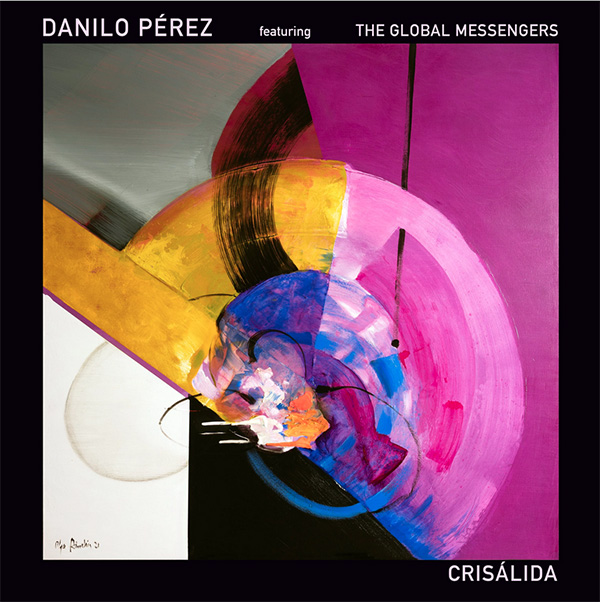 Some original observations. On "Calling for the Dawn" from La Muralla (Glass Walls) Suite, from the wonderful 2022 album Crisálida by Danilo Pérez and the Global Messengers (16/44.1 FLAC CD rip, Mack Avenue MAC1178), I heard—I felt—a remarkable sense of openness. Well-separated instruments were laid out in an otherwise empty, blank space. This is a very dynamic, percussion-heavy track, with piano, vocals (including spoken voice), and cello. There's a lot going on, and it is all nicely sorted, nicely spread out spatially, never getting in its own way, making for a relaxing, stress-free listening experience even at high volume. This is music that can sound busy, even grating, if the system playing it back steps on its own feet (to borrow a metaphor from Mikey's review). I heard it live at Birdland just after the album's release, played by this young, tentative, highly talented band, and I love it.
Powerful, muscular, plenty of grunt, clear, open, spacious, relaxed. The soundstage (on recordings containing this information) runs from speaker to speaker, sometimes beyond, with serious depth, to the limits of what my local room acoustics can resolve. On "One Finger Snap," from Herbie Hancock's album Empyrean Isles (LP, Blue Note Classic Vinyl Series 4859562), Freddy Hubbard's solo trumpet, positioned just a hair inside the left speaker, pushed farther forward, farther in front of the speaker, than I'm used to, while Tony Williams's kit was positioned to the right, unambiguously several feet back, well behind Hancock's center-stage piano.
Some original observations. On "Calling for the Dawn" from La Muralla (Glass Walls) Suite, from the wonderful 2022 album Crisálida by Danilo Pérez and the Global Messengers (16/44.1 FLAC CD rip, Mack Avenue MAC1178), I heard—I felt—a remarkable sense of openness. Well-separated instruments were laid out in an otherwise empty, blank space. This is a very dynamic, percussion-heavy track, with piano, vocals (including spoken voice), and cello. There's a lot going on, and it is all nicely sorted, nicely spread out spatially, never getting in its own way, making for a relaxing, stress-free listening experience even at high volume. This is music that can sound busy, even grating, if the system playing it back steps on its own feet (to borrow a metaphor from Mikey's review). I heard it live at Birdland just after the album's release, played by this young, tentative, highly talented band, and I love it.
Powerful, muscular, plenty of grunt, clear, open, spacious, relaxed. The soundstage (on recordings containing this information) runs from speaker to speaker, sometimes beyond, with serious depth, to the limits of what my local room acoustics can resolve. On "One Finger Snap," from Herbie Hancock's album Empyrean Isles (LP, Blue Note Classic Vinyl Series 4859562), Freddy Hubbard's solo trumpet, positioned just a hair inside the left speaker, pushed farther forward, farther in front of the speaker, than I'm used to, while Tony Williams's kit was positioned to the right, unambiguously several feet back, well behind Hancock's center-stage piano.
 If you don't know it already and are looking for a sonic treat, check out Vikingur Ólafsson's album From Afar (2LP, DG 00289 486 1997). I listened on vinyl, then streaming. The program is compelling, rich in György Kurtág; what really makes it great is that it's all performed twice, once on a Steinway Model D grand and again on Ólafsson's favorite upright, one that, if memory serves, he grew up with. Both sound superb, but the experiences are totally different—see Jason Victor Serinus's take in his Recording of the Month for November 2022. On the album's first piece, an arrangement by Kurtág of Bach's Christe, du Lamm Gottes, BWV 619—and also on Theodor Kirschner's arrangement of Robert Schumann's Study in Canonic Form, Op.56 No.1 (and, really, on all the upright recordings)—the profoundly different timbres of the upright's different octaves, even between the lower and upper midrange, give the music remarkable, organlike color. And in the Allegro Moderato movement of Kurtág's arrangement of Bach's Trio Sonata No.1 in E-flat major, BWV 525, the higher notes float in space between the speakers, in front of and behind them, like little sprites, in a way that could only cause delight. In this system, powered by the M1.1, every nuance was revealed.
Highly recommended if you've got the cash. I wish I did.—Jim Austin
If you don't know it already and are looking for a sonic treat, check out Vikingur Ólafsson's album From Afar (2LP, DG 00289 486 1997). I listened on vinyl, then streaming. The program is compelling, rich in György Kurtág; what really makes it great is that it's all performed twice, once on a Steinway Model D grand and again on Ólafsson's favorite upright, one that, if memory serves, he grew up with. Both sound superb, but the experiences are totally different—see Jason Victor Serinus's take in his Recording of the Month for November 2022. On the album's first piece, an arrangement by Kurtág of Bach's Christe, du Lamm Gottes, BWV 619—and also on Theodor Kirschner's arrangement of Robert Schumann's Study in Canonic Form, Op.56 No.1 (and, really, on all the upright recordings)—the profoundly different timbres of the upright's different octaves, even between the lower and upper midrange, give the music remarkable, organlike color. And in the Allegro Moderato movement of Kurtág's arrangement of Bach's Trio Sonata No.1 in E-flat major, BWV 525, the higher notes float in space between the speakers, in front of and behind them, like little sprites, in a way that could only cause delight. In this system, powered by the M1.1, every nuance was revealed.
Highly recommended if you've got the cash. I wish I did.—Jim Austin
Footnote 1: The M1.1 costs a consequential $54,000, including the two input cards ($2000 each) needed for a stereo configuration. CH Precision Sàrl, ZI Le Trési 6B, 1028 Préverenges, Switzerland. Tel: (41) (0)21-701-9040. Web: ch-precision.com. Footnote 2: If you're a manufacturer, and a current product from your company—one you do not plan to revise or discontinue anytime soon—has fallen off our Recommended Components list, and you'd like to have it restored, feel free to get in touch. My email address is on the magazine's Contact Page.
Footnote 3: To avoid any misunderstanding: When I write "onerous," I am being facetious. Reviewing a fine audio component is actual work—big amplifiers are heavy—but to be able to listen to such fine components cost-free, and even get paid for it, is a rare privilege.
Footnote 4: With components at this level, you probably should maintain separate networks for music streaming and control.
Michael Fremer wrote that original review, in the context of a different system, and he used the amplifier differently. His speakers were very similar: He reviewed the M1.1 with the Wilson Alexx. Coincidentally, I am using the Alexx's successor, the Alexx V. Mikey used a dCS digital front-end and a darTZeel preamplifier. I'm using a CH Precision front-end—specifically the C1.2 D/A processor—and two preamplifiers: the CH L1 (review forthcoming) and my reference Pass Laboratories XP-32.
The rooms and setups were also different. Mikey listened relatively close, almost in the nearfield. My room is large, and I sit some 12' from the speakers. We both used balanced connections and plugged the M1.1—two of them in Mikey's case—directly into the wall.
I was excited by the opportunity to play with variable feedback, but in the end I found this anticlimactic, first because changing the feedback setting had less impact on the sound than I expected it to, and second because, for me at least, the useful range was between about zero and 20%—limited, as noted, to 10% steps; beyond that, more feedback didn't seem to change the sound that much, and I didn't care for it anyway. This, surely, is why CH turned to finer steps for its 10-series amplifiers. I settled at 10%, but I was equally happy with no negative feedback. In contrast to Mikey's experience, I did not find the bass soggy even with feedback set to zero.
Some original observations. On "Calling for the Dawn" from La Muralla (Glass Walls) Suite, from the wonderful 2022 album Crisálida by Danilo Pérez and the Global Messengers (16/44.1 FLAC CD rip, Mack Avenue MAC1178), I heard—I felt—a remarkable sense of openness. Well-separated instruments were laid out in an otherwise empty, blank space. This is a very dynamic, percussion-heavy track, with piano, vocals (including spoken voice), and cello. There's a lot going on, and it is all nicely sorted, nicely spread out spatially, never getting in its own way, making for a relaxing, stress-free listening experience even at high volume. This is music that can sound busy, even grating, if the system playing it back steps on its own feet (to borrow a metaphor from Mikey's review). I heard it live at Birdland just after the album's release, played by this young, tentative, highly talented band, and I love it.
Powerful, muscular, plenty of grunt, clear, open, spacious, relaxed. The soundstage (on recordings containing this information) runs from speaker to speaker, sometimes beyond, with serious depth, to the limits of what my local room acoustics can resolve. On "One Finger Snap," from Herbie Hancock's album Empyrean Isles (LP, Blue Note Classic Vinyl Series 4859562), Freddy Hubbard's solo trumpet, positioned just a hair inside the left speaker, pushed farther forward, farther in front of the speaker, than I'm used to, while Tony Williams's kit was positioned to the right, unambiguously several feet back, well behind Hancock's center-stage piano.
If you don't know it already and are looking for a sonic treat, check out Vikingur Ólafsson's album From Afar (2LP, DG 00289 486 1997). I listened on vinyl, then streaming. The program is compelling, rich in György Kurtág; what really makes it great is that it's all performed twice, once on a Steinway Model D grand and again on Ólafsson's favorite upright, one that, if memory serves, he grew up with. Both sound superb, but the experiences are totally different—see Jason Victor Serinus's take in his Recording of the Month for November 2022. On the album's first piece, an arrangement by Kurtág of Bach's Christe, du Lamm Gottes, BWV 619—and also on Theodor Kirschner's arrangement of Robert Schumann's Study in Canonic Form, Op.56 No.1 (and, really, on all the upright recordings)—the profoundly different timbres of the upright's different octaves, even between the lower and upper midrange, give the music remarkable, organlike color. And in the Allegro Moderato movement of Kurtág's arrangement of Bach's Trio Sonata No.1 in E-flat major, BWV 525, the higher notes float in space between the speakers, in front of and behind them, like little sprites, in a way that could only cause delight. In this system, powered by the M1.1, every nuance was revealed.
Highly recommended if you've got the cash. I wish I did.—Jim Austin
Footnote 1: The M1.1 costs a consequential $54,000, including the two input cards ($2000 each) needed for a stereo configuration. CH Precision Sàrl, ZI Le Trési 6B, 1028 Préverenges, Switzerland. Tel: (41) (0)21-701-9040. Web: ch-precision.com. Footnote 2: If you're a manufacturer, and a current product from your company—one you do not plan to revise or discontinue anytime soon—has fallen off our Recommended Components list, and you'd like to have it restored, feel free to get in touch. My email address is on the magazine's Contact Page.















