On music with layers of instruments, the 120s resolved those layers with ease, with good separation—again, within a single, unified soundstage. As Talking Heads' "This Must Be the Place (Naïve Melody)" (footnote 3) from Speaking in Tongues bopped along (24/96 FLAC, Qobuz), nothing stuck out as exaggerated. Throughout, the song felt intense, close-up. Byrne's harmonized vocals came across as more impassioned and vivid, more in-your-face. When he pleads, "Love me 'til my heart stops/ Love me 'til I'm dead," you think he means it. I heard a few flourishes and details in this familiar music that I hadn't noticed before, or that I had not registered so clearly: a guitar riff; a woodblock; a triangle; chimes. It felt like the musicians kept picking up instruments at random and playing them for a moment. I had not heard this familiar music in quite this way before, and it added to the track's quirky playfulness.
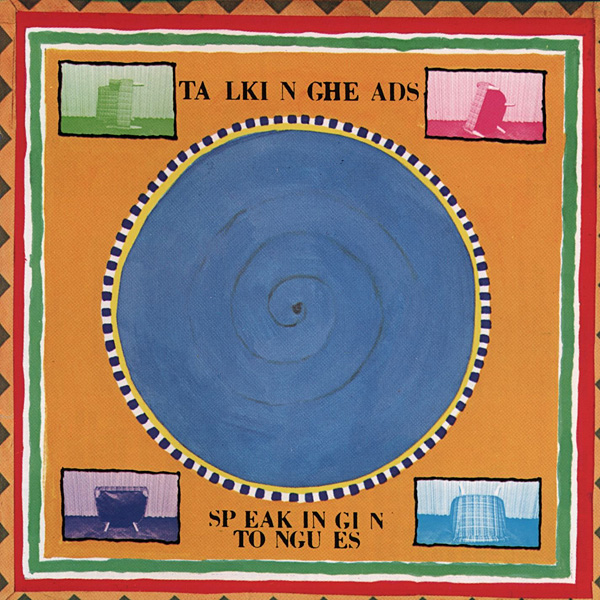 This sweet little song always charms and cheers me, yet it can seem lightweight, peppy but without much depth. The 120s (and the ancillary components in my system) kicked it up a notch. The song hit harder. From the first two downbeats through to David Byrne's crooning at the end, there was more punch, pop, body, and heft.
I don't often listen to silver discs, but when I do—well, I do occasionally pull out some special ones I've kept around. An example is Ben Webster and Harry "Sweets" Edison's Wanted to Do One Together (SACD, Columbia 8691/ORG 117-3), recorded in 1962. Webster's buzzy breath off his tenor sax reed took its time decaying. The 120s captured his style as if it were here and now, on "How Long Has This Been Going On" and especially on "My Romance," where his breathing technique was audible, close enough to hear a little spittle. A natural sense of air and space between instruments made me feel like I was at the session or sitting in a smoky jazz bar (ideally without smoke).
This sweet little song always charms and cheers me, yet it can seem lightweight, peppy but without much depth. The 120s (and the ancillary components in my system) kicked it up a notch. The song hit harder. From the first two downbeats through to David Byrne's crooning at the end, there was more punch, pop, body, and heft.
I don't often listen to silver discs, but when I do—well, I do occasionally pull out some special ones I've kept around. An example is Ben Webster and Harry "Sweets" Edison's Wanted to Do One Together (SACD, Columbia 8691/ORG 117-3), recorded in 1962. Webster's buzzy breath off his tenor sax reed took its time decaying. The 120s captured his style as if it were here and now, on "How Long Has This Been Going On" and especially on "My Romance," where his breathing technique was audible, close enough to hear a little spittle. A natural sense of air and space between instruments made me feel like I was at the session or sitting in a smoky jazz bar (ideally without smoke).
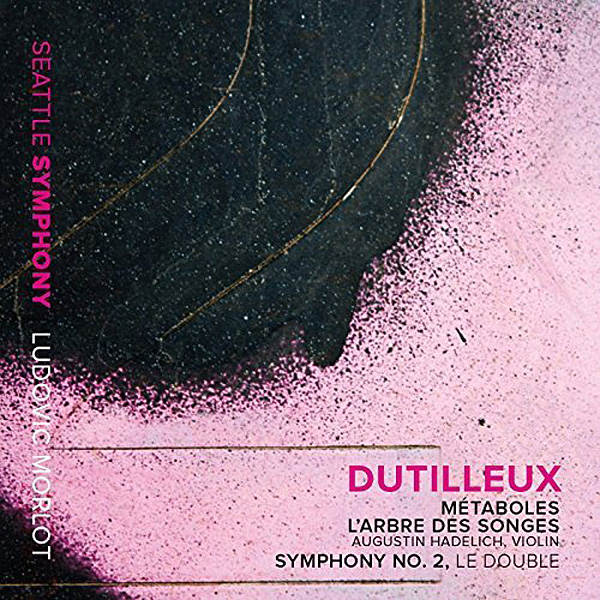 Switching to classical, I played the Henri Dutilleux Métaboles, for orchestra, from Dutilleux: Métaboles, L'arbre des songes & Symphony No.2 "Le Double" (footnote 4) performed by the Seattle Symphony Orchestra under Ludovic Morlot (24/96 FLAC, Seattle Symphony Media/Qobuz). The leading-edge transients on the fits and starts of "Incantatoire" compelled me to listen more closely. "Obsessionel" has a lively soundtrack vibe that wouldn't be out of place in a cartoon; its crescendos lifted my mood. At the end, the textures of the soft snare rolls and pianissimo taps deep in the right channel drew me in to listen more closely. On "Flamboyant," the final movement, the stage opened up, expanding to fill the whole area surrounding the speakers, including the space behind them all the way to the front wall. I closed my eyes. Though not to full scale, the space was there, contextual, present.
Producing a soundstage at orchestral scale is a tall order, a hi-fi holy grail. It's exciting when any system can do it. It's especially rare for standmounts, but the 120s, while not quite all the way there, managed to reproduce a pretty good semblance of the live event.
Switching to classical, I played the Henri Dutilleux Métaboles, for orchestra, from Dutilleux: Métaboles, L'arbre des songes & Symphony No.2 "Le Double" (footnote 4) performed by the Seattle Symphony Orchestra under Ludovic Morlot (24/96 FLAC, Seattle Symphony Media/Qobuz). The leading-edge transients on the fits and starts of "Incantatoire" compelled me to listen more closely. "Obsessionel" has a lively soundtrack vibe that wouldn't be out of place in a cartoon; its crescendos lifted my mood. At the end, the textures of the soft snare rolls and pianissimo taps deep in the right channel drew me in to listen more closely. On "Flamboyant," the final movement, the stage opened up, expanding to fill the whole area surrounding the speakers, including the space behind them all the way to the front wall. I closed my eyes. Though not to full scale, the space was there, contextual, present.
Producing a soundstage at orchestral scale is a tall order, a hi-fi holy grail. It's exciting when any system can do it. It's especially rare for standmounts, but the 120s, while not quite all the way there, managed to reproduce a pretty good semblance of the live event.
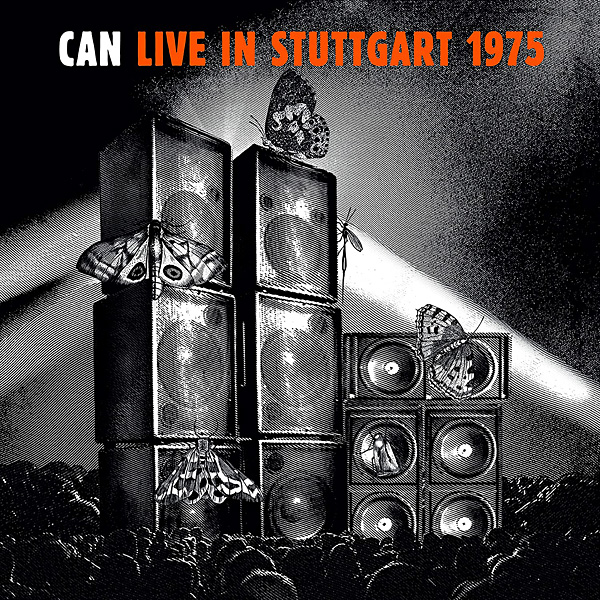 Next, I switched to a different style of live recording: Can's Live in Stuttgart 1975 (24/44.1 FLAC, Spoon Records/Qobuz), which was just released earlier this year. I closed my eyes and sank into a seat 10 or 15 rows back and soaked up the Eins and Zwei tracks of the album's five meandering improvisations. Here, the system provided a decent portrayal of the venue's width and depth; what I didn't expect was the impression I had of the venue's height, that third dimension. On Can's "Vitamin C," from Ege Bamyasi (FLAC 16/44.1 Qobuz) as remastered by Andreas Torkler, Jaki Liebezeit's sharp snare attacks transfixed with their crisp realism. They sounded as taut as, well, a drumhead.
These deep grooves felt effortless, and yet the MBLs responded well to power—and to higher volumes (within reason). More than other speakers I've used, the intensity of the experience correlated with how loud I listened. With the 120s I could often subtly feel the soundwaves, especially at higher levels. Their energy was palpable, visceral, like live music, adding to the sense of immersion. It gave more muscle to rock 'n' roll. The soundwaves' energy was like a gentle force field. Or not so gentle.
I dig the semi-sleazy, dance-y art rock of Franz Ferdinand's self-titled studio debut (16/44.1 FLAC, Qobuz and CD), which is laced with post-punk edge. The Beach Boys must have inspired some of their blended vocal harmonies. The production may not be flawless, or all that consistent, but I like its raw, grungy feel—it's part of the experience. It's fun to crank it up, and when I did that, the MBLs delivered more heft and substance. The decay of the final guitar chord on "The Dark of the Matinee" lingered a long time, as matinée darkness should. On "40'," parts I seldom pay close attention to—the near-staccato guitar intro, Alex Kapranos's lackadaisical "la la la's," the ending riffs, and what might be melodica interplay—took on new interest, more distinct in the mix.
Next, I switched to a different style of live recording: Can's Live in Stuttgart 1975 (24/44.1 FLAC, Spoon Records/Qobuz), which was just released earlier this year. I closed my eyes and sank into a seat 10 or 15 rows back and soaked up the Eins and Zwei tracks of the album's five meandering improvisations. Here, the system provided a decent portrayal of the venue's width and depth; what I didn't expect was the impression I had of the venue's height, that third dimension. On Can's "Vitamin C," from Ege Bamyasi (FLAC 16/44.1 Qobuz) as remastered by Andreas Torkler, Jaki Liebezeit's sharp snare attacks transfixed with their crisp realism. They sounded as taut as, well, a drumhead.
These deep grooves felt effortless, and yet the MBLs responded well to power—and to higher volumes (within reason). More than other speakers I've used, the intensity of the experience correlated with how loud I listened. With the 120s I could often subtly feel the soundwaves, especially at higher levels. Their energy was palpable, visceral, like live music, adding to the sense of immersion. It gave more muscle to rock 'n' roll. The soundwaves' energy was like a gentle force field. Or not so gentle.
I dig the semi-sleazy, dance-y art rock of Franz Ferdinand's self-titled studio debut (16/44.1 FLAC, Qobuz and CD), which is laced with post-punk edge. The Beach Boys must have inspired some of their blended vocal harmonies. The production may not be flawless, or all that consistent, but I like its raw, grungy feel—it's part of the experience. It's fun to crank it up, and when I did that, the MBLs delivered more heft and substance. The decay of the final guitar chord on "The Dark of the Matinee" lingered a long time, as matinée darkness should. On "40'," parts I seldom pay close attention to—the near-staccato guitar intro, Alex Kapranos's lackadaisical "la la la's," the ending riffs, and what might be melodica interplay—took on new interest, more distinct in the mix.
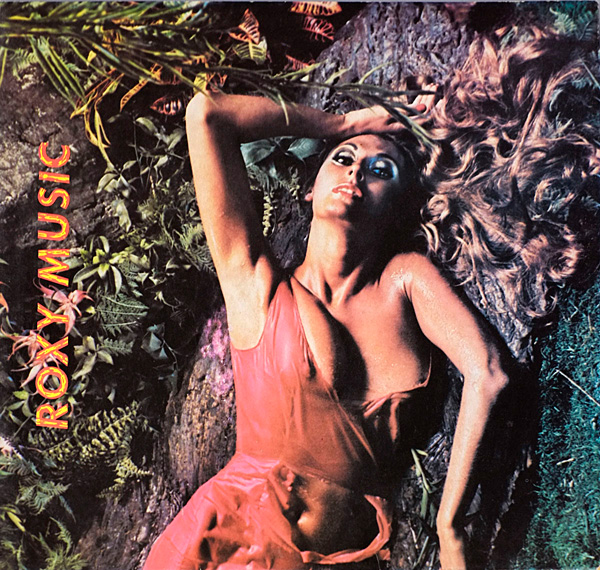 I rolled on to some Roxy Music. The weirdly wonderful "Mother of Pearl" from 1973's Stranded (16/44 FLAC, Qobuz) winds down and shape-shifts from heavy 4/4 driving rocker to moody, quirky melody. I loved John Gustafson's few, simple bass notes leading into Bryan Ferry's vocal antics and affectations as they glided into the mellower main part of the track. Those notes were crystal clear, closer to the center of consciousness.
Again, the higher the volume, the deeper the immersion. This was especially true, and welcome, with atmospheric music. The 120s rendered St. Vincent's latest full-length, Daddy's Home (LP, Loma Vista LVRO1856 and 24/44.1 FLAC, Qobuz), with full body and color. St. Vincent, aka Annie Clark, reinvents herself again here with a mix of styles incorporating influences from the Eurythmics to yacht rock, with serious '70s flair. Plus, sitar. The off-kilter opener "Pay Your Way in Pain" staggers through layers of sass and exasperation, culminating in Clark's not-so-pretty near-screeching raw wails. Via the MBLs, the David Gilmour–ish guitar soared and filled the room on "Live in the Dream," which is about a hazy close-call overdose. On "Melting of the Sun," Joe Walsh–worthy guitar swells and swirls make for a curious counterpoint against this roll call of iconic long-suffering ladies: Marilyn, Joan, Joni, Nina, Tori.
A tale of two (other) amps
I rolled on to some Roxy Music. The weirdly wonderful "Mother of Pearl" from 1973's Stranded (16/44 FLAC, Qobuz) winds down and shape-shifts from heavy 4/4 driving rocker to moody, quirky melody. I loved John Gustafson's few, simple bass notes leading into Bryan Ferry's vocal antics and affectations as they glided into the mellower main part of the track. Those notes were crystal clear, closer to the center of consciousness.
Again, the higher the volume, the deeper the immersion. This was especially true, and welcome, with atmospheric music. The 120s rendered St. Vincent's latest full-length, Daddy's Home (LP, Loma Vista LVRO1856 and 24/44.1 FLAC, Qobuz), with full body and color. St. Vincent, aka Annie Clark, reinvents herself again here with a mix of styles incorporating influences from the Eurythmics to yacht rock, with serious '70s flair. Plus, sitar. The off-kilter opener "Pay Your Way in Pain" staggers through layers of sass and exasperation, culminating in Clark's not-so-pretty near-screeching raw wails. Via the MBLs, the David Gilmour–ish guitar soared and filled the room on "Live in the Dream," which is about a hazy close-call overdose. On "Melting of the Sun," Joe Walsh–worthy guitar swells and swirls make for a curious counterpoint against this roll call of iconic long-suffering ladies: Marilyn, Joan, Joni, Nina, Tori.
A tale of two (other) amps
Early in my MBL 120 listening, I experimented with the 85Wpc, tubed VAC Sigma 170i iQ integrated amplifier. Although it's rated at 85Wpc—well below the MBLs' 200W recommended minimum power spec—it yielded pleasing results. The MBL 120s can deliver sound with involving intensity even on quiet, subtle material. On A Delicate Motor's Fellover My Own (LP, SofaBurn Records 0711574844623), the 120s driven by the VAC displayed the chamber pop album's depth of field and intimate delicacy. Adam Petersen's kalimba (thumb piano) bookends the opening track, "Do for Self." Its strikes rang out within the space, its sustains seeming almost to travel in slow motion. Ben Sloan's kickdrum had pleasing body, texture, and bloom, especially as its intensity increased. Ditto the soft cymbals and gentle tambourine. Vocal harmonies sounded somewhat richer and more nuanced than with the MBL amp, increasing earnest expression. The 120s disappeared as they conveyed the music's ethereal qualities. The sounds seemed to emerge from thin air.
I also used the Swiss-made, class-A Soulution 330, which outputs 240W into 4 ohms and 120W into 8 ohms. For comparison with the N51 reference amp, I adjusted the volume on each for an 82dB average at the listening position.
The 330 might have had a slight edge over the N51 in fine detail retrieval and resolution, but on some tracks, musicians' positions seemed to shift more toward one speaker or the other. On vinyl playback, changing the cartridge loading from 200 to 400 ohms reduced these differences. With the Soulution, timbre and tone color seemed slightly more neutral. With the N51, they sounded slightly darker and richer.
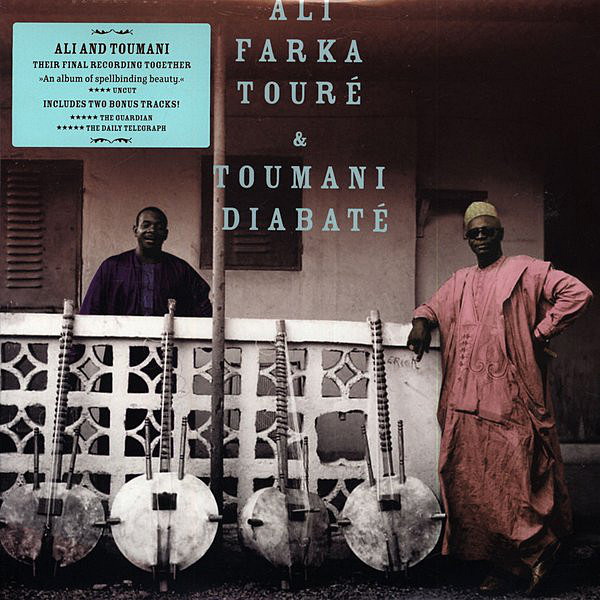 With the Soulution amp, backgrounds seemed quieter, which benefitted recordings such as Ali and Toumani with Toumani Diabaté and Ali Farka Touré (LP, World Circuit WCV083). The West African kora is a soft-sounding, 21-stringed instrument that mixes elements of lute and harp (footnote 5). The 120s' omnidirectional dispersion patterns made this record sound natural, relaxed, and expansive. The transient attacks with Diabaté's kora were crystal clear. Sustains overlapped and harmonized. I'm no kora expert, but this setup made it easy to hear the effects of various playing techniques, from quick-plucked runs and polyrhythmic riffs to delicate taps and subtle string squeaks. Textures on all instruments—kora, bass, congas, voice—were convincing in detail and dimensionality. The instruments sounded true to life. On other material, some basslines were easier to follow with the class-A 330's grip and control.
Did I prefer one solid-state integrated over the other? Not really. They provided two different experiences. Both were satisfying.
With the Soulution amp, backgrounds seemed quieter, which benefitted recordings such as Ali and Toumani with Toumani Diabaté and Ali Farka Touré (LP, World Circuit WCV083). The West African kora is a soft-sounding, 21-stringed instrument that mixes elements of lute and harp (footnote 5). The 120s' omnidirectional dispersion patterns made this record sound natural, relaxed, and expansive. The transient attacks with Diabaté's kora were crystal clear. Sustains overlapped and harmonized. I'm no kora expert, but this setup made it easy to hear the effects of various playing techniques, from quick-plucked runs and polyrhythmic riffs to delicate taps and subtle string squeaks. Textures on all instruments—kora, bass, congas, voice—were convincing in detail and dimensionality. The instruments sounded true to life. On other material, some basslines were easier to follow with the class-A 330's grip and control.
Did I prefer one solid-state integrated over the other? Not really. They provided two different experiences. Both were satisfying.
 Conclusion
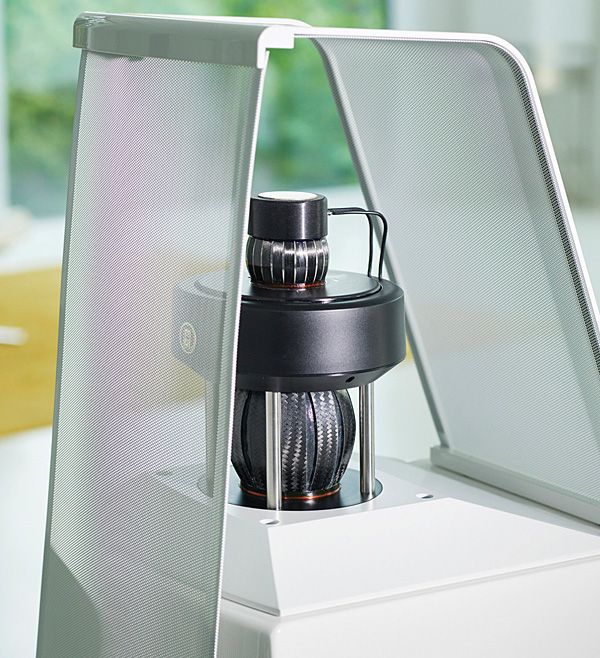
The MBL 120s sound big and full—voluptuous at times, especially when you turn up the volume, which I did often, though not to excess. Because the Radialstrahler drivers radiate sound in all directions, they avoid the hazards of beamy tweeters and shout-at-you midrange drivers. I love how the sound seems to float in the air rather than be fired at you. Many instruments and voices sound natural. The 120s elevate musical material—they maximize but don't exaggerate what's there, like dressing to highlight your best features. Unlike some speakers, the MBL 120s don't favor one genre of music over another—which is essential for my eclectic tastes. Wallflowers they ain't: Immersive and involving, these speakers are built for fun. Their sound, though always substantial, tends to stay detailed without getting thick or muddy.
The MBL 120s can be addictive. I'm not here to be a bad influence, but if you're not careful, you might need to call your nearest dealer
Footnote 3: Even stripped down, it's a good tune: Lyle Lovett and Shawn Colvin performed a mellower acoustic guitar version during a concert encore I saw a few years back. Footnote 4: Another work from this album appears on the Editorial Tracks from Stereophile playlist on Qobuz.
Footnote 5: See en.wikipedia.org/wiki/Kora_(instrument).
This sweet little song always charms and cheers me, yet it can seem lightweight, peppy but without much depth. The 120s (and the ancillary components in my system) kicked it up a notch. The song hit harder. From the first two downbeats through to David Byrne's crooning at the end, there was more punch, pop, body, and heft.
I don't often listen to silver discs, but when I do—well, I do occasionally pull out some special ones I've kept around. An example is Ben Webster and Harry "Sweets" Edison's Wanted to Do One Together (SACD, Columbia 8691/ORG 117-3), recorded in 1962. Webster's buzzy breath off his tenor sax reed took its time decaying. The 120s captured his style as if it were here and now, on "How Long Has This Been Going On" and especially on "My Romance," where his breathing technique was audible, close enough to hear a little spittle. A natural sense of air and space between instruments made me feel like I was at the session or sitting in a smoky jazz bar (ideally without smoke).
Switching to classical, I played the Henri Dutilleux Métaboles, for orchestra, from Dutilleux: Métaboles, L'arbre des songes & Symphony No.2 "Le Double" (footnote 4) performed by the Seattle Symphony Orchestra under Ludovic Morlot (24/96 FLAC, Seattle Symphony Media/Qobuz). The leading-edge transients on the fits and starts of "Incantatoire" compelled me to listen more closely. "Obsessionel" has a lively soundtrack vibe that wouldn't be out of place in a cartoon; its crescendos lifted my mood. At the end, the textures of the soft snare rolls and pianissimo taps deep in the right channel drew me in to listen more closely. On "Flamboyant," the final movement, the stage opened up, expanding to fill the whole area surrounding the speakers, including the space behind them all the way to the front wall. I closed my eyes. Though not to full scale, the space was there, contextual, present.
Producing a soundstage at orchestral scale is a tall order, a hi-fi holy grail. It's exciting when any system can do it. It's especially rare for standmounts, but the 120s, while not quite all the way there, managed to reproduce a pretty good semblance of the live event.
Next, I switched to a different style of live recording: Can's Live in Stuttgart 1975 (24/44.1 FLAC, Spoon Records/Qobuz), which was just released earlier this year. I closed my eyes and sank into a seat 10 or 15 rows back and soaked up the Eins and Zwei tracks of the album's five meandering improvisations. Here, the system provided a decent portrayal of the venue's width and depth; what I didn't expect was the impression I had of the venue's height, that third dimension. On Can's "Vitamin C," from Ege Bamyasi (FLAC 16/44.1 Qobuz) as remastered by Andreas Torkler, Jaki Liebezeit's sharp snare attacks transfixed with their crisp realism. They sounded as taut as, well, a drumhead.
I rolled on to some Roxy Music. The weirdly wonderful "Mother of Pearl" from 1973's Stranded (16/44 FLAC, Qobuz) winds down and shape-shifts from heavy 4/4 driving rocker to moody, quirky melody. I loved John Gustafson's few, simple bass notes leading into Bryan Ferry's vocal antics and affectations as they glided into the mellower main part of the track. Those notes were crystal clear, closer to the center of consciousness.
Early in my MBL 120 listening, I experimented with the 85Wpc, tubed VAC Sigma 170i iQ integrated amplifier. Although it's rated at 85Wpc—well below the MBLs' 200W recommended minimum power spec—it yielded pleasing results. The MBL 120s can deliver sound with involving intensity even on quiet, subtle material. On A Delicate Motor's Fellover My Own (LP, SofaBurn Records 0711574844623), the 120s driven by the VAC displayed the chamber pop album's depth of field and intimate delicacy. Adam Petersen's kalimba (thumb piano) bookends the opening track, "Do for Self." Its strikes rang out within the space, its sustains seeming almost to travel in slow motion. Ben Sloan's kickdrum had pleasing body, texture, and bloom, especially as its intensity increased. Ditto the soft cymbals and gentle tambourine. Vocal harmonies sounded somewhat richer and more nuanced than with the MBL amp, increasing earnest expression. The 120s disappeared as they conveyed the music's ethereal qualities. The sounds seemed to emerge from thin air.
With the Soulution amp, backgrounds seemed quieter, which benefitted recordings such as Ali and Toumani with Toumani Diabaté and Ali Farka Touré (LP, World Circuit WCV083). The West African kora is a soft-sounding, 21-stringed instrument that mixes elements of lute and harp (footnote 5). The 120s' omnidirectional dispersion patterns made this record sound natural, relaxed, and expansive. The transient attacks with Diabaté's kora were crystal clear. Sustains overlapped and harmonized. I'm no kora expert, but this setup made it easy to hear the effects of various playing techniques, from quick-plucked runs and polyrhythmic riffs to delicate taps and subtle string squeaks. Textures on all instruments—kora, bass, congas, voice—were convincing in detail and dimensionality. The instruments sounded true to life. On other material, some basslines were easier to follow with the class-A 330's grip and control.
ConclusionThe MBL 120s sound big and full—voluptuous at times, especially when you turn up the volume, which I did often, though not to excess. Because the Radialstrahler drivers radiate sound in all directions, they avoid the hazards of beamy tweeters and shout-at-you midrange drivers. I love how the sound seems to float in the air rather than be fired at you. Many instruments and voices sound natural. The 120s elevate musical material—they maximize but don't exaggerate what's there, like dressing to highlight your best features. Unlike some speakers, the MBL 120s don't favor one genre of music over another—which is essential for my eclectic tastes. Wallflowers they ain't: Immersive and involving, these speakers are built for fun. Their sound, though always substantial, tends to stay detailed without getting thick or muddy.
Footnote 3: Even stripped down, it's a good tune: Lyle Lovett and Shawn Colvin performed a mellower acoustic guitar version during a concert encore I saw a few years back. Footnote 4: Another work from this album appears on the Editorial Tracks from Stereophile playlist on Qobuz.