

Except on a few choral recordings, the MAC7200's DAC matched the Bryston BDA-3's dynamics, background quietness, and depiction of the soundstage. Both revealed subtle details in the bass drum head—muffled but solid—which underpinned the chorus and soloist, Jose Carreras, in the "Kyrie" of Ariel Ramirez's Misa Criolla, conducted by José Luis Ocejo (CD, Philips 420 955-2), and discriminated different vocal details in the chorus. In their rendering of Patricia Barber's Companion (Premonition/Blue Note/Mobile Fidelity Sound Lab UDSACD 2023), the two DACs both depicted the rich, well-defined notes from Michael Arnopol's stand-up bass, the timbre of Barber's vocals, and the subtle adjustments in her Hammond organ described so well by JA in his review of the dCS Rossini Transport.
The DA1 DAC also processed DSD native files streamed from my P50 laptop (using JRiver Media 26 software, footnote 7) once I had downloaded and installed the "McIntosh-HD USB Audio Windows Drive D v2.0" driver to identify the MAC7200 as an audio output device. I streamed a DSD musical file of Art Lande's piano version of "Tenderly" from While She Sleeps (DSD64 and DSD128 downloads from Blue Coast Music) to the MAC7200's internal DAC. The sound of the piano was warm, immediate, but dynamic, and the front-panel display confirmed that the MAC7200 internal DAC was processing DSD files.
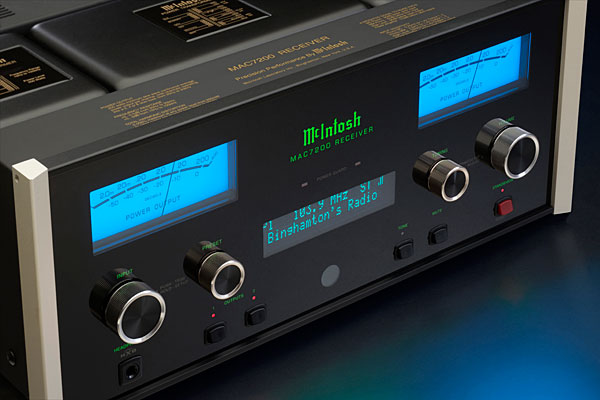 I also listen to KDFC-FM's "Classical California Ultimate Playlist" streamed from its website. Although free of FM noise and multipath, the digital stream did not have the dynamics, transparency, or soundstage imaging of the MAC7200's FM tuner or of PCM digital music files stored on my laptop.
Line section and amplifier stages
I also listen to KDFC-FM's "Classical California Ultimate Playlist" streamed from its website. Although free of FM noise and multipath, the digital stream did not have the dynamics, transparency, or soundstage imaging of the MAC7200's FM tuner or of PCM digital music files stored on my laptop.
Line section and amplifier stages
The MAC7200 refreshed my Quad ESL-989's, which delivered in turn a translucent upper midrange while reproducing the pipe organ's tenor and soprano ranks of pipes in Andrew Galuska's performance of Bossi's Intermezzo, from the compilation Pipes Rhode Island (CD, Riago CD-101). Like KR in his review of the NAD Master Series M33 streaming integrated amplifier, I enjoyed the warm, well-defined pipe organ notes from the album's opening track, John Dunstable's Agincourt Hymn played by Patrick Aiken (Riago 101). The MAC7200 painted a wide 3D soundstage for the male chorus on John Rutter's Lord, Make Me an Instrument of Thy Peace from Requiem, performed by Timothy Seelig and the Turtle Creek Chorale (CD, Reference Recordings RR-57CD), their distinct vocal timbres easily resolved. The ending of Piè Jesu conveyed intense sadness and hope, as soprano Nancy Keith's voice gradually ascended the scale as the pipe organ descended. The MAC7200's amplifier delivered the power and bass extension of the pipe organ, so much so that I had to reduce the volume as the electrostatic screens began to flap, or seemed to. The separate notes from harp, organ, and rich mix of voices on the album's final track, A Gaelic Blessing, could be differentiated easily. Similarly, Lyle Lovett's cover of the Grateful Dead's "Friend of the Devil," in the compilation Deadicated (CD, Arista, ARCD-8669), was played with a 3D, holographic image of the singer. The large conga drum that opens "Hotel California," from the Eagles' Hell Freezes Over (CD, Geffen GEFD-24725), was 3D, the drumhead tight, fast, deep, and massive. The ESL-989's midrange blossomed playing piano music. Keith Jarrett's "Part 7" from his 2006 Carnegie Hall Concert (CD, ECM Records B0007362-02) had both a warm piano timbre and tight, syncopated, rhythmic drive that had me tapping my foot and singing along. Wow!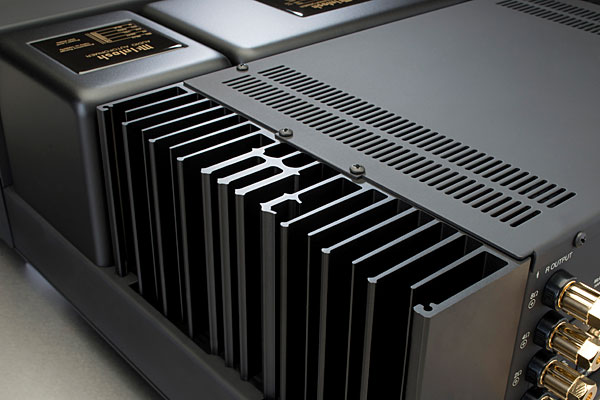 I was shocked by the sudden crashing transients that open "2049" from Hans Zimmer and Benjamin Wallfisch's score for Blade Runner 2049 (CD, Epic 19075800852), followed by eerie reverberant echoes and sustained new-age synth chords. The MAC7200 delivered the same explosive dynamics, beginning with a faint, staticky whine followed by crashing heavy-metal chords on another Hans Zimmer soundtrack, The Dark Knight (CD, Warner Sunset 511103-2)—specifically the track "Why So Serious?"
I enjoyed the line stage and amplifier's tubelike warmth and highly detailed imaging in the title track "Going Home" from a CD reissue of The L.A. Four: Going Home (CD, East Wind 32-JD-10043), which placed Laurindo Almeida's guitar to the left, Ray Brown's standing bass just left of center, Shelly Manne's drums slightly to the right of center, and Bud Shank's alto flute and saxophone far right.
Conclusions
I was shocked by the sudden crashing transients that open "2049" from Hans Zimmer and Benjamin Wallfisch's score for Blade Runner 2049 (CD, Epic 19075800852), followed by eerie reverberant echoes and sustained new-age synth chords. The MAC7200 delivered the same explosive dynamics, beginning with a faint, staticky whine followed by crashing heavy-metal chords on another Hans Zimmer soundtrack, The Dark Knight (CD, Warner Sunset 511103-2)—specifically the track "Why So Serious?"
I enjoyed the line stage and amplifier's tubelike warmth and highly detailed imaging in the title track "Going Home" from a CD reissue of The L.A. Four: Going Home (CD, East Wind 32-JD-10043), which placed Laurindo Almeida's guitar to the left, Ray Brown's standing bass just left of center, Shelly Manne's drums slightly to the right of center, and Bud Shank's alto flute and saxophone far right.
Conclusions
The MAC7200 belongs in Class A of Stereophile's Recommended Components list. Yes, its $7500 price makes it the most expensive stereo receiver available today, but its power, resolution, dynamics, and transparency are among the best I've heard. Its internal DAC's transparency, speed, and imaging provided strong competition for my Bryston BDA-3. The phono and line preamplifiers excelled in their versatility as well as delivering transparent midrange, tuneful bass, and open highs. The amplifier allowed the Quad Electrostatic 989s to play loud with great dynamics.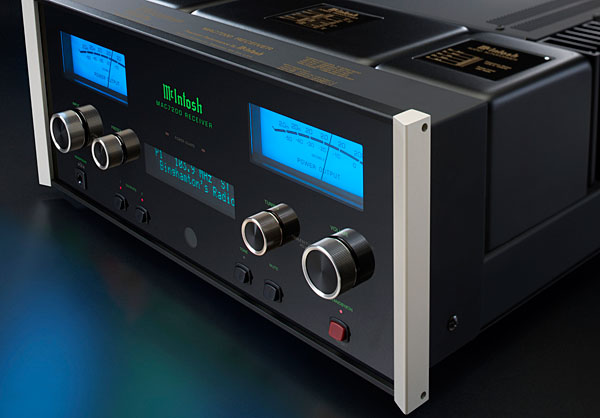 The FM tuner is this product's jewel. Its sensitivity, selectivity, and ability to quiet with an FM signal equaled and in many cases bettered my FM Reference tuner. This FM tuner's superb performance was not limited by multipath, as in Jim's case, but because there are so few FM fine music stations in my area of the country—and that's not the tuner's fault! Here in SF's North Bay region, it pulled in 17 FM stations well, but only one offered classical music, one other National Public Radio.
I will be sad to return the MAC7200. Its intuitive remote made it so easy and convenient to access high-quality FM radio, vinyl, and digital musical sources.
If you have the sturdy shelf space for its large, heavy chassis, are a fan of FM radio, and are looking for one unit to handle many different two-channel tasks, the MAC7200 should be on your short list.
The FM tuner is this product's jewel. Its sensitivity, selectivity, and ability to quiet with an FM signal equaled and in many cases bettered my FM Reference tuner. This FM tuner's superb performance was not limited by multipath, as in Jim's case, but because there are so few FM fine music stations in my area of the country—and that's not the tuner's fault! Here in SF's North Bay region, it pulled in 17 FM stations well, but only one offered classical music, one other National Public Radio.
I will be sad to return the MAC7200. Its intuitive remote made it so easy and convenient to access high-quality FM radio, vinyl, and digital musical sources.
If you have the sturdy shelf space for its large, heavy chassis, are a fan of FM radio, and are looking for one unit to handle many different two-channel tasks, the MAC7200 should be on your short list.
Footnote 7: I had to select two settings in my laptop's streaming software, JRiver Media 26: "McIntosh HD-(ASIO)" and "1 × DSD in Native Format (requires ASIO and 1×DSD capable DAC)."
I also listen to KDFC-FM's "Classical California Ultimate Playlist" streamed from its website. Although free of FM noise and multipath, the digital stream did not have the dynamics, transparency, or soundstage imaging of the MAC7200's FM tuner or of PCM digital music files stored on my laptop.
The MAC7200 refreshed my Quad ESL-989's, which delivered in turn a translucent upper midrange while reproducing the pipe organ's tenor and soprano ranks of pipes in Andrew Galuska's performance of Bossi's Intermezzo, from the compilation Pipes Rhode Island (CD, Riago CD-101). Like KR in his review of the NAD Master Series M33 streaming integrated amplifier, I enjoyed the warm, well-defined pipe organ notes from the album's opening track, John Dunstable's Agincourt Hymn played by Patrick Aiken (Riago 101). The MAC7200 painted a wide 3D soundstage for the male chorus on John Rutter's Lord, Make Me an Instrument of Thy Peace from Requiem, performed by Timothy Seelig and the Turtle Creek Chorale (CD, Reference Recordings RR-57CD), their distinct vocal timbres easily resolved. The ending of Piè Jesu conveyed intense sadness and hope, as soprano Nancy Keith's voice gradually ascended the scale as the pipe organ descended. The MAC7200's amplifier delivered the power and bass extension of the pipe organ, so much so that I had to reduce the volume as the electrostatic screens began to flap, or seemed to. The separate notes from harp, organ, and rich mix of voices on the album's final track, A Gaelic Blessing, could be differentiated easily. Similarly, Lyle Lovett's cover of the Grateful Dead's "Friend of the Devil," in the compilation Deadicated (CD, Arista, ARCD-8669), was played with a 3D, holographic image of the singer. The large conga drum that opens "Hotel California," from the Eagles' Hell Freezes Over (CD, Geffen GEFD-24725), was 3D, the drumhead tight, fast, deep, and massive. The ESL-989's midrange blossomed playing piano music. Keith Jarrett's "Part 7" from his 2006 Carnegie Hall Concert (CD, ECM Records B0007362-02) had both a warm piano timbre and tight, syncopated, rhythmic drive that had me tapping my foot and singing along. Wow!
I was shocked by the sudden crashing transients that open "2049" from Hans Zimmer and Benjamin Wallfisch's score for Blade Runner 2049 (CD, Epic 19075800852), followed by eerie reverberant echoes and sustained new-age synth chords. The MAC7200 delivered the same explosive dynamics, beginning with a faint, staticky whine followed by crashing heavy-metal chords on another Hans Zimmer soundtrack, The Dark Knight (CD, Warner Sunset 511103-2)—specifically the track "Why So Serious?"
The MAC7200 belongs in Class A of Stereophile's Recommended Components list. Yes, its $7500 price makes it the most expensive stereo receiver available today, but its power, resolution, dynamics, and transparency are among the best I've heard. Its internal DAC's transparency, speed, and imaging provided strong competition for my Bryston BDA-3. The phono and line preamplifiers excelled in their versatility as well as delivering transparent midrange, tuneful bass, and open highs. The amplifier allowed the Quad Electrostatic 989s to play loud with great dynamics.
The FM tuner is this product's jewel. Its sensitivity, selectivity, and ability to quiet with an FM signal equaled and in many cases bettered my FM Reference tuner. This FM tuner's superb performance was not limited by multipath, as in Jim's case, but because there are so few FM fine music stations in my area of the country—and that's not the tuner's fault! Here in SF's North Bay region, it pulled in 17 FM stations well, but only one offered classical music, one other National Public Radio.
Footnote 7: I had to select two settings in my laptop's streaming software, JRiver Media 26: "McIntosh HD-(ASIO)" and "1 × DSD in Native Format (requires ASIO and 1×DSD capable DAC)."















