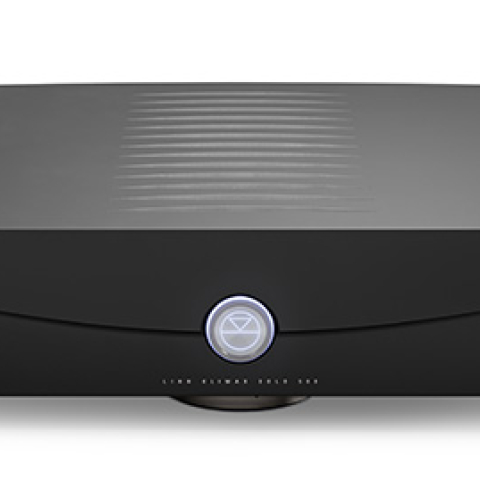
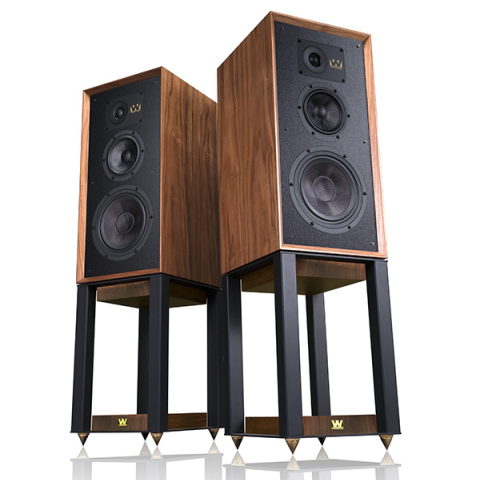
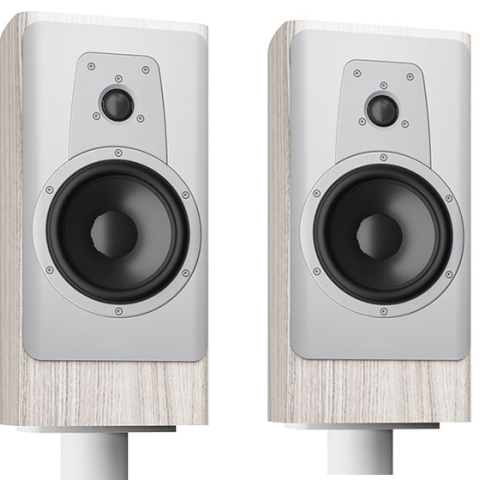
John Atkinson has asked me to share my impressions of MQA. Currently, the only retail outlet in the United States able to demonstrate Meridian's MQA (Master Quality Authenticated) encoding/decoding system is Audio High in Mountain View, CA. Auditioned, during a return visit to the Bay Area, on the very same pair of Meridian DSP8000SE loudspeakers that I reported on last April, MQA impressed anew with each track.
Since Audio High had sent Meridian specific recordings of varying resolutions that it wished encoded, I mostly confined my auditioning to those tracks. Yevgeny (Eugene) Konnikov and Michael Silver at Audio High were extremely generous with their time, allowing frequent back and forth comparisons.
In Audio High's exceedingly dry listening room, we began with an 24/88.2k file of Hilary Hahn playing what I believe was a movement from J. S. Bach's Violin Concerto No.2 in E, BWV1042. As compelling as the untreated hi-res file sounded, I literally laughed at the difference when the MQA version began. Not only did it feel as though a veil had been lifted, with far more color to the sound, but instruments also possessed more body. With more meat on dem bones, I also noticed less of a digital edge on the violin. I've heard Hahn in concert several times, and this was the closest to real I've ever heard her violin sound on recording.
Next came Ray Charles dueting with Natalie Cole on "Fever." Besides the fact that both artists sounded fantastic—it's astounding to think that Charles was approaching death as he made this impeccable recording—the MQA version conveyed a more believably large soundstage. Cole's voice in particular sounded so much more vibrant and defined with MQA. Equally notable was how the drum had so much more impact, not only because of its better defined leading edge, but also because of a more accurate depiction of its resonant depth and reverberant undertones.
Next I heard Herbie Hancock's version of Joni Mitchell's "The River" in 24/96. Not only were the subtle inflections of Corinne Bailey Rae's voice more audible with MQA, but the color and roundness of Hancock's piano also really stood out. The sound of brushes on drums seems far more defined and realistic than without MQA.
The only drawback I heard to MQA was the extra realism it brought to the noisy breaths of baritone Matthias Goerne on a far too closely miked recording of Schubert's "Litanei." Goerne chose to sing the song very, very slowly, and required huge intakes of breath to get through a phrase. He's a noisy breather to begin with, and the extra realism, in this instance, detracted from his artistry. To balance that, however, the depiction of the complexities of his voice, including the raspiness that is sometimes audible in live performance, was uncanny.
Fasten your seat belts, boys and girls, because my listening concluded with part of a 24/96 track by Metallica, " Enter Sandman." Although I confess that my breathing deepened once the music ended and my ears had a chance to recover, this comparison revealed the most dramatic improvements that MQA can bring to an anything but acoustic presentation.
With MQA, I heard far more definition and separation between instruments and lines in the lighter beginning of the track. When the band went all out, I was astounded at how much more colorful and undeniably brutal the sound was with MQA engaged. The full impact of heavy metal came through in ways that I would have thought possible only in live performance. And this, mind you, was at a volume level that, for the sake of my ears, had been turned down several notches from my initial listen without MQA. That the music could be lower in volume, yet sound meaner and more vile in the best of ways, confirmed the musical dividends that MQA can deliver.—Jason Victor Serinus