With recordings that did not contain copious energy in the 50–100Hz region, such as Chants Grégoriens Pour le Temps de Noël, by the Munich Capella Antiqua directed by Konrad Ruhland (LP, Harmonia Mundi 5112), the Morels played gloriously. The main energy in Gregorian chant seems to fall in that gender-ambiguous range of 120–200Hz, while the subsequent reverberations off the stone walls of Schloss Aicha vorm Wald, in Bavaria, in which this was recorded, can be heard logarithmically expanding and diminishing through the octaves on either side of that center point. With the Morels, the adult singers' maleness was delivered with a lush, saturated tone; I have seldom heard the middle to upper registers of the male voice sound so distinct and beautifully exposed. The Morels articulated the natural reverberation of the room's acoustic with striking clarity; the decaying tones of the voices became separate musical entities worthy of their own moments of meditation and praise.
The Crumpled Sock Mod
Then it hit me: The Morel Octave 6es needed to be on 27"-high stands, not 24" stands such as mine. And they needed to be farther out in the room. I moved my Sound Anchor stands from 29" to 39" from the front wall, and placed between the stands and the speakers' bottom panels 3" worth of heavy Japanese-art books. The results were gratifying: The bass response evened out a lot, and the imaging and transient response slightly improved. But the room boom diminished only slightly. Disappointed and pondering, I had a flashback: I remembered the crumpled-sock woofer mod. I stuffed the Morels' ports loosely with dirty crew socks, thus stiffening the loading of the woofer. The upper bass got tighter. The boom disappeared a bit more. But blocking the ports changed the overall tone and fundamental viscosity of the Octave 6es to a point where their sound became completely unenjoyable. My experiment had failed, so I put my socks in the laundry, where they belonged. The Burning Tubes Festival
According to Morel's specs, the Octave 6 Limited Edition presents a nominal impedance of 4 ohms. So far, all of my listening was done with the Hegel H160 integrated, which delivers 250Wpc into 4 ohms. When I switched to my Line Magnetic LM-518IA integrated, I was impressed by how effortlessly its 22Wpc drove the 88dB-sensitive Morels. I thought the bass would soften, but it didn't. The gender-specific charms of male and female voices were further enhanced; madrigals and tarantellas played almost perfectly. With the LM-518IA, life was beautiful, but only when I chose music carefully, avoiding recordings with copious low-frequency content. The eponymous first track of Philip Glass's score for the film Koyaanisqatsi (LP, Antilles ASTA 1) had so much uncontrolled bass that I became anxious and took it off.
When I switched to the Simaudio Moon Neo 340i integrated (200Wpc into 4 ohms), the bass did not tighten up, but the mid and high frequencies opened up considerably. In addition to Simaudio's legendary transparency, the 340i added a measure of precision and neutrality to the Morel Octave 6's midrange presentation.
 I was very surprised to discover that the best match of all was the $1300 class-D/tube hybrid Rogue Audio Sphinx integrated amp. It couldn't match the Neo 340i's fine-grained transparency or high-frequency perfection, but the Sphinx improved the upper-bass detail and enhanced midrange textures, voice articulation, and slam. Overall, the Morels delivered their most satisfying sound when sitting on 27" stands 44" out from the front wall and driven by the wildly overachieving Sphinx. With the speakers in those positions, my ears were only about 5' from the tweeters: The closer I sat to the Octave 6es, the better they sounded.
And then . . .
I was very surprised to discover that the best match of all was the $1300 class-D/tube hybrid Rogue Audio Sphinx integrated amp. It couldn't match the Neo 340i's fine-grained transparency or high-frequency perfection, but the Sphinx improved the upper-bass detail and enhanced midrange textures, voice articulation, and slam. Overall, the Morels delivered their most satisfying sound when sitting on 27" stands 44" out from the front wall and driven by the wildly overachieving Sphinx. With the speakers in those positions, my ears were only about 5' from the tweeters: The closer I sat to the Octave 6es, the better they sounded.
And then . . .
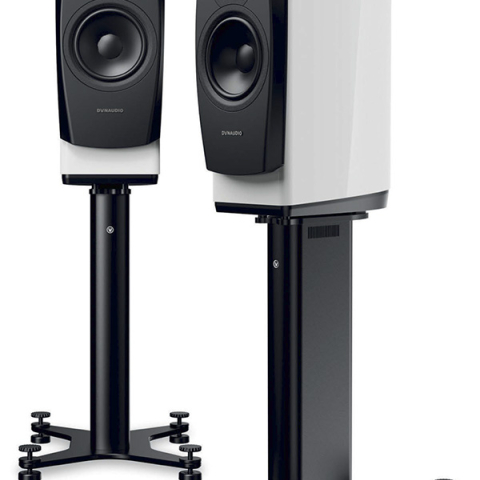
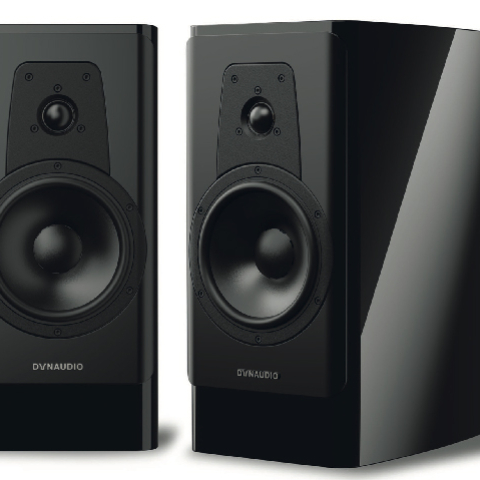
John Atkinson brought me the pair of Dynaudio Excite X14s ($1299/pair) that the late Robert J. Reina had used as his under-$2000 reference speakers. I felt sad but honored. Once I'd got the X14s loosened up, positioned properly (24" from the front wall), and playing Koyaanisqatsi, I felt discouragingly foolish and naãve: The difference in bass quality was not subtle. The Excites had replaced the Octave 6es' loosey-goosey with tight and tasty. Bass detail, tone, and texture seemed more accurately reproduced by the Dynaudios than by any of my own small-speaker references.
 Like Morel, Dynaudio is one of the few speaker companies that make their own drive-units. Like Dynaudio, Morel was founded in the 1970s, and one of the chief thoughts I had in Morel's room at the 2015 CES was, Who should better know how to implement their own high-quality drivers than the people who designed them? Indeed. Trouble is, Morel's and Dynaudio's speakers were obviously designed to satisfy the tastes of (at least) two very different people. Two small loudspeakers could hardly play music more differently than the Excite X14 and the Octave 6. The Morel's sound was intoxicating, euphoric, and sometimes annoying—maybe a little undercontrolled. In contrast, the Dynaudio had a more sober, starched-collar minister effect—maybe a little overcontrolled?
Truth besmirched by beauty?
Like Morel, Dynaudio is one of the few speaker companies that make their own drive-units. Like Dynaudio, Morel was founded in the 1970s, and one of the chief thoughts I had in Morel's room at the 2015 CES was, Who should better know how to implement their own high-quality drivers than the people who designed them? Indeed. Trouble is, Morel's and Dynaudio's speakers were obviously designed to satisfy the tastes of (at least) two very different people. Two small loudspeakers could hardly play music more differently than the Excite X14 and the Octave 6. The Morel's sound was intoxicating, euphoric, and sometimes annoying—maybe a little undercontrolled. In contrast, the Dynaudio had a more sober, starched-collar minister effect—maybe a little overcontrolled?
Truth besmirched by beauty?
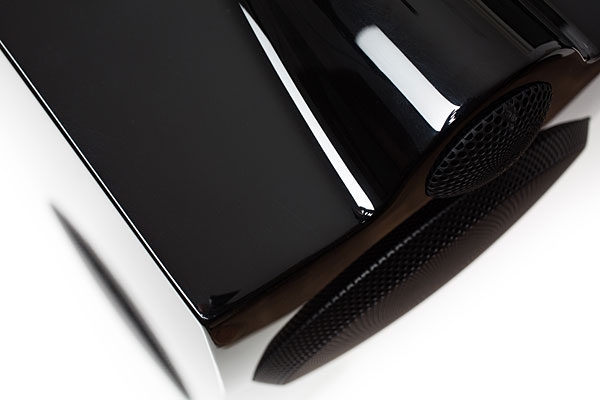
During the long course of this review, the Morel Octave 6 Limited Edition Bookshelf speakers inspired fair amounts of Dionysian revelry hereabouts. Goose bumps, tears, synchronized rocking—all appeared unsummoned. My non-audiophile friends thought these were the best-sounding small speakers ever. Many times, I forgot I was an audio reviewer and simply basked in the beauty of my record collection. I have listened to these piano-black, stand-mounted, two-way speakers a lot. More often than not, they have led me into songs and the meanings of their words better than most speakers I have used in my Bed-Stuy bothy. There isn't much more I can say—except that some personal introspection and reconciliation might be required, the latter between the warring Dionysian and Apollonian tendencies in my own nature. Am I an audio objectivist? You tell me. Am I a silly girl dreamer? Absolutely. But I am also a wrench-twirling, gearhead, artiste peintre, and I need speakers that play to my complete nature.
When I asked to review the Morel Octave 6 Limited Edition, I already knew I could bask in their musical intensity. I already knew they would favor the kinds of music I most often listen to. I already knew they had a kind of rounded, orbicular sound. What I did not recognize was the degree to which I had suppressed (and denied) my own objectivist pride.
There isn't much more I can say—except that some personal introspection and reconciliation might be required, the latter between the warring Dionysian and Apollonian tendencies in my own nature. Am I an audio objectivist? You tell me. Am I a silly girl dreamer? Absolutely. But I am also a wrench-twirling, gearhead, artiste peintre, and I need speakers that play to my complete nature.
When I asked to review the Morel Octave 6 Limited Edition, I already knew I could bask in their musical intensity. I already knew they would favor the kinds of music I most often listen to. I already knew they had a kind of rounded, orbicular sound. What I did not recognize was the degree to which I had suppressed (and denied) my own objectivist pride.
Then it hit me: The Morel Octave 6es needed to be on 27"-high stands, not 24" stands such as mine. And they needed to be farther out in the room. I moved my Sound Anchor stands from 29" to 39" from the front wall, and placed between the stands and the speakers' bottom panels 3" worth of heavy Japanese-art books. The results were gratifying: The bass response evened out a lot, and the imaging and transient response slightly improved. But the room boom diminished only slightly. Disappointed and pondering, I had a flashback: I remembered the crumpled-sock woofer mod. I stuffed the Morels' ports loosely with dirty crew socks, thus stiffening the loading of the woofer. The upper bass got tighter. The boom disappeared a bit more. But blocking the ports changed the overall tone and fundamental viscosity of the Octave 6es to a point where their sound became completely unenjoyable. My experiment had failed, so I put my socks in the laundry, where they belonged.
The Burning Tubes FestivalAccording to Morel's specs, the Octave 6 Limited Edition presents a nominal impedance of 4 ohms. So far, all of my listening was done with the Hegel H160 integrated, which delivers 250Wpc into 4 ohms. When I switched to my Line Magnetic LM-518IA integrated, I was impressed by how effortlessly its 22Wpc drove the 88dB-sensitive Morels. I thought the bass would soften, but it didn't. The gender-specific charms of male and female voices were further enhanced; madrigals and tarantellas played almost perfectly. With the LM-518IA, life was beautiful, but only when I chose music carefully, avoiding recordings with copious low-frequency content. The eponymous first track of Philip Glass's score for the film Koyaanisqatsi (LP, Antilles ASTA 1) had so much uncontrolled bass that I became anxious and took it off.
I was very surprised to discover that the best match of all was the $1300 class-D/tube hybrid Rogue Audio Sphinx integrated amp. It couldn't match the Neo 340i's fine-grained transparency or high-frequency perfection, but the Sphinx improved the upper-bass detail and enhanced midrange textures, voice articulation, and slam. Overall, the Morels delivered their most satisfying sound when sitting on 27" stands 44" out from the front wall and driven by the wildly overachieving Sphinx. With the speakers in those positions, my ears were only about 5' from the tweeters: The closer I sat to the Octave 6es, the better they sounded.
And then . . .John Atkinson brought me the pair of Dynaudio Excite X14s ($1299/pair) that the late Robert J. Reina had used as his under-$2000 reference speakers. I felt sad but honored. Once I'd got the X14s loosened up, positioned properly (24" from the front wall), and playing Koyaanisqatsi, I felt discouragingly foolish and naãve: The difference in bass quality was not subtle. The Excites had replaced the Octave 6es' loosey-goosey with tight and tasty. Bass detail, tone, and texture seemed more accurately reproduced by the Dynaudios than by any of my own small-speaker references.
Like Morel, Dynaudio is one of the few speaker companies that make their own drive-units. Like Dynaudio, Morel was founded in the 1970s, and one of the chief thoughts I had in Morel's room at the 2015 CES was, Who should better know how to implement their own high-quality drivers than the people who designed them? Indeed. Trouble is, Morel's and Dynaudio's speakers were obviously designed to satisfy the tastes of (at least) two very different people. Two small loudspeakers could hardly play music more differently than the Excite X14 and the Octave 6. The Morel's sound was intoxicating, euphoric, and sometimes annoying—maybe a little undercontrolled. In contrast, the Dynaudio had a more sober, starched-collar minister effect—maybe a little overcontrolled?
Truth besmirched by beauty?During the long course of this review, the Morel Octave 6 Limited Edition Bookshelf speakers inspired fair amounts of Dionysian revelry hereabouts. Goose bumps, tears, synchronized rocking—all appeared unsummoned. My non-audiophile friends thought these were the best-sounding small speakers ever. Many times, I forgot I was an audio reviewer and simply basked in the beauty of my record collection. I have listened to these piano-black, stand-mounted, two-way speakers a lot. More often than not, they have led me into songs and the meanings of their words better than most speakers I have used in my Bed-Stuy bothy.
There isn't much more I can say—except that some personal introspection and reconciliation might be required, the latter between the warring Dionysian and Apollonian tendencies in my own nature. Am I an audio objectivist? You tell me. Am I a silly girl dreamer? Absolutely. But I am also a wrench-twirling, gearhead, artiste peintre, and I need speakers that play to my complete nature.