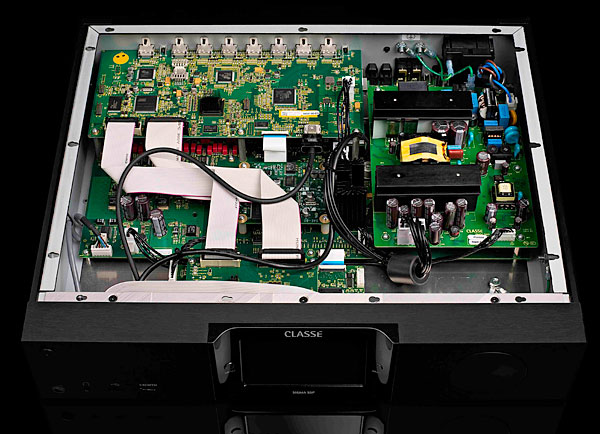
Setup procedures seemed identical to those of other Classé controllers, so I was able to jump right in using the Sigma SSP's touchscreen or the OSD. The screen's ability to display live video will be particularly convenient when the Sigma SSP is kept in a closet or other remote location. I connected my Oppo BDP-103 universal Blu-ray player, music server, and cable box to the Classé's HDMI inputs and renamed them. The Oppo was also connected to a coax S/PDIF input and a stereo analog input, and the Sigma's RJ45 jack was connected to my home network. For these inputs I created two configurations: one with bass management and EQ, one without. The latter was for the input from my Mac mini–based music server, which has its own bass management, and Dirac Live EQ. The former was used for all other sources.
At first, I amplified the Sigma SSP's output with my Bryston 9B-SST2 power amplifier, but I did most of my listening with Classé's Sigma AMP5 (reviewed below). In both cases, I used the Sigma SSP's XLR outputs for L/R and its RCA outputs for the other channels, including the subwoofer. I began listening to the analog stereo feed from the Oppo via digital bypass (which many of us call analog bypass) and, with either amp, the Sigma SSP offered a strikingly clean, transparent sound that immediately conjured comparisons with the SSP-800 and other very high-end controllers or preamps. For this, I used my go-to track, mezzo-soprano Marianne Beate Kielland singing Finzi's "Come Away, Death," accompanied by pianist Sergei Osadchuk, this time with the Oppo playing the SACD (2L-064-SACD). Further listening to a wider range of sources only reaffirmed that the Sigma SSP can be regarded as a superb stereo analog preamp, and all the rest of its bells and whistles as gifts.
 The S/PDIF input fed from the Oppo sounded even better than the analog feed, while the A/D–D/A through the Sigma SSP was marginally but inconsequentially less so. I was more than happy with my local server feeding multichannel files to the Sigma SSP via HDMI at PCM rates of up to 24/192. From the remote server via DLNA/Ethernet, the sound was entirely equal in quality but limited to two-channel files. As a result, I quickly stopped making these tedious comparisons and moved on to more meaningful work, with other sources with two or more channels.
I used the Sigma SSP constantly over several weeks, and everything I tossed at it sounded as good as ever. More than occasionally, it offered more detail, and a more relaxed sound overall. This was particularly true after I'd transferred REW-derived correction filters for each channel, but even unfiltered there was a satisfying balance, coupled with strongly delineated bass and really wide dynamic range. The Sigma SSP offered an impressively spacious yet detailed re-creation of a symphony orchestra from one of my 2015 picks for "Records to Die For," Dvorák's Symphony 8 with Manfred Honeck leading the Pittsburgh Symphony (SACD/CD, Fresh!/Reference FR-710SACD)—and presented an audiophile favorite, Sara K.'s Hell or High Water (SACD/CD, Stockfisch SFR 357.4039.2), with all intimacy, warmth, and slam one could desire.
In designing this lower-priced preamplifier-processor, Classé seems to have made all the right choices without sacrificing sound quality in any way. In fact, I suspect that it may be an advance on its older sibling, and on other high-end processors of only a few years ago. A few of the SSP-800's features were eliminated, and it will be matter of personal preference whether those omissions are a problem. For me, they aren't; moreover, the new features and cosmetics and the sonic clarity are more than adequate compensation. With digital or analog sources, the Classé Sigma SSP sounds more like a top-tier analog preamp than any pre-pro near its price. As such, it has carved out for itself a unique market niche.
Classé Sigma AMP5 five-channel power amplifier
The S/PDIF input fed from the Oppo sounded even better than the analog feed, while the A/D–D/A through the Sigma SSP was marginally but inconsequentially less so. I was more than happy with my local server feeding multichannel files to the Sigma SSP via HDMI at PCM rates of up to 24/192. From the remote server via DLNA/Ethernet, the sound was entirely equal in quality but limited to two-channel files. As a result, I quickly stopped making these tedious comparisons and moved on to more meaningful work, with other sources with two or more channels.
I used the Sigma SSP constantly over several weeks, and everything I tossed at it sounded as good as ever. More than occasionally, it offered more detail, and a more relaxed sound overall. This was particularly true after I'd transferred REW-derived correction filters for each channel, but even unfiltered there was a satisfying balance, coupled with strongly delineated bass and really wide dynamic range. The Sigma SSP offered an impressively spacious yet detailed re-creation of a symphony orchestra from one of my 2015 picks for "Records to Die For," Dvorák's Symphony 8 with Manfred Honeck leading the Pittsburgh Symphony (SACD/CD, Fresh!/Reference FR-710SACD)—and presented an audiophile favorite, Sara K.'s Hell or High Water (SACD/CD, Stockfisch SFR 357.4039.2), with all intimacy, warmth, and slam one could desire.
In designing this lower-priced preamplifier-processor, Classé seems to have made all the right choices without sacrificing sound quality in any way. In fact, I suspect that it may be an advance on its older sibling, and on other high-end processors of only a few years ago. A few of the SSP-800's features were eliminated, and it will be matter of personal preference whether those omissions are a problem. For me, they aren't; moreover, the new features and cosmetics and the sonic clarity are more than adequate compensation. With digital or analog sources, the Classé Sigma SSP sounds more like a top-tier analog preamp than any pre-pro near its price. As such, it has carved out for itself a unique market niche.
Classé Sigma AMP5 five-channel power amplifier
For the Sigma series power amplifiers, Classé took the switch-mode power supply and proprietary class-D amplifier technology they'd lavished on their Delta CA-D200 amplifier ($5000) and put it into a new chassis for the Sigma AMP2 stereo amplifier ($3500). What's notable is that the five-channel Sigma AMP5, with the same power supply and class-D amp, and identical watts-per-channel and stereo specs, costs only $5000. If there's a catch, it's that the Sigma AMP5 is rated at 200Wpc RMS into 8 ohms, all channels driven, but can achieve 400Wpc into 4 ohms only with two channels driven—like the CA-D200 and the Sigma AMP5. This is due to limitations in AC mains/power and, bench tests aside, will not limit real-world use.
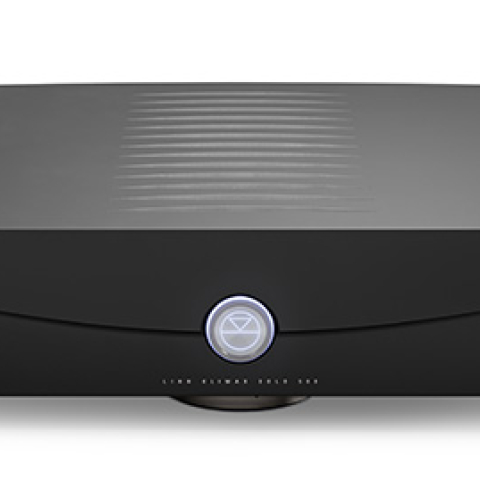
 The Sigma AMP5 weighs 23 lbs and is designed into the same small, sleek case as the Sigma SSP. The two models' front panels, too, are identical, except that AMP5's central screen is merely decorative, and its only control is a matching On/Standby button. The rear panel is also similar to the SSP's, with five channels of RCA inputs, but only two channels with XLR inputs. Of course, it's logical that one would usually choose the latter for the main Left/Right channels, as I did, but there's nothing to keep you from using all of the RCA inputs, or even from using the XLR inputs for any other channels. On the input (left) side of the rear panel are a USB port (for firmware updates), an RS232 and CAN BUS connectors (for command and control), and IR and trigger in/outs, along with an IEC power port and a fuse post. On the right are five pairs of multiway speaker posts.
I slipped the Sigma AMP5 into the rack, and connected it to the Sigma SSP with XLR (L/R) and RCA cables. I also linked it to the SSP via the CAN BUS (RJ-45) connectors, which let me control and monitor the AMP5 from the SSP's display and OSD. Nothing unusual or problematic.
The Sigma AMP5 weighs 23 lbs and is designed into the same small, sleek case as the Sigma SSP. The two models' front panels, too, are identical, except that AMP5's central screen is merely decorative, and its only control is a matching On/Standby button. The rear panel is also similar to the SSP's, with five channels of RCA inputs, but only two channels with XLR inputs. Of course, it's logical that one would usually choose the latter for the main Left/Right channels, as I did, but there's nothing to keep you from using all of the RCA inputs, or even from using the XLR inputs for any other channels. On the input (left) side of the rear panel are a USB port (for firmware updates), an RS232 and CAN BUS connectors (for command and control), and IR and trigger in/outs, along with an IEC power port and a fuse post. On the right are five pairs of multiway speaker posts.
I slipped the Sigma AMP5 into the rack, and connected it to the Sigma SSP with XLR (L/R) and RCA cables. I also linked it to the SSP via the CAN BUS (RJ-45) connectors, which let me control and monitor the AMP5 from the SSP's display and OSD. Nothing unusual or problematic.
 Having switched directly over from the Bryston 9B-SST2, I immediately heard that the Sigma AMP5 opened up the midrange and ameliorated the slight nasality I've come to expect from my Paradigm Studio60 speakers. Of course, I ran it through the gantlet of standard music test tracks, from solo voice (Marianne Beate Kielland singing "Come Away, Death") to Saint-Saâns's "Organ" Symphony, as performed by Christoph Eschenbach and the Philadelphia Orchestra, with organist Olivier Latry (Ondine ODE 1094-5). The midrange and treble were pure and smooth—something of a surprise for a class-D amp—and the bass was powerful, delineated, and extended. More important, the Sigma AMP5 imposed no coloration or character on the music, but seemed utterly transparent. I've been enjoying a new recording of Mozart's Requiem, with Masaaki Suzuki leading the Bach Collegium Japan (SACD/CD, BIS-2091). This is a new version of the work, completed and edited by Suzuki's son, Masato (organist for this performance), and it doesn't so much surprise as electrify. The AMP5 revealed an open, continuous soundstage populated by an array of players and singers, each retaining a presence in space—presences that, to my surprise, closely matched the positions of their images in the booklet's centerfold picture.
 I heard a different kind of electricity from Alison Krauss and Union Station's Live (2 SACD/CDs, Rounder ROUN0515). This set of greatest hits was performed before an enthusiastic audience who assert their presence in the surrounds; the band, up front, is very clear. Despite the lack of any discrete center-channel information, there is no gap or deficit in the presentation of the soundstage. With the clarity and dynamics of the Sigma AMP5 and SSP, I can say, with little hyperbole, that I heard every voice and every plucked or strummed string instrument in this stirring concert, almost as if I were there.
As with the Sigma SSP, Classé has brought to the Sigma AMP5 their acknowledged high-end sound quality at an appealing price. I've been impressed with several recent class-D amps, but the Sigma AMP5 brought me a new level of performance that easily competes with or outperforms comparable nonswitching designs. That's progress.
Coming up next in the Round
I heard a different kind of electricity from Alison Krauss and Union Station's Live (2 SACD/CDs, Rounder ROUN0515). This set of greatest hits was performed before an enthusiastic audience who assert their presence in the surrounds; the band, up front, is very clear. Despite the lack of any discrete center-channel information, there is no gap or deficit in the presentation of the soundstage. With the clarity and dynamics of the Sigma AMP5 and SSP, I can say, with little hyperbole, that I heard every voice and every plucked or strummed string instrument in this stirring concert, almost as if I were there.
As with the Sigma SSP, Classé has brought to the Sigma AMP5 their acknowledged high-end sound quality at an appealing price. I've been impressed with several recent class-D amps, but the Sigma AMP5 brought me a new level of performance that easily competes with or outperforms comparable nonswitching designs. That's progress.
Coming up next in the Round
Speaking of value, next up is Emotiva's long-awaited XMC-1 preamplifier-processor. It's extremely full-featured, made in America, is now shipping with Dirac's Live room correction, and costs $1999.
The S/PDIF input fed from the Oppo sounded even better than the analog feed, while the A/D–D/A through the Sigma SSP was marginally but inconsequentially less so. I was more than happy with my local server feeding multichannel files to the Sigma SSP via HDMI at PCM rates of up to 24/192. From the remote server via DLNA/Ethernet, the sound was entirely equal in quality but limited to two-channel files. As a result, I quickly stopped making these tedious comparisons and moved on to more meaningful work, with other sources with two or more channels.
For the Sigma series power amplifiers, Classé took the switch-mode power supply and proprietary class-D amplifier technology they'd lavished on their Delta CA-D200 amplifier ($5000) and put it into a new chassis for the Sigma AMP2 stereo amplifier ($3500). What's notable is that the five-channel Sigma AMP5, with the same power supply and class-D amp, and identical watts-per-channel and stereo specs, costs only $5000. If there's a catch, it's that the Sigma AMP5 is rated at 200Wpc RMS into 8 ohms, all channels driven, but can achieve 400Wpc into 4 ohms only with two channels driven—like the CA-D200 and the Sigma AMP5. This is due to limitations in AC mains/power and, bench tests aside, will not limit real-world use.
The Sigma AMP5 weighs 23 lbs and is designed into the same small, sleek case as the Sigma SSP. The two models' front panels, too, are identical, except that AMP5's central screen is merely decorative, and its only control is a matching On/Standby button. The rear panel is also similar to the SSP's, with five channels of RCA inputs, but only two channels with XLR inputs. Of course, it's logical that one would usually choose the latter for the main Left/Right channels, as I did, but there's nothing to keep you from using all of the RCA inputs, or even from using the XLR inputs for any other channels. On the input (left) side of the rear panel are a USB port (for firmware updates), an RS232 and CAN BUS connectors (for command and control), and IR and trigger in/outs, along with an IEC power port and a fuse post. On the right are five pairs of multiway speaker posts.
I slipped the Sigma AMP5 into the rack, and connected it to the Sigma SSP with XLR (L/R) and RCA cables. I also linked it to the SSP via the CAN BUS (RJ-45) connectors, which let me control and monitor the AMP5 from the SSP's display and OSD. Nothing unusual or problematic.
Having switched directly over from the Bryston 9B-SST2, I immediately heard that the Sigma AMP5 opened up the midrange and ameliorated the slight nasality I've come to expect from my Paradigm Studio60 speakers. Of course, I ran it through the gantlet of standard music test tracks, from solo voice (Marianne Beate Kielland singing "Come Away, Death") to Saint-Saâns's "Organ" Symphony, as performed by Christoph Eschenbach and the Philadelphia Orchestra, with organist Olivier Latry (Ondine ODE 1094-5). The midrange and treble were pure and smooth—something of a surprise for a class-D amp—and the bass was powerful, delineated, and extended. More important, the Sigma AMP5 imposed no coloration or character on the music, but seemed utterly transparent. I've been enjoying a new recording of Mozart's Requiem, with Masaaki Suzuki leading the Bach Collegium Japan (SACD/CD, BIS-2091). This is a new version of the work, completed and edited by Suzuki's son, Masato (organist for this performance), and it doesn't so much surprise as electrify. The AMP5 revealed an open, continuous soundstage populated by an array of players and singers, each retaining a presence in space—presences that, to my surprise, closely matched the positions of their images in the booklet's centerfold picture.
I heard a different kind of electricity from Alison Krauss and Union Station's Live (2 SACD/CDs, Rounder ROUN0515). This set of greatest hits was performed before an enthusiastic audience who assert their presence in the surrounds; the band, up front, is very clear. Despite the lack of any discrete center-channel information, there is no gap or deficit in the presentation of the soundstage. With the clarity and dynamics of the Sigma AMP5 and SSP, I can say, with little hyperbole, that I heard every voice and every plucked or strummed string instrument in this stirring concert, almost as if I were there.
As with the Sigma SSP, Classé has brought to the Sigma AMP5 their acknowledged high-end sound quality at an appealing price. I've been impressed with several recent class-D amps, but the Sigma AMP5 brought me a new level of performance that easily competes with or outperforms comparable nonswitching designs. That's progress.
Coming up next in the RoundSpeaking of value, next up is Emotiva's long-awaited XMC-1 preamplifier-processor. It's extremely full-featured, made in America, is now shipping with Dirac's Live room correction, and costs $1999.