Those of us who like to listen to music at room-filling scale may worry when we sit between a pair of standmount speakers. Sure, many of us have heard remarkably large and expansive sound from relatively smallish boxes (though I've never heard full-range, full-scale sound from tiny boxes with woofers smaller than 5"). But it's always a crapshoot. Will that little two-way speaker excite my blood to musical ecstasy or boil it in frustration?
Subwoofers help. Sometimes they help a lot. They can also be a royal pain to set up, especially if one's musical tastes, like mine, range from quiet-but-dynamic classical to torrents of heavy metal fury. Getting the subwoofer level just right and setting its crossover point with standmount speakers can involve many trips from the listening seat to the controls on the subwoofer (often located on the back, hard to reach and adjust because the thing is sitting on the floor, usually backed up near a wall or corner).
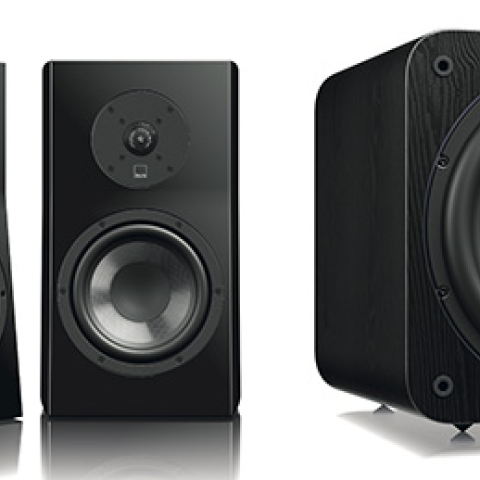
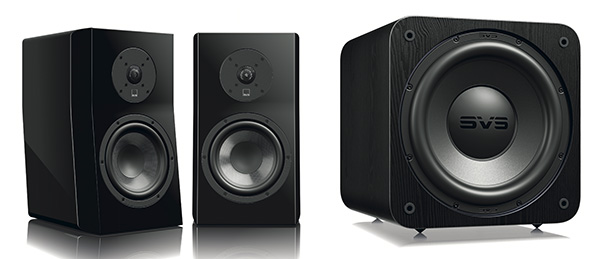
Apparently, SVS felt my pain. The Youngstown, Ohio–based company has taken on two challenges in developing the Ultra Evolution Bookshelf speakers ($1200/pair) and the SB-3000 R|Evolution subwoofer ($1300): get room-filling sound out of small boxes that will fit many living spaces, and simplify subwoofer setup and adjustment.
For the former, the company employed all sorts of new tech and engineering, detailed later. For the latter, they designed the subwoofer with a Bluetooth transceiver and a phone- or tablet-based control app. Every parameter that can be adjusted via a menu tree and tiny OLED display on the back of the unit can be adjusted from the app, from the listening seat.
I'm reviewing the speakers and subwoofer together at the suggestion of SVS's Nick Brown, VP of marketing (footnote 1). It's worth emphasizing: The speakers and subwoofer can be purchased separately. Indeed, SVS's website boasts about the bass energy the Ultra Evolution Bookshelf speakers can generate on their own: spec'd at –3dB at 40Hz. Not bad. But although they present a decent low end on their own, to my ears they excelled with the added whomp and weight of the subwoofer, working as a system to resemble full-sized speakers capable of delivering a house-rocking beat at dance party listening levels. Combined, the speakers and subwoofer are smaller and lighter than one of my reference Bowers & Wilkins 808s (and just over the cost of a single SVS Ultra Evolution Pinnacle, the top-line full-range floorstander). So their ability to deliver that much clean, dynamic sound impressed me greatly.
 SVS's Brown put it this way: Whether to use the Ultra Evolution Bookshelf with a subwoofer "is not a binary recommendation. They are very capable standmount speakers, ... more than enough for many listeners. But for those who want the biggest possible soundstage with the ability to extend into infrasonic ranges, a properly dialed-in subwoofer will only be a positive."
I asked Brown: What sort of audio gear does SVS think goes well with this 2.1 speaker/subwoofer system? He replied, "Everything from entry-level AV receivers that may be used in a home theater to tube amplifiers with turntables, and high-performance integrated models paired with AV streamers. Our goal is to craft a speaker that can capably handle the demands of discerning audiophiles and home theater fans and all the gear they may use."
Brown told me that SVS uses a variety of music and movie content for reference as they develop their speakers: "We use a wide range of content that covers nearly every genre of music and movies. That said, a lot of these music tracks are chosen not based on genre but rather for specific musical events that help us identify details about the tonal balance, dynamics, transient response, imaging, and so on. We always test with a wider range of both music and movies, since we need our products to be authentic and neutral delivery systems for every kind of listener. As for music, some of the tracks that act as a first gate for the voicing come from Bob Dylan, Norah Jones, Miles Davis, Beck, Miranda Lambert, Tool, Nine Inch Nails, Grateful Dead, and many more in the realms of classical, jazz, rock, metal, and electronic music. We cover all kinds of instrumentation from single piano or solo voice to large ensembles and fully synthesized tracks."
SVS's Brown put it this way: Whether to use the Ultra Evolution Bookshelf with a subwoofer "is not a binary recommendation. They are very capable standmount speakers, ... more than enough for many listeners. But for those who want the biggest possible soundstage with the ability to extend into infrasonic ranges, a properly dialed-in subwoofer will only be a positive."
I asked Brown: What sort of audio gear does SVS think goes well with this 2.1 speaker/subwoofer system? He replied, "Everything from entry-level AV receivers that may be used in a home theater to tube amplifiers with turntables, and high-performance integrated models paired with AV streamers. Our goal is to craft a speaker that can capably handle the demands of discerning audiophiles and home theater fans and all the gear they may use."
Brown told me that SVS uses a variety of music and movie content for reference as they develop their speakers: "We use a wide range of content that covers nearly every genre of music and movies. That said, a lot of these music tracks are chosen not based on genre but rather for specific musical events that help us identify details about the tonal balance, dynamics, transient response, imaging, and so on. We always test with a wider range of both music and movies, since we need our products to be authentic and neutral delivery systems for every kind of listener. As for music, some of the tracks that act as a first gate for the voicing come from Bob Dylan, Norah Jones, Miles Davis, Beck, Miranda Lambert, Tool, Nine Inch Nails, Grateful Dead, and many more in the realms of classical, jazz, rock, metal, and electronic music. We cover all kinds of instrumentation from single piano or solo voice to large ensembles and fully synthesized tracks."
 Evolution to the Ultra
My colleague Sasha Matson ably reviewed the SVS Ultra Evolution Pinnacle back in September 2024; refer there to learn the company's history. Its background was subwoofers. SVS branched out to making loudspeakers in 2012.
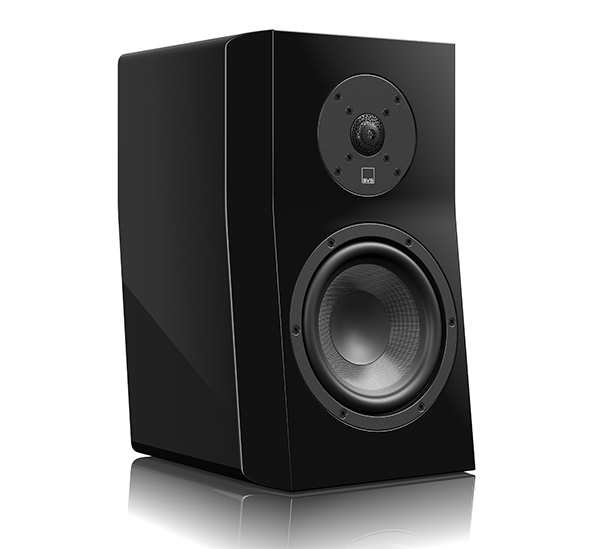
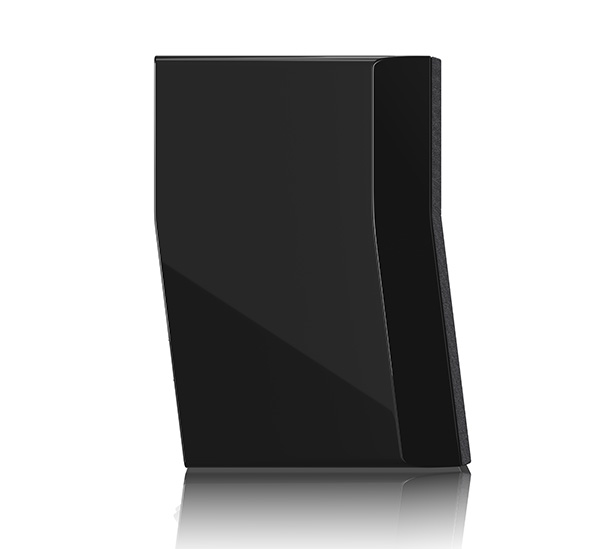
You'll also learn how chief designer Smith Freeman uses the cabinet shapes in the Ultra Evolution series to physically time-align the drivers. The same design ideas applied to the Ultra Evolution Pinnacle have been scaled down to a standmount rear-ported cabinet for the Ultra Evolution Bookshelf. The cabinet is 15.04" H × 8.66" W × 11.64" D (apparently designed to metric, not English, measurements) and sort of C-shaped so that the acoustical centers of the 1" dome tweeter and 6.5" woofer are on the same vertical plane. The idea is to get the output of both speakers at the same microsecond, which then to arrive at the listener's ears makes the speaker sound like a single point source rather than "treble on top, bass on the bottom" separation. In many real-world listening spaces, the speakers and room fight each other to some degree. It's good engineering to assure the speaker isn't fighting itself; time alignment is a force multiplier when it's executed correctly.
Brown said the Ultra Evolution line is the first series of SVS designs with time-aligned drivers. The company touts the benefit of physically time-aligning the drivers thusly: "The result is improved linearity and directionality throughout the crossover frequencies and a more accurate soundstage." The symmetric second-order Linkwitz-Riley crossover frequency is 1.8kHz, in the critical upper midrange. Not a place for misalignment.
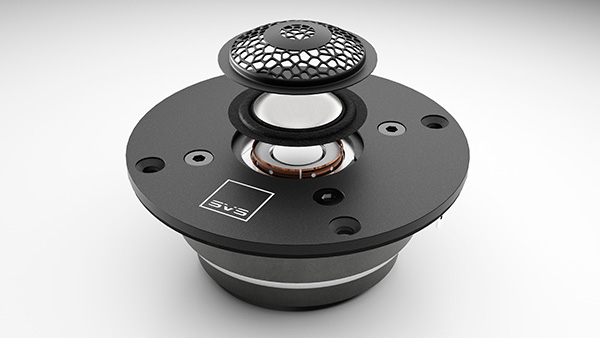 The drivers—a 1" "diamond-coated" dome tweeter and a 6.5" "composite glass-fiber" woofer—are mounted on a 1"-thick MDF baffle. The rest of the cabinet and its internal bracing is made from ¾"-thick material. The baffle edges are chamfered and the drivers flush-mounted, which according to SVS reduces "edge diffraction and improves on-axis and off-axis high-frequency response." The front grilles are cloth, held on with magnets.
Each speaker weighs about 19lb, not as heavy as some standmounts made from more exotic materials but not lightweight. They did not rattle, shake, or move around as they reproduced music and TV/movie sounds (dialog, sound effects). They stood their ground and delivered clean audio, as loud as I cared to take them (footnote 2).
amones
On the down low
The drivers—a 1" "diamond-coated" dome tweeter and a 6.5" "composite glass-fiber" woofer—are mounted on a 1"-thick MDF baffle. The rest of the cabinet and its internal bracing is made from ¾"-thick material. The baffle edges are chamfered and the drivers flush-mounted, which according to SVS reduces "edge diffraction and improves on-axis and off-axis high-frequency response." The front grilles are cloth, held on with magnets.
Each speaker weighs about 19lb, not as heavy as some standmounts made from more exotic materials but not lightweight. They did not rattle, shake, or move around as they reproduced music and TV/movie sounds (dialog, sound effects). They stood their ground and delivered clean audio, as loud as I cared to take them (footnote 2).
amones
On the down low
The SB-3000 R|Evolution is the sealed-box front-firing version of its subwoofer line that also includes the PB-3000 R|Evolution, which comes in a larger cabinet with two large front ports under the same 13" high-excursion driver and costs an extra $500. There's also the 3000 Micro R|Evolution, which features two side-firing 9" drivers in a substantially smaller, lighter cabinet (priced $300 below the SB-3000 R|Evolution). The company also makes scaled-up versions of the sealed-box and ported subwoofers with 15" and 17" drivers. Which brings to mind the theater release of Earthquake, in Sensurround! (footnote 3)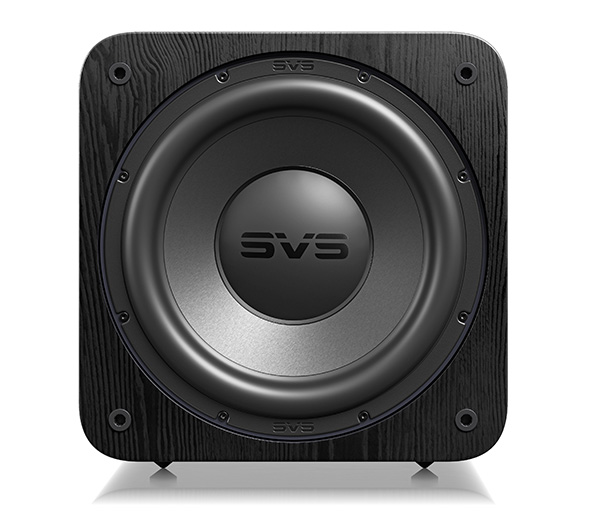 With a cabinet measuring 15.6" H × 15.2" W × 16.8" D, the SB-3000 R|Evolution will fit most spaces that can accommodate the Ultra Evolution Bookshelf speakers. Its frequency response is spec'd at 17–230Hz, ±3dB, and the anechoic response graph presented at SVS's website indicates it can hold its own, nearly flat, well into the bottom octave of music. SVS touts the "massively powerful 1200 watts continuous class-D (amplifier) with over 4000 watts of peak power." Yowza! Around press time, the SB-3000 added Auto EQ.
e
Perhaps its best feature is the SVS control app, which is available for iOS and Android devices. All the useful subwoofer parameters, like crossover frequency, output level, phase, and polarity, can be set from the listening seat. There's also a "Room Gain Compensation" setting, which sets a high-pass filter to restrict rumble nodes caused by room-subwoofer interactions. All this signal adjustment takes place in the digital realm, described by SVS as "advanced audiophile grade 56-bit digital audio processing" using an Analog Devices DSP chip. The app includes a link to a handy tutorial, and a printed Quick-Start guide is in the box.
Getting started
With a cabinet measuring 15.6" H × 15.2" W × 16.8" D, the SB-3000 R|Evolution will fit most spaces that can accommodate the Ultra Evolution Bookshelf speakers. Its frequency response is spec'd at 17–230Hz, ±3dB, and the anechoic response graph presented at SVS's website indicates it can hold its own, nearly flat, well into the bottom octave of music. SVS touts the "massively powerful 1200 watts continuous class-D (amplifier) with over 4000 watts of peak power." Yowza! Around press time, the SB-3000 added Auto EQ.
e
Perhaps its best feature is the SVS control app, which is available for iOS and Android devices. All the useful subwoofer parameters, like crossover frequency, output level, phase, and polarity, can be set from the listening seat. There's also a "Room Gain Compensation" setting, which sets a high-pass filter to restrict rumble nodes caused by room-subwoofer interactions. All this signal adjustment takes place in the digital realm, described by SVS as "advanced audiophile grade 56-bit digital audio processing" using an Analog Devices DSP chip. The app includes a link to a handy tutorial, and a printed Quick-Start guide is in the box.
Getting started
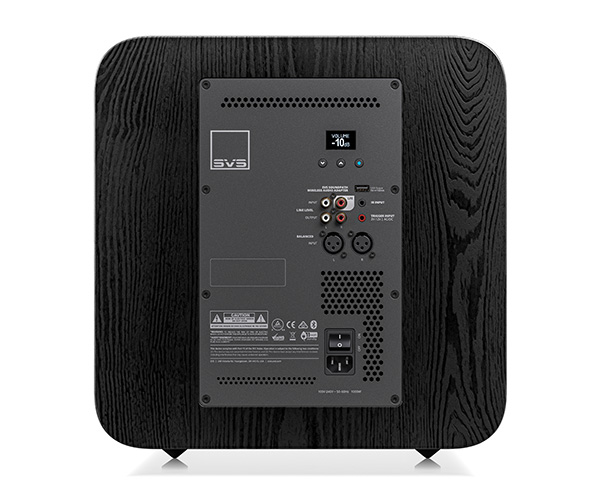
About that Quick-Start pamphlet: It's useful to read it as soon as you open the SB-3000 R|Evolution. Turns out, there's a process to unpacking the subwoofer, and the guide alerts you that it's printed on the carton. Unpacking involves flipping the box around a bit so the 55lb subwoofer slides out right side up. Once the box is out of the way, it's just a matter of some deadlifting to move it into position. The rear panel includes stereo balanced XLR and single-ended RCA inputs (which get summed to mono and digitized ahead of the DSP engine), and an RCA line-out pass-through which could connect a second subwoofer. If it's connected to a multichannel theater system, the right-channel RCA connector is where to connect the LFE output from the surround processor or disc player. There is also a 12V trigger and an IR input. For this review, I connected the SVS speakers and subwoofer to the Onkyo Icon Series A-50 streaming integrated amplifier I reviewed in the April 2026 issue (footnote 4). It's a midlevel multifunction device that is in the same high-value audiophile universe as these speakers. Everything turned out to be a good match. The speakers were connected to the amplifier's output posts, and the subwoofer was connected to the Preamp Out RCA jacks. I turned off the A-50's DSP tone-shaping controls, meaning the internal DAC sent full-resolution audio through the system and out the analog connections. This meant no room-correction software was engaged and that I didn't have access to bass or treble adjustments. I was hearing the SVS speakers and subwoofers as they were.
My setup was a bit untraditional, but it worked. The centers of the Ultra Evolution Bookshelf speakers were 112" apart, and each speaker was about 95" from the center of my face. The SB-3000 R|Evolution subwoofer was 65" from the center of my listening chair. My late-model Samsung 40" plasma TV was above the subwoofer, connected to the Onkyo A-50 via TosLink optical digital.
Listening to the speakers
For a few days, I left the subwoofer turned off and gauged the sound of the Ultra Evolution Bookshelf speakers alone. They replaced my go-to small-format speakers: KEF LS50 Metas. They sounded very different: better low-frequency extension (not boominess; they just go lower before crapping out) and a less "polite" top end (not shrill but definitely brighter-sounding). It was a more "American" sound, meaning a top end that emphasizes high percussion and a meaty, but not flabby, bass. Nothing in the sound was implied; it was all laid out there to hear. Over a couple of weeks, the woofers seemed to relax a little bit, and the deep bass revealed itself more, balancing the tweeter better. I noticed things like sibilance in poorly recorded TV and movie dialog less and low-frequency sound effects more. With music, the sound seemed to mellow, which was pleasing. It did not take more than a few dozen hours to break in these speakers, an admirable trait.
 I concentrated on my Imaging Test and Bass Test Qobuz playlists (footnote 5), very familiar music, to learn how these unfamiliar speakers sounded. Because of their crisp top end, they enhanced the feeling of space in the wide stereo image in front of me, with reverb tails fading out as subtly as the recording captured and a height and width extending well beyond the plane of the speaker boxes. Roger Waters's "The Ballad of Bill Hubbard" from Amused to Death (24/192 FLAC, Qobuz) was appropriately 180°, with the first dog bark in the distance heard far wide of the right speaker, the sound of a TV playing at low volume wide of the left speaker, and Jeff Beck's guitar dead center. Willie Nelson's voice on "Stardust" (24/88.2 FLAC, Qobuz, from the album of same title) was more nasal and less chesty than I'm accustomed to with the KEF LS50 Metas, but it stayed on the right side of harsh. Same with the cover of Radiohead's "Creep" by the Scala female chorus and Kolacny Brothers (from Dawn, 16/44.1 FLAC, Qobuz). The women's higher registers were present and accounted for but not to the level of ear fatigue.
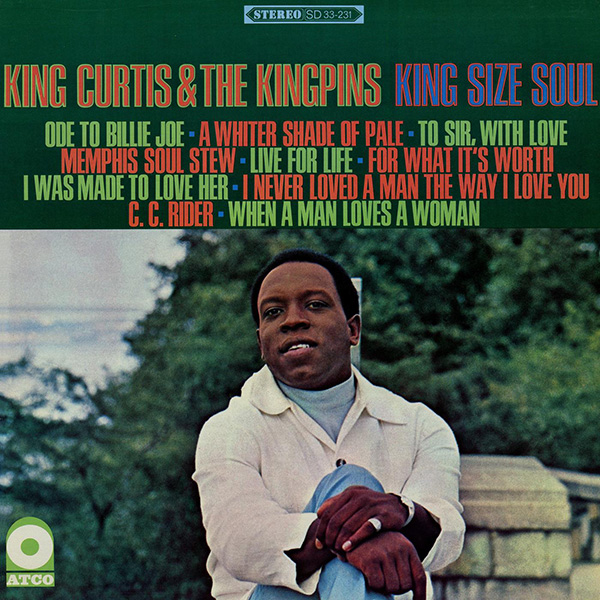
With Bass Test tracks, I explored how low these little shiny "Piano Gloss Black" boxes could go. They can indeed get down to 40Hz but cannot fully excite the room with gut-stirring LF energy. For instance, King Curtis's "Memphis Soul Stew" (16/44.1 FLAC, Qobuz, from King Size Soul) was plenty finger-poppin' snappy, but Tommy Cogbill's bass didn't engage the floor and walls. Same with Aretha Franklin's cover of "Bridge Over Troubled Water" (24/96 FLAC, Qobuz, from Aretha): It was clear that the left speaker was working hard to push out the electric bass but couldn't get all the air moving.
I concentrated on my Imaging Test and Bass Test Qobuz playlists (footnote 5), very familiar music, to learn how these unfamiliar speakers sounded. Because of their crisp top end, they enhanced the feeling of space in the wide stereo image in front of me, with reverb tails fading out as subtly as the recording captured and a height and width extending well beyond the plane of the speaker boxes. Roger Waters's "The Ballad of Bill Hubbard" from Amused to Death (24/192 FLAC, Qobuz) was appropriately 180°, with the first dog bark in the distance heard far wide of the right speaker, the sound of a TV playing at low volume wide of the left speaker, and Jeff Beck's guitar dead center. Willie Nelson's voice on "Stardust" (24/88.2 FLAC, Qobuz, from the album of same title) was more nasal and less chesty than I'm accustomed to with the KEF LS50 Metas, but it stayed on the right side of harsh. Same with the cover of Radiohead's "Creep" by the Scala female chorus and Kolacny Brothers (from Dawn, 16/44.1 FLAC, Qobuz). The women's higher registers were present and accounted for but not to the level of ear fatigue.
With Bass Test tracks, I explored how low these little shiny "Piano Gloss Black" boxes could go. They can indeed get down to 40Hz but cannot fully excite the room with gut-stirring LF energy. For instance, King Curtis's "Memphis Soul Stew" (16/44.1 FLAC, Qobuz, from King Size Soul) was plenty finger-poppin' snappy, but Tommy Cogbill's bass didn't engage the floor and walls. Same with Aretha Franklin's cover of "Bridge Over Troubled Water" (24/96 FLAC, Qobuz, from Aretha): It was clear that the left speaker was working hard to push out the electric bass but couldn't get all the air moving.
 Will this matter in a small space like an apartment, where listening levels might be constrained by neighborly conduct? I would say yes. The lower the listening level, the less the speakers can push low-frequency energy through their little woofers. Indeed, that scenario of SPL-constrained listening may be the perfect argument—and segue—to add a subwoofer.
Building the foundation after the house
Will this matter in a small space like an apartment, where listening levels might be constrained by neighborly conduct? I would say yes. The lower the listening level, the less the speakers can push low-frequency energy through their little woofers. Indeed, that scenario of SPL-constrained listening may be the perfect argument—and segue—to add a subwoofer.
Building the foundation after the house
Adding a subwoofer to a stereo system is a bit like adding a basement and foundation after a house has already been built: So many things can go wrong. Just as the house framing needs to attach precisely to the foundation, so must a pair of speakers integrate with a subwoofer, which is in a separate cabinet located in a different part of the room (footnote 6). Luckily, the SVS SB-3000 R|Evolution includes that powerful DSP engine and enough sound-shaping controls to make it lock in with the main speakers even if it's placed some distance away from them. SVS's website also includes a Subwoofer Matching Tool and extensive FAQs focused on proper setup and operation of their products, and the subwoofer control app has info/help text related to each screen. First, with the subwoofer turned off, I used the dual-mono pink noise track on Stereophile's Editor's Choice CD (footnote 7) to set the SPL at my listening seat at 85dB. I noted where the Onkyo amp's volume control was, taking the level number from its control app. Then I listened to some streaming tracks to make sure that was a comfortable listening level. By and large, it was. Super-crunched, loud-all-the-time music needed to be turned down a few dB, and more dynamic classical and jazz needed to be turned up a few dB. The key point was, I had my reference zone to set the subwoofer.
With the SVS app, at the Low Pass Filter screen, I set it to 80Hz and a –12dB/octave slope. I figured, correctly, that it would be beneficial to have some overlap with the Ultra Evolution Bookshelves' woofers, so the bass energy wouldn't have a dropoff and then go down to the floor. By default, the low-pass filter is turned on. It can be turned off if the subwoofer's signal source is the LFE channel from a surround processor or movie-disc player. From there it was a matter of setting the right volume level for the subwoofer. In my setup, –15dB seemed the magic zone, the point at which there was noticeable added heft and movement of air in the room without the subwoofer seeming to poke out away from the speakers.
It was like the whole system got bigger and the speakers seemed like they were floorstanding. It became the kind of listening experience I'm accustomed to with my B&W speakers: full-sized and lifelike. It made me think: Little speakers alone, and headphones for that matter, can never sound this exciting and alive.
First, with the subwoofer turned off, I used the dual-mono pink noise track on Stereophile's Editor's Choice CD (footnote 7) to set the SPL at my listening seat at 85dB. I noted where the Onkyo amp's volume control was, taking the level number from its control app. Then I listened to some streaming tracks to make sure that was a comfortable listening level. By and large, it was. Super-crunched, loud-all-the-time music needed to be turned down a few dB, and more dynamic classical and jazz needed to be turned up a few dB. The key point was, I had my reference zone to set the subwoofer.
With the SVS app, at the Low Pass Filter screen, I set it to 80Hz and a –12dB/octave slope. I figured, correctly, that it would be beneficial to have some overlap with the Ultra Evolution Bookshelves' woofers, so the bass energy wouldn't have a dropoff and then go down to the floor. By default, the low-pass filter is turned on. It can be turned off if the subwoofer's signal source is the LFE channel from a surround processor or movie-disc player. From there it was a matter of setting the right volume level for the subwoofer. In my setup, –15dB seemed the magic zone, the point at which there was noticeable added heft and movement of air in the room without the subwoofer seeming to poke out away from the speakers.
It was like the whole system got bigger and the speakers seemed like they were floorstanding. It became the kind of listening experience I'm accustomed to with my B&W speakers: full-sized and lifelike. It made me think: Little speakers alone, and headphones for that matter, can never sound this exciting and alive.
 I also experimented with the subwoofer's phase and polarity controls, opting to keep them at the default 0° phase shift and positive polarity. There's also a built-in DSP parametric equalizer for those who want to dive down the bass-management rabbit hole. In addition, there's a setting called Room Gain Compensation, which allows a high-pass filter to be engaged, with slope and frequency settings. This is a way to attack bass nodes in the room. I didn't need it in my setup, but I can see it being handy in a home theater setup with several subwoofers.
A group of desirable settings can be saved as a Preset, which can be recalled later. The bass-management journey may lead one to have one preset for music listening and a different preset for movie watching, for example. Having all this flexibility available at the listening seat is a real step forward.
I also experimented with the subwoofer's phase and polarity controls, opting to keep them at the default 0° phase shift and positive polarity. There's also a built-in DSP parametric equalizer for those who want to dive down the bass-management rabbit hole. In addition, there's a setting called Room Gain Compensation, which allows a high-pass filter to be engaged, with slope and frequency settings. This is a way to attack bass nodes in the room. I didn't need it in my setup, but I can see it being handy in a home theater setup with several subwoofers.
A group of desirable settings can be saved as a Preset, which can be recalled later. The bass-management journey may lead one to have one preset for music listening and a different preset for movie watching, for example. Having all this flexibility available at the listening seat is a real step forward.
 Listening in stereo 2.1
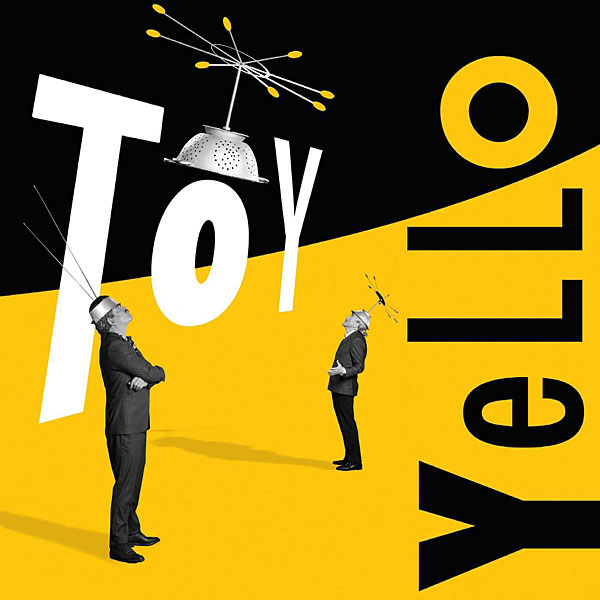
With the subwoofer and speakers integrated to my liking, I returned to my Bass Test playlist. Although I wasn't surprised, I constantly smiled at the beat impact and visceral dimension that the added LF heft brought to the party. Aretha's cover of "Bridge Over Troubled Water" now sounded as big as it should, with the electric bass left and the Hammond organ right, sometimes doubling up on the low notes. Yello's "Electrified II" (24/48 FLAC, Qobuz, from Toy) was positively electrifying, the creature from the New York dance floor emerging in front of me. Alice in Chains's "Rooster" (24/44.1 FLAC, Qobuz, from Dirt) was full-sized menacing. And Lee "Scratch" Perry's "100lbs of Summer" (16/44.1 FLAC, Qobuz, from King Perry) rocked the floor and shook the walls, as it should.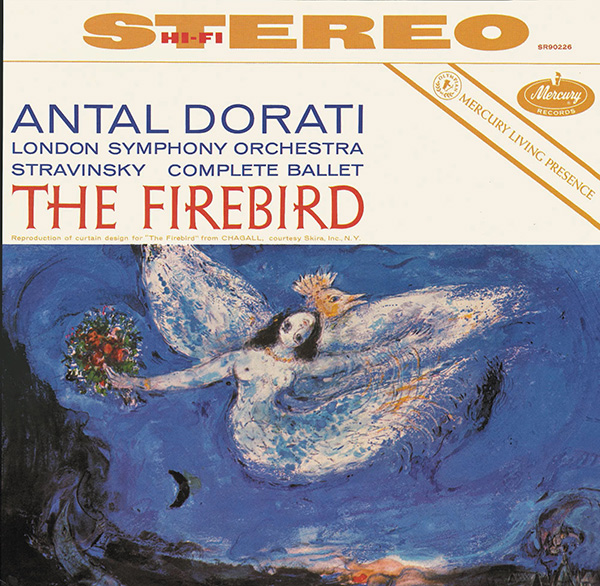 The subwoofer also helped music that is more subtle in the low end. The added heft to the double basses and low percussion in my remaster of Stravinsky's Firebird (24/192 FLAC, Qobuz; footnote 8), as performed by the London Symphony Orchestra and Antal Doráti, made the small-format speakers seem like they were 4'-tall floorstanders. Likewise for George Morrow's acoustic bass on Study in Brown by Clifford Brown and Max Roach (16/44.1 FLAC, Qobuz), especially the tune "George's Dilemma."
TV/movie sound
The subwoofer also helped music that is more subtle in the low end. The added heft to the double basses and low percussion in my remaster of Stravinsky's Firebird (24/192 FLAC, Qobuz; footnote 8), as performed by the London Symphony Orchestra and Antal Doráti, made the small-format speakers seem like they were 4'-tall floorstanders. Likewise for George Morrow's acoustic bass on Study in Brown by Clifford Brown and Max Roach (16/44.1 FLAC, Qobuz), especially the tune "George's Dilemma."
TV/movie sound
Today, it's more common to have a video screen connected to the hi-fi system. I much prefer listening to the varied and sometimes hard-to-discern dialog recordings of modern TV and movies through full-range and well-resolving speakers. If I still can't clearly understand the words, I move on to other viewing options. Unlike the kids these days, I refuse to resort to subtitles (take that, Christopher Nolan and other directors who seem to relish mumbled and gasped dialog). Streamed via Wi-Fi through my cheap little Roku gadget and out the optical digital output of my Samsung TV, the video sound through the Onkyo/SVS system was often shockingly good. I watched a few movies from different eras: Slap Shot from the 1970s, Wayne's World from the 1990s, and the new HBO docuseries The Dark Wizard, about the late rock climber/BASE jumper Dean Potter. It was interesting to hear how much sound production has evolved from 1970s frequency-limited mono to the '80s mix-tape sound, to full-range full-sized present day, and how wide-image stereo sound is now a standard part of the video experience. Video streaming doesn't always do the soundtrack justice, but it often works better than I expect, which validates my preference for connecting a flat screen to something better than its wimpy built-in speakers. Wrapping up
With the Ultra Evolution Bookshelf standmount speakers and the SB-3000 R|Evolution subwoofer, SVS has developed a 2.1 system that makes as much full-range sound as a pair of floorstanding speakers but takes up less room and likely makes a smaller dent in the bank account. In a smaller listening space, it produced life-sized sound. Even as standalone speakers, the Ultra Evolution Bookshelves produce more bass energy than would seem possible from their cabinet size. Their top end tends toward brightness, but I didn't hear it as harsh or glaring. It meshed just fine with the enhanced low end when the subwoofer was added.
SVS sells direct and through online retailers. The company is small enough that human beings answer the phone. Its website and phone support seem robust. All its speakers can be auditioned through a 45-day "risk-free in-home trial," and a 5-year "unconditional" warranty is standard. Brown said SVS doesn't own the Chinese factory that makes its speakers and subwoofers, but "we employ about a dozen full-time employees in [the] facilities, including engineers and quality assurance managers. SVS is very much into the entire design, engineering, and manufacturing process." Manufacturing in China enables SVS's competitive pricing.
If you already own a midlevel front end and amplifier and want to up the size and impact of your speakers, consider the concept of a 2.1 "sub-sat" system instead of lower-end floorstanders—especially if the system will be playing both music and video sound. The SVS system I reviewed offered a nice integration of the pure enjoyment of high-fidelity music and fully experiencing all the buzzes, beeps, and booms of movie sound. In that, they are a stellar value.
Footnote 1: And with the enthusiastic approval of Editor Jim Austin. Footnote 2: I'm not a loudness fiend, but I want the system to play loud enough for the sound to open up and fill the space. With the SVS speakers and subwoofer, most music and video sound was comfortably loud if I set a reference level of 85dB SPL at my listening seat, using the dual-mono pink noise track from Stereophile's Editor's Choice CD. I used a RadioShack SPL meter with A-weighting.
Footnote 3: See tinyurl.com/58zvs8ku.
Footnote 4: Onkyo was kind enough to let me keep the review unit on an extended loan, and it now forms the heart of my Junior System, which surrounds my Samsung plasma TV downstairs.
Footnote 5: Imaging Test: open.qobuz.com/playlist/22204090; Bass Test: open.qobuz.com/playlist/21395182.
Footnote 6: There is a compelling argument to install subwoofers in pairs and locate them under or directly next to the main speakers. Alas, this isn't budget- or layout-feasible in many systems.
Footnote 7: This CD is out-of print, but the test tone files can be downloaded free-of-charge from tinyurl.com/yfkvayat.—John Atkinson
Footnote 8: See open.qobuz.com/album/wx9l570fav7eb. The Firebird (complete ballet) remaster is also included in this CD box set: tinyurl.com/449tb7ph.
SVS's Brown put it this way: Whether to use the Ultra Evolution Bookshelf with a subwoofer "is not a binary recommendation. They are very capable standmount speakers, ... more than enough for many listeners. But for those who want the biggest possible soundstage with the ability to extend into infrasonic ranges, a properly dialed-in subwoofer will only be a positive."
Evolution to the UltraMy colleague Sasha Matson ably reviewed the SVS Ultra Evolution Pinnacle back in September 2024; refer there to learn the company's history. Its background was subwoofers. SVS branched out to making loudspeakers in 2012.
The drivers—a 1" "diamond-coated" dome tweeter and a 6.5" "composite glass-fiber" woofer—are mounted on a 1"-thick MDF baffle. The rest of the cabinet and its internal bracing is made from ¾"-thick material. The baffle edges are chamfered and the drivers flush-mounted, which according to SVS reduces "edge diffraction and improves on-axis and off-axis high-frequency response." The front grilles are cloth, held on with magnets.
The SB-3000 R|Evolution is the sealed-box front-firing version of its subwoofer line that also includes the PB-3000 R|Evolution, which comes in a larger cabinet with two large front ports under the same 13" high-excursion driver and costs an extra $500. There's also the 3000 Micro R|Evolution, which features two side-firing 9" drivers in a substantially smaller, lighter cabinet (priced $300 below the SB-3000 R|Evolution). The company also makes scaled-up versions of the sealed-box and ported subwoofers with 15" and 17" drivers. Which brings to mind the theater release of Earthquake, in Sensurround! (footnote 3)
With a cabinet measuring 15.6" H × 15.2" W × 16.8" D, the SB-3000 R|Evolution will fit most spaces that can accommodate the Ultra Evolution Bookshelf speakers. Its frequency response is spec'd at 17–230Hz, ±3dB, and the anechoic response graph presented at SVS's website indicates it can hold its own, nearly flat, well into the bottom octave of music. SVS touts the "massively powerful 1200 watts continuous class-D (amplifier) with over 4000 watts of peak power." Yowza! Around press time, the SB-3000 added Auto EQ.
eAbout that Quick-Start pamphlet: It's useful to read it as soon as you open the SB-3000 R|Evolution. Turns out, there's a process to unpacking the subwoofer, and the guide alerts you that it's printed on the carton. Unpacking involves flipping the box around a bit so the 55lb subwoofer slides out right side up. Once the box is out of the way, it's just a matter of some deadlifting to move it into position. The rear panel includes stereo balanced XLR and single-ended RCA inputs (which get summed to mono and digitized ahead of the DSP engine), and an RCA line-out pass-through which could connect a second subwoofer. If it's connected to a multichannel theater system, the right-channel RCA connector is where to connect the LFE output from the surround processor or disc player. There is also a 12V trigger and an IR input. For this review, I connected the SVS speakers and subwoofer to the Onkyo Icon Series A-50 streaming integrated amplifier I reviewed in the April 2026 issue (footnote 4). It's a midlevel multifunction device that is in the same high-value audiophile universe as these speakers. Everything turned out to be a good match. The speakers were connected to the amplifier's output posts, and the subwoofer was connected to the Preamp Out RCA jacks. I turned off the A-50's DSP tone-shaping controls, meaning the internal DAC sent full-resolution audio through the system and out the analog connections. This meant no room-correction software was engaged and that I didn't have access to bass or treble adjustments. I was hearing the SVS speakers and subwoofers as they were.
For a few days, I left the subwoofer turned off and gauged the sound of the Ultra Evolution Bookshelf speakers alone. They replaced my go-to small-format speakers: KEF LS50 Metas. They sounded very different: better low-frequency extension (not boominess; they just go lower before crapping out) and a less "polite" top end (not shrill but definitely brighter-sounding). It was a more "American" sound, meaning a top end that emphasizes high percussion and a meaty, but not flabby, bass. Nothing in the sound was implied; it was all laid out there to hear. Over a couple of weeks, the woofers seemed to relax a little bit, and the deep bass revealed itself more, balancing the tweeter better. I noticed things like sibilance in poorly recorded TV and movie dialog less and low-frequency sound effects more. With music, the sound seemed to mellow, which was pleasing. It did not take more than a few dozen hours to break in these speakers, an admirable trait.
I concentrated on my Imaging Test and Bass Test Qobuz playlists (footnote 5), very familiar music, to learn how these unfamiliar speakers sounded. Because of their crisp top end, they enhanced the feeling of space in the wide stereo image in front of me, with reverb tails fading out as subtly as the recording captured and a height and width extending well beyond the plane of the speaker boxes. Roger Waters's "The Ballad of Bill Hubbard" from Amused to Death (24/192 FLAC, Qobuz) was appropriately 180°, with the first dog bark in the distance heard far wide of the right speaker, the sound of a TV playing at low volume wide of the left speaker, and Jeff Beck's guitar dead center. Willie Nelson's voice on "Stardust" (24/88.2 FLAC, Qobuz, from the album of same title) was more nasal and less chesty than I'm accustomed to with the KEF LS50 Metas, but it stayed on the right side of harsh. Same with the cover of Radiohead's "Creep" by the Scala female chorus and Kolacny Brothers (from Dawn, 16/44.1 FLAC, Qobuz). The women's higher registers were present and accounted for but not to the level of ear fatigue.
With Bass Test tracks, I explored how low these little shiny "Piano Gloss Black" boxes could go. They can indeed get down to 40Hz but cannot fully excite the room with gut-stirring LF energy. For instance, King Curtis's "Memphis Soul Stew" (16/44.1 FLAC, Qobuz, from King Size Soul) was plenty finger-poppin' snappy, but Tommy Cogbill's bass didn't engage the floor and walls. Same with Aretha Franklin's cover of "Bridge Over Troubled Water" (24/96 FLAC, Qobuz, from Aretha): It was clear that the left speaker was working hard to push out the electric bass but couldn't get all the air moving.
Will this matter in a small space like an apartment, where listening levels might be constrained by neighborly conduct? I would say yes. The lower the listening level, the less the speakers can push low-frequency energy through their little woofers. Indeed, that scenario of SPL-constrained listening may be the perfect argument—and segue—to add a subwoofer.
Adding a subwoofer to a stereo system is a bit like adding a basement and foundation after a house has already been built: So many things can go wrong. Just as the house framing needs to attach precisely to the foundation, so must a pair of speakers integrate with a subwoofer, which is in a separate cabinet located in a different part of the room (footnote 6). Luckily, the SVS SB-3000 R|Evolution includes that powerful DSP engine and enough sound-shaping controls to make it lock in with the main speakers even if it's placed some distance away from them. SVS's website also includes a Subwoofer Matching Tool and extensive FAQs focused on proper setup and operation of their products, and the subwoofer control app has info/help text related to each screen.
First, with the subwoofer turned off, I used the dual-mono pink noise track on Stereophile's Editor's Choice CD (footnote 7) to set the SPL at my listening seat at 85dB. I noted where the Onkyo amp's volume control was, taking the level number from its control app. Then I listened to some streaming tracks to make sure that was a comfortable listening level. By and large, it was. Super-crunched, loud-all-the-time music needed to be turned down a few dB, and more dynamic classical and jazz needed to be turned up a few dB. The key point was, I had my reference zone to set the subwoofer.
With the SVS app, at the Low Pass Filter screen, I set it to 80Hz and a –12dB/octave slope. I figured, correctly, that it would be beneficial to have some overlap with the Ultra Evolution Bookshelves' woofers, so the bass energy wouldn't have a dropoff and then go down to the floor. By default, the low-pass filter is turned on. It can be turned off if the subwoofer's signal source is the LFE channel from a surround processor or movie-disc player. From there it was a matter of setting the right volume level for the subwoofer. In my setup, –15dB seemed the magic zone, the point at which there was noticeable added heft and movement of air in the room without the subwoofer seeming to poke out away from the speakers.
I also experimented with the subwoofer's phase and polarity controls, opting to keep them at the default 0° phase shift and positive polarity. There's also a built-in DSP parametric equalizer for those who want to dive down the bass-management rabbit hole. In addition, there's a setting called Room Gain Compensation, which allows a high-pass filter to be engaged, with slope and frequency settings. This is a way to attack bass nodes in the room. I didn't need it in my setup, but I can see it being handy in a home theater setup with several subwoofers.
A group of desirable settings can be saved as a Preset, which can be recalled later. The bass-management journey may lead one to have one preset for music listening and a different preset for movie watching, for example. Having all this flexibility available at the listening seat is a real step forward.
Listening in stereo 2.1With the subwoofer and speakers integrated to my liking, I returned to my Bass Test playlist. Although I wasn't surprised, I constantly smiled at the beat impact and visceral dimension that the added LF heft brought to the party. Aretha's cover of "Bridge Over Troubled Water" now sounded as big as it should, with the electric bass left and the Hammond organ right, sometimes doubling up on the low notes. Yello's "Electrified II" (24/48 FLAC, Qobuz, from Toy) was positively electrifying, the creature from the New York dance floor emerging in front of me. Alice in Chains's "Rooster" (24/44.1 FLAC, Qobuz, from Dirt) was full-sized menacing. And Lee "Scratch" Perry's "100lbs of Summer" (16/44.1 FLAC, Qobuz, from King Perry) rocked the floor and shook the walls, as it should.
The subwoofer also helped music that is more subtle in the low end. The added heft to the double basses and low percussion in my remaster of Stravinsky's Firebird (24/192 FLAC, Qobuz; footnote 8), as performed by the London Symphony Orchestra and Antal Doráti, made the small-format speakers seem like they were 4'-tall floorstanders. Likewise for George Morrow's acoustic bass on Study in Brown by Clifford Brown and Max Roach (16/44.1 FLAC, Qobuz), especially the tune "George's Dilemma."
Today, it's more common to have a video screen connected to the hi-fi system. I much prefer listening to the varied and sometimes hard-to-discern dialog recordings of modern TV and movies through full-range and well-resolving speakers. If I still can't clearly understand the words, I move on to other viewing options. Unlike the kids these days, I refuse to resort to subtitles (take that, Christopher Nolan and other directors who seem to relish mumbled and gasped dialog). Streamed via Wi-Fi through my cheap little Roku gadget and out the optical digital output of my Samsung TV, the video sound through the Onkyo/SVS system was often shockingly good. I watched a few movies from different eras: Slap Shot from the 1970s, Wayne's World from the 1990s, and the new HBO docuseries The Dark Wizard, about the late rock climber/BASE jumper Dean Potter. It was interesting to hear how much sound production has evolved from 1970s frequency-limited mono to the '80s mix-tape sound, to full-range full-sized present day, and how wide-image stereo sound is now a standard part of the video experience. Video streaming doesn't always do the soundtrack justice, but it often works better than I expect, which validates my preference for connecting a flat screen to something better than its wimpy built-in speakers. Wrapping up
With the Ultra Evolution Bookshelf standmount speakers and the SB-3000 R|Evolution subwoofer, SVS has developed a 2.1 system that makes as much full-range sound as a pair of floorstanding speakers but takes up less room and likely makes a smaller dent in the bank account. In a smaller listening space, it produced life-sized sound. Even as standalone speakers, the Ultra Evolution Bookshelves produce more bass energy than would seem possible from their cabinet size. Their top end tends toward brightness, but I didn't hear it as harsh or glaring. It meshed just fine with the enhanced low end when the subwoofer was added.
Footnote 1: And with the enthusiastic approval of Editor Jim Austin. Footnote 2: I'm not a loudness fiend, but I want the system to play loud enough for the sound to open up and fill the space. With the SVS speakers and subwoofer, most music and video sound was comfortably loud if I set a reference level of 85dB SPL at my listening seat, using the dual-mono pink noise track from Stereophile's Editor's Choice CD. I used a RadioShack SPL meter with A-weighting.