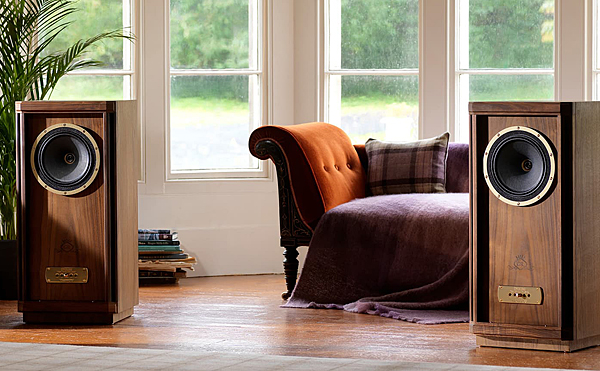
The Dual Concentric's tweeter uses an aluminum-magnesium– alloy dome driver with, as previously mentioned, Tannoy's Point Source Tulip Waveguide. The woofer part utilizes a 10", treated-paper-pulp cone with an HE twin-roll fabric surround and a 1 5/8" (42mm) edge-wound voice-coil. "The HE refers to the hard-edge, impregnated fabric surround on the bass driver, which stores less energy and gives it a faster and more articulate sound than its predecessors," Deal added.
"The high-frequency driver is a wide-dynamic-range compression unit," Deal wrote. "The Tulip Waveguide is a low-compression, phase-compensating device that allows the driver to exhibit high dynamic levels with little power. The throat of the low-frequency cone ... provides a second waveguide with acoustic impedance transformation to match the high-frequency radiation into the listening environment." The Stirling's Dual Concentric driver uses neodymium magnets and a diecast chassis. The loudspeaker's crossover includes ICW ClarityCaps for the high-frequency circuits and metalized film capacitors for low frequencies. To connect drivers and crossover to the outside world, the Stirling uses van den Hul CS-18 halogen-free, silver-plated cabling.
The Stirling Prestige Gold Reference stands a regal 33.5" high; it is 15.5" wide, 14.5" deep, and it weighs 50.7lb. Its nominal impedance is 8 ohms, and its reported sensitivity is 91dB/2.83V/m, which together should make it exceptionally easy to drive. The stated frequency response is 39Hz to 46kHz, –6dB.
"The speakers are built one at a time in matched pairs, fully finished and tested before tests are run," Deal added. "A test track is run on a reference speaker that's a perfect specimen called the Gold Sample. The newly built speaker is then tested against those measurements."
Setup
The Stirlings required more work on placement than the usual move-away-from-walls and toe-it-in ritual. Tannoy suggests positioning the speakers so that their projection axes intersect at a point slightly in front of the listening position. Tannoy also advises that the Stirlings should be no closer than 1m to sidewalls and at least 0.5m from the front wall. I ended up with the speakers 42" from the back wall, 60" from tweeter to tweeter, and 8' (2.4m) from my comfy listening chair. Had I been listening in a larger, deeper room, the hornlike Stirlings would probably have had me sitting farther back. In a comfortable sitting position, my ears are slightly above tweeter level. Someone suggested I slouch, but I found it made little difference. Along with traditional technology, the Stirling incorporates an interesting feature Tannoy calls energy control, which allows adjustment of the treble output. Treble response can be adjusted from Level (center) to +3.0 and +1.5, on the left, or to –1.5 and –3.0, on the right, which was counterintuitive. The resulting change in sound was anything but subtle, and it took a while to home in on the best treble setting for my listening room.
The speaker's treble, which at the neutral setting is somewhat forward, can be ameliorated by adjusting the energy control, but it is also affected by the grille. In contrast to any speaker I've previously auditioned, the Stirling sounded better with the grilles attached: its tone fuller, its treble more open and revealing, its low end weightier and better defined.
Listening
At its core a horn speaker, the Stirling is fast, communicative, coherent, and demonstrative. It was transparent to equipment and music sources while retaining its trademark sound. As noted, that sound can be adjusted to room conditions. The Stirling sounded balanced and exhibited enhanced coherence and more weight with the grilles in place and the energy control set to neutral. I also experimented with the energy control set to –1.5, which, at equivalent volume, resulted in weightier bass that at times was boomy.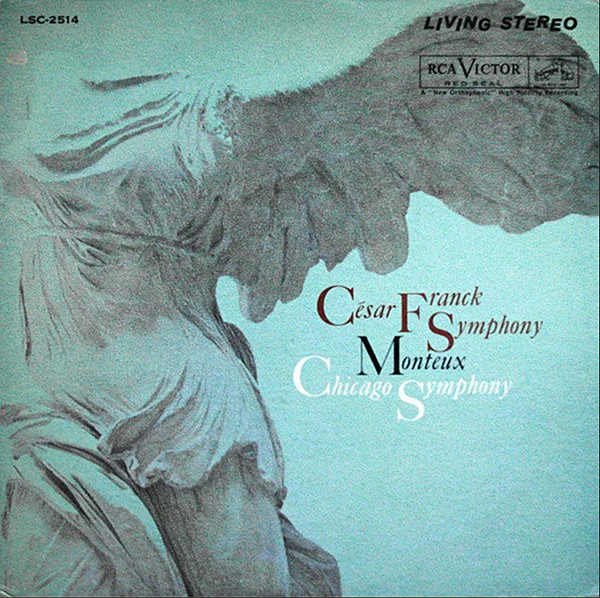 When I played César Franck's Symphony in D Minor, with the Chicago Symphony Orchestra under the baton of Pierre Monteux (LP, RCA LSC-2514), the Stirling boldly surged on orchestral climaxes without breaking up. The Stirling was so fast and expansive—with such stark dynamic contrasts—that I had to run to turn down the volume on my Sugden preamp for fear the room would burst. Similar moments occurred on Mahler's Symphony No.6, with the Chicago Symphony Orchestra under Sir Georg Solti (LP, London CSA-2227), and on Wagner's Tannhäuser, with the Vienna Philharmonic Orchestra, also with Solti conducting (LP, London OSA 1438).
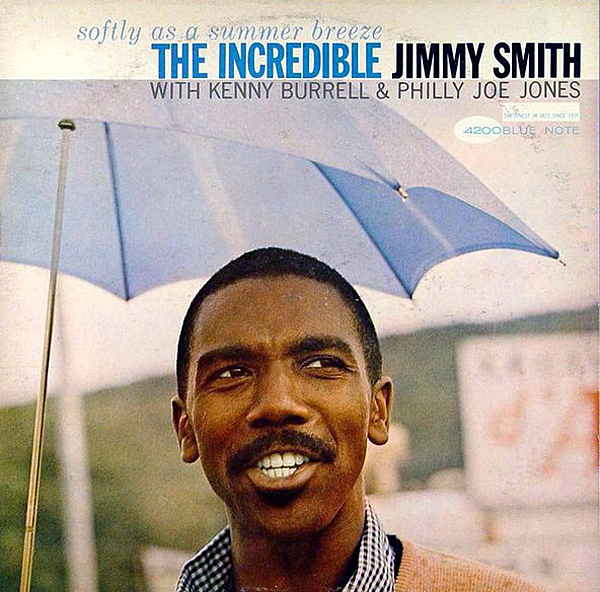 Playing the Stirlings with my Thorens TD 124 and its Ortofon SPU Classic GE Mk.II MC cartridge, through Shindo amplification, I found the sound saturated and blooming within a massive soundstage. The Stirling's clean, extended treble exposed surface noise on Jimmy Smith's "These Foolish Things," from Softly As a Summer Breeze (LP, Blue Note BLP 4200), but that did nothing to obscure the deep organ-pedal notes and the dense, physical, liquid textures of Kenny Burrell's guitar.
Whether I used solid state or tubed gear and whether my source was vinyl or digital, the Stirling had a special way with texture and physicality. Together with its lively sound, it made jazz and classical music corporeal, record after record.
The Stirling revealed the full, riveting microdetail in Caroline Shaw and the Attacca Quartet's album Orange (LP, Nonesuch 75597921434). String instruments were reproduced with rich, realistic tone with every string pluck; each draw of a bow sounded natural and visceral. Again, the Stirlings presented a room-filling soundstage that was grand and deep, though imaging was diffuse.
Playing the Stirlings with my Thorens TD 124 and its Ortofon SPU Classic GE Mk.II MC cartridge, through Shindo amplification, I found the sound saturated and blooming within a massive soundstage. The Stirling's clean, extended treble exposed surface noise on Jimmy Smith's "These Foolish Things," from Softly As a Summer Breeze (LP, Blue Note BLP 4200), but that did nothing to obscure the deep organ-pedal notes and the dense, physical, liquid textures of Kenny Burrell's guitar.
Whether I used solid state or tubed gear and whether my source was vinyl or digital, the Stirling had a special way with texture and physicality. Together with its lively sound, it made jazz and classical music corporeal, record after record.
The Stirling revealed the full, riveting microdetail in Caroline Shaw and the Attacca Quartet's album Orange (LP, Nonesuch 75597921434). String instruments were reproduced with rich, realistic tone with every string pluck; each draw of a bow sounded natural and visceral. Again, the Stirlings presented a room-filling soundstage that was grand and deep, though imaging was diffuse.
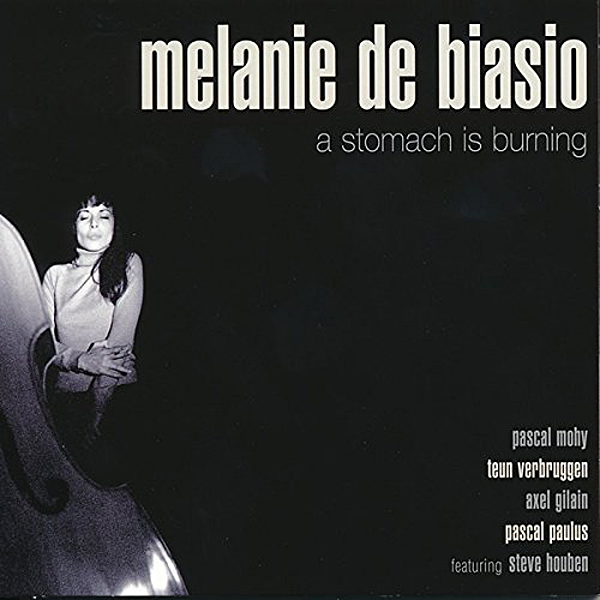 Belgian vocalist Melanie De Biasio, on her album A Stomach Is Burning (LP, Igloo IGL193LP), had excellent tone, highlighted by cymbals and brushed snare drum that the Stirlings presented in deep ambience and that special sense of live performance that horn and hornlike speakers can create. The Stirling's treble extended so high that I easily noted percussionists playing out of time even on delicate instruments such as the triangle. Well-recorded orchestral music sounded fantastic on the Stirlings. Their Dual Concentric drivers belted out the full, epic dynamics and deep-boweled thrills in records such as The Rare Wagner: Overtures and Marches (LP, EMI ASD 2837) and Kalinnikov's Symphony No.1 in G Minor (LP, Melodiya/EMI/His Master's Voice ASD 2720).
Exchanging the Shindos for the Sugden LA-4 preamplifier and the Pass Labs XA-25 power amplifier caused some diminution in tone and color but gains in resolution. Recordings had more ambience and faster decay, and the Stirling was better able to reveal differences in recordings and equipment. On the Wagner disc, images were better located and more precise, but the presentation lost some of its former bloom. The De Biasio LP showed roughly the same trade-off: more precise imaging, less saturation and immediacy. The soundstage remained large and full—a Stirling constant.
Belgian vocalist Melanie De Biasio, on her album A Stomach Is Burning (LP, Igloo IGL193LP), had excellent tone, highlighted by cymbals and brushed snare drum that the Stirlings presented in deep ambience and that special sense of live performance that horn and hornlike speakers can create. The Stirling's treble extended so high that I easily noted percussionists playing out of time even on delicate instruments such as the triangle. Well-recorded orchestral music sounded fantastic on the Stirlings. Their Dual Concentric drivers belted out the full, epic dynamics and deep-boweled thrills in records such as The Rare Wagner: Overtures and Marches (LP, EMI ASD 2837) and Kalinnikov's Symphony No.1 in G Minor (LP, Melodiya/EMI/His Master's Voice ASD 2720).
Exchanging the Shindos for the Sugden LA-4 preamplifier and the Pass Labs XA-25 power amplifier caused some diminution in tone and color but gains in resolution. Recordings had more ambience and faster decay, and the Stirling was better able to reveal differences in recordings and equipment. On the Wagner disc, images were better located and more precise, but the presentation lost some of its former bloom. The De Biasio LP showed roughly the same trade-off: more precise imaging, less saturation and immediacy. The soundstage remained large and full—a Stirling constant.
 Changing to my Kuzma Stabi R turntable with the Luxman LMC-5 MC cartridge, music gained focus, with more body, less coloration, and a more fleshed-out midrange. The Stirlings were quick to lay bare these differences.
Conclusion
Changing to my Kuzma Stabi R turntable with the Luxman LMC-5 MC cartridge, music gained focus, with more body, less coloration, and a more fleshed-out midrange. The Stirlings were quick to lay bare these differences.
Conclusion
Like other speakers I've reviewed that have horn-loaded drive units, the Tannoy Stirling Prestige Gold Reference is fast, plays with marvelous dynamics, and presents a full, believable, densely populated soundstage. It requires careful setup, but once that's done, it rewards with excellent transparency, fine treble resolution, good midrange and bass fundamentals, and impressive textures. I'd go so far as to say that the Stirling, which just had its first price increase since 2013, is a bargain. Considering the adjustability of its treble output to accommodate different room sizes and conditions, the Stirling is an easy speaker to love. Despite changes at the company, the Tannoy legacy continues with the Stirling, which proudly carries the torch for a classic, timeless design.
The Stirlings required more work on placement than the usual move-away-from-walls and toe-it-in ritual. Tannoy suggests positioning the speakers so that their projection axes intersect at a point slightly in front of the listening position. Tannoy also advises that the Stirlings should be no closer than 1m to sidewalls and at least 0.5m from the front wall. I ended up with the speakers 42" from the back wall, 60" from tweeter to tweeter, and 8' (2.4m) from my comfy listening chair. Had I been listening in a larger, deeper room, the hornlike Stirlings would probably have had me sitting farther back. In a comfortable sitting position, my ears are slightly above tweeter level. Someone suggested I slouch, but I found it made little difference. Along with traditional technology, the Stirling incorporates an interesting feature Tannoy calls energy control, which allows adjustment of the treble output. Treble response can be adjusted from Level (center) to +3.0 and +1.5, on the left, or to –1.5 and –3.0, on the right, which was counterintuitive. The resulting change in sound was anything but subtle, and it took a while to home in on the best treble setting for my listening room.
At its core a horn speaker, the Stirling is fast, communicative, coherent, and demonstrative. It was transparent to equipment and music sources while retaining its trademark sound. As noted, that sound can be adjusted to room conditions. The Stirling sounded balanced and exhibited enhanced coherence and more weight with the grilles in place and the energy control set to neutral. I also experimented with the energy control set to –1.5, which, at equivalent volume, resulted in weightier bass that at times was boomy.
When I played César Franck's Symphony in D Minor, with the Chicago Symphony Orchestra under the baton of Pierre Monteux (LP, RCA LSC-2514), the Stirling boldly surged on orchestral climaxes without breaking up. The Stirling was so fast and expansive—with such stark dynamic contrasts—that I had to run to turn down the volume on my Sugden preamp for fear the room would burst. Similar moments occurred on Mahler's Symphony No.6, with the Chicago Symphony Orchestra under Sir Georg Solti (LP, London CSA-2227), and on Wagner's Tannhäuser, with the Vienna Philharmonic Orchestra, also with Solti conducting (LP, London OSA 1438).
Playing the Stirlings with my Thorens TD 124 and its Ortofon SPU Classic GE Mk.II MC cartridge, through Shindo amplification, I found the sound saturated and blooming within a massive soundstage. The Stirling's clean, extended treble exposed surface noise on Jimmy Smith's "These Foolish Things," from Softly As a Summer Breeze (LP, Blue Note BLP 4200), but that did nothing to obscure the deep organ-pedal notes and the dense, physical, liquid textures of Kenny Burrell's guitar.
Whether I used solid state or tubed gear and whether my source was vinyl or digital, the Stirling had a special way with texture and physicality. Together with its lively sound, it made jazz and classical music corporeal, record after record.
The Stirling revealed the full, riveting microdetail in Caroline Shaw and the Attacca Quartet's album Orange (LP, Nonesuch 75597921434). String instruments were reproduced with rich, realistic tone with every string pluck; each draw of a bow sounded natural and visceral. Again, the Stirlings presented a room-filling soundstage that was grand and deep, though imaging was diffuse.
Belgian vocalist Melanie De Biasio, on her album A Stomach Is Burning (LP, Igloo IGL193LP), had excellent tone, highlighted by cymbals and brushed snare drum that the Stirlings presented in deep ambience and that special sense of live performance that horn and hornlike speakers can create. The Stirling's treble extended so high that I easily noted percussionists playing out of time even on delicate instruments such as the triangle. Well-recorded orchestral music sounded fantastic on the Stirlings. Their Dual Concentric drivers belted out the full, epic dynamics and deep-boweled thrills in records such as The Rare Wagner: Overtures and Marches (LP, EMI ASD 2837) and Kalinnikov's Symphony No.1 in G Minor (LP, Melodiya/EMI/His Master's Voice ASD 2720).
Exchanging the Shindos for the Sugden LA-4 preamplifier and the Pass Labs XA-25 power amplifier caused some diminution in tone and color but gains in resolution. Recordings had more ambience and faster decay, and the Stirling was better able to reveal differences in recordings and equipment. On the Wagner disc, images were better located and more precise, but the presentation lost some of its former bloom. The De Biasio LP showed roughly the same trade-off: more precise imaging, less saturation and immediacy. The soundstage remained large and full—a Stirling constant.
Changing to my Kuzma Stabi R turntable with the Luxman LMC-5 MC cartridge, music gained focus, with more body, less coloration, and a more fleshed-out midrange. The Stirlings were quick to lay bare these differences.
Like other speakers I've reviewed that have horn-loaded drive units, the Tannoy Stirling Prestige Gold Reference is fast, plays with marvelous dynamics, and presents a full, believable, densely populated soundstage. It requires careful setup, but once that's done, it rewards with excellent transparency, fine treble resolution, good midrange and bass fundamentals, and impressive textures. I'd go so far as to say that the Stirling, which just had its first price increase since 2013, is a bargain. Considering the adjustability of its treble output to accommodate different room sizes and conditions, the Stirling is an easy speaker to love. Despite changes at the company, the Tannoy legacy continues with the Stirling, which proudly carries the torch for a classic, timeless design.