Ken Micallef auditioned the Wharfedale Diamond 225 in June 2017 (Vol.40 No.6):
In my review of Volti Audio's Rival loudspeaker, elsewhere in this issue, I recall how New York City turntable technician Michael Trei, who contributes to our sister magazine Sound & Vision, correctly recalibrated my Kuzma Stabi S turntable and Stogi S tonearm. That lit a fire in my vinyl-stuffed belly. I began a frenzy of LP cleaning. I bought one of those cute Pro-Ject Align It cartridge-alignment tools. For fun, I set up jazz drummer Dan Weiss's virgin Dynavector 10X5 cartridge. Lately, I've been enjoying a game of multiple choice with moving-coil cartridges.
First I tried the Goldring Elite ($995), a cartridge that imbues most recordings with a sense of stately grandeur, though with a wee bit recessed midrange and a touch of softness in the lower octaves. Regal, royal, even majestic in its buttoned-down tonality, the Elite created roomy soundstages and a firm sense of drive.
I moved on to the Transfiguration Phoenix cartridge ($4249), a revelatory, graphically resolute, refined audio pleasure from Japan. In his review at Analog Planet, Michael Fremer noted the Transfiguration's sometimes forward character and timbral neutrality. Like a forensic code breaker, the Transfiguration feasted on detail, yielding exquisite decay trails and spooky ambient cues. I was challenged by occasional ear fatigue, but the Phoenix Transfiguration's clear window on the music was a reasonable trade-off.
Finally, after a long hiatus, Denon's trustworthy DL-103 cartridge ($379, often found for less on eBay) returned to my rig. There it happily stays, revealing the souls of jazz, rock, classical, and electronic-music LPs with unfailing effortlessness and honesty. The Denon doesn't deliver the Phoenix's myriad musical minutiae or the Goldring's commodious soundstages, but by any measure it's enormously musical. From its inception in 1962 as the Japanese broadcast benchmark to the present day, the Denon DL-103 remains a standard.
High-end audio has few such standards—products that remain popular with listeners and reviewers for decades. In his March 2017 review of the Wharfedale Diamond 225 stand-mounted loudspeaker ($449/pair), Herb Reichert wrote, "Forget the Diamond's modest price. This humble wooden box is actually a connoisseur-level audio component. It could satisfy any sane music collector for decades."
Herb's review told me that the 225 is a modern classic that establishes a standard for years to come. A product that satisfies the buying public, trend-conscious reviewers, and bottom-line distributors deserves a permanent place in Stereophile's "Recommended Components." Herb "fell crazy in love with the Diamond 225s." They made him feel "loose and free like I was 23," and he particularly enjoyed the Diamond 225's machismo delivery of Metallica's Master of Puppets, whose "guitar sounds and hyper-drivin', amped-up rhythms never fail to cut me through to the gut."
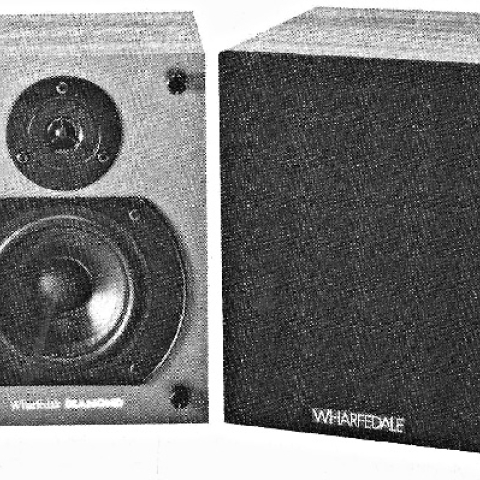
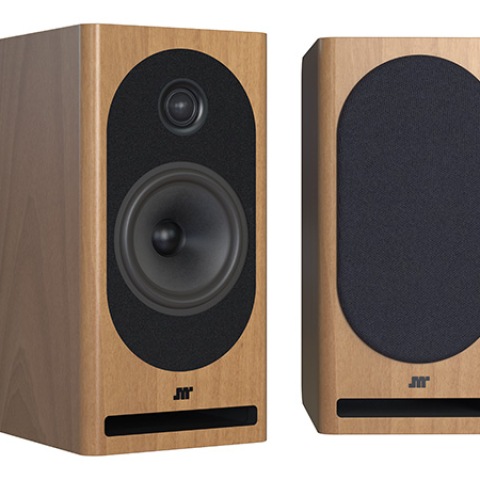
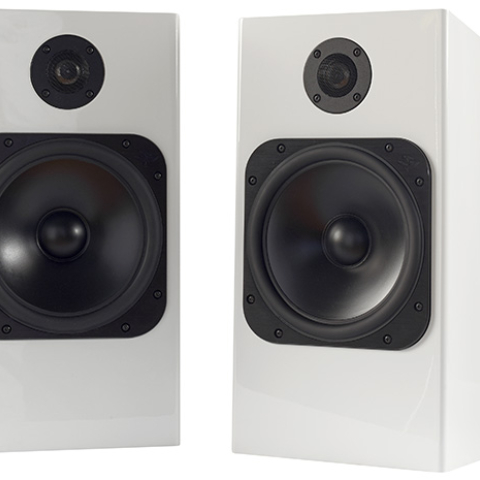
Measuring 14" high by 7.7" wide by 10.3" deep, the Wharfedale Diamond 225 is an attractive wood-veneered cabinet containing a 1" soft-dome tweeter and a 6.5" woven-Kevlar mid/woofer. Wharfedale describes its unusual reflex-loaded design as an "Enhanced 'Slot-loaded distributed Port'—for lower turbulence and there for [sic] low frequency distortion"—that fires downward through a pencil-thin space between the cabinet's bottom and its rubber-footed base.
You'd think that the 225, specified as having a sensitivity of 87dB —JA measured 85dB/2.83V/m—and an impedance of "8 ohm compatible" would present a moderately easy load for my Shindo Haut-Brion amplifier (25Wpc). Such was not the case. The Shindo is truly friendly only to speakers with sensitivities of 90dB and above, such as my DeVore Fidelity Orangutan O/93s or the Volti Audio Rivals. Pairing the Wharfedales with the Shindos produced a measure of believable tone, but the music seemed stuck somewhere deep inside the 225s' cabinets, sounding pale and congealed and lacking in dynamics.
I brought in that other future high-end standard that currently graces my po-boy penthouse: Heed Audio's Elixir integrated amplifier ($1195). Its 50Wpc made the speakers dance and sing from the get-go. The Heed's warmth, coupled to the Denon DL-103's innate musicality, empowered the Wharfedales like the Harley-riding gang in The Wild One (1953) egging on chief marauder Johnny Strabler (Marlon Brando) to greater depths of hoodlumish behavior.
The Diamond 225s required mucho reinforcement to bring out agreeable bass frequencies. I positioned the speakers near my listening room's corners: 10" from the front wall to the middle of the speakers' rear panels. From then on, the Wharfedales reproduced reasonably satisfying bass.
Vinyl reissues of Nina Simone albums are a hot commodity these days, but one I've yet to see get the 180gm virgin-vinyl treatment is her Sings Ellington! (LP, Colpix SCP 425). Accompanied by the Malcolm Dodds Singers (and instruments panned hard right and left), Simone rises above the hackneyed, commercial production style of 1962, bringing her troubled spirit to Ellington's great songs. "Do Nothin' Till You Hear from Me," with words by Bob Russell, is a jubilant lark of swing and soul, and Simone takes obvious glee in adapting a humorous country twang to her field-holler delivery. The Wharfedales begged to be played louder, so I granted their wish and Simone took over my listening space. The Diamond 225s revealed the deep, tubby bass of the Denon DL-103, as well as the pert texture of the brass, Simone's sometimes nasal singing, and the piano and driving double bass. The sound was visceral and alive.
To gauge dynamics and attack, I often use Makoto Aruga and Percussion Ensemble's Digital Percussion (LP, Seven Seas K28C-165). The Diamond 225s excelled in both regards, relaying the fine microdynamic shadings that accompany this recording's stomach-churning timpani passages, drill-like snare-drum rolls, and pure bell tones. There was a touch of Kevlar zing to the percussion, but mostly I was awed by the 225s' quick delivery and faithfulness to the recording.
Playing "I Don't Want to Spoil the Party," from Beatles for Sale (LP, Odeon SMO 73790), I was gobsmacked by the 225s' clarity, and their full-bodied resolution of the sound of George Harrison's twangy, glistening guitar. I'd never heard his sweet, stinging tone and palpable textures reproduced so realistically and wholesomely—his Gretsch hollow-body electric sounded especially live and shimmering through the Wharfedales.
Newvelle Records has won much-deserved attention for their state-of-the-art production and gorgeous vinyl releases. Their latest is Irmãos De Fé, by jazz bassist John Patitucci (LP, Newvelle NV007LP), an exercise in dark-sounding instruments and equally dark lower-frequency production. The 225s revealed all the touch, timing, and grip of Patitucci's double bass as expressed via the Denon DL-103's warm tonality. Again, the 225s were wonderfully clear-headed, re-creating Patitucci's extremely low notes with ease, yet with a touch of thickness paired to superb weight.
Switching to CDs, I felt the 225s sometimes favored midrange and treble clarity and precision over reproduction of the nether frequencies. They could certainly go deep when needed, but they revealed little of the warmth of my PS Audio NuWave DAC. This was consistent, from Pat Metheny's Day Trip (CD, Nonesuch 376829) to the eponymously titled Manu Katché (CD, ECM 2284). However, the 225s created large soundstages and relayed dynamics with self-confidence and poise.
Compared to the Elac Debut B6 ($279/pair), the Wharfedale Diamond 225 played more clearly, more dynamically, with better attention to frequency extremes, and none of the Elac's processed sheen. The Diamond 225s sounded natural and resolving; the Debut B6es sounded like country cousins to the Wharfedale's urban sophisticate. The Elacs played like stock hot-rods shod with smoking rings and bald tires; the 225s never broke a sweat as they zoomed past the Elacs in every regard. The 225 was cool, a bit cerebral, but definitely up for any and every challenge. It sounded far more accomplished than its list price of $449/pair might lead you to expect, easily challenging some stand-mounted speakers costing $1000/pair.
At first, I'd thought the 225s had no "house sound," opening a sunny window on the three cartridges I experimented with. And, unlike the Wharfedale Diamond 10.1s (now discontinued) I once owned, the Diamond 225s sounded less colored and generally more neutral and resolving, though they lacked the simple soul and organic feel of the 10.1. I agree with Herb's comment that the 225's Kevlar mid/woofer cone imparted to some recordings a "touch of rigidity or tightness," but that's audio-reviewer nitpicking.
Happily, the Diamond 225s loved to boogie. They sounded good at moderate levels, but came into their own when cranked up. The Wharfedales partied hard with Muddy Waters, Super Furry Animals, and Howlin' Wolf, swung righteously with Red Garland and Miles Davis, and scaled dynamic orchestral heights with Max Roach's M'Boom collective and Béla Bartók, becoming confused and strident only at very loud and taxing climaxes. While the 225s' low end was occasionally too buttoned-down for my taste, its overall reproduction of the audioband was entirely free of grain, pure, and well defined. And the 225s imaged beautifully, consistently pulling off a magical "disappearing" act.
Cool-headed, ready to rumble, and ready to dance, the Wharfedale Diamond 225 stand-mounted loudspeaker strikes a good balance between studio-monitor precision and living-room bookshelf ease. It's the epitome of transparent response to both source components and recordings, extracting every last iota of information from CDs and LPs in a nonclinical yet highly revealing fashion. The Wharfedale Diamond 225 is an acute reproducer of music: tonally accurate, dynamic, and explicit. I second HR's recommendation.—Ken Micallef
Wharfedale Diamond 225 loudspeaker Ken Micallef June 2017

Company Info
ARTICLE CONTENTS
- Log in or register to post comments