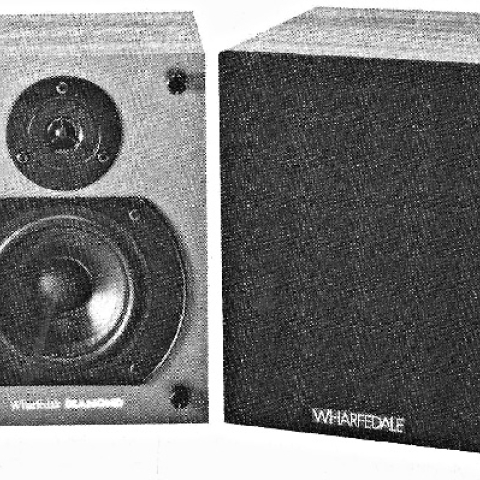
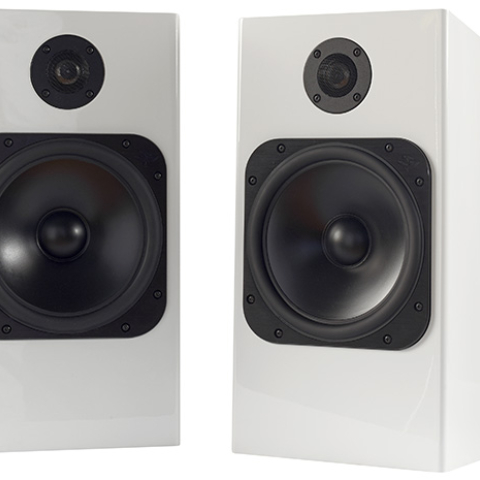
I wanted to find out if the 25W of First Watt's J2, designed by Pass Labs' Nelson Pass, would be enough power to make me, Metallica, and the Wharfedale 225s skip, mosh, and fist-pump through some densely vibrating air. I cranked "Battery" to old-man loud, and holy effing shit—these shiny little Brit boxes lit a hot flame that belied their size. They sawed fast and pounded hard. They got me up. I felt loose and free like I was 23. With easy clarity and ambitious drive, they powered my small room to average levels of 89dB and peaks of 96dB. No overcompressed muck. No congealed textures. No distortions of grainy hardness or stuttering vagary.
Listening with the Rogue Audio Sphinx
Every time I pull out Rogue's 100W hybrid (tubed/class-D) Sphinx integrated amp, I'm blown away by how ridiculously musical, authoritative, and transparent it sounds for $1300. The Sphinx, and Schiit Audio's Ragnarok ($1699), continue to be the two most satisfying integrated amplifiers I know for less than $2000. You know me: I believe that, subtly or obviously, an audio product expresses the resonant character of whatever stuff it's made of. One day, with the Rogue Sphinx, I realized I could hear the slightly inorganic Kevlarness of the Diamond's mid/woofer cone. (To my ears, all speakers sound like their cone, magnet, and cabinet materials.) The Wharfedale's Kevlar quality was most noticeable with timpani and massed strings. It was least noticeable with jazz, zydeco, or blues. The effect I'm talking about was minuscule; I had to listen extremely closely to hear it.
 I don't need synthesizers, pipe organs, or fast-plucked four-string Fenders to suss out a speaker's bass performance. I just need 100W of class-D and Pepe Romero playing his bewitching performance of Joaquín Rodrigo's Bajando de la Meseta on his Miguel Rodriguez guitar (LP, Philips 9500 915). The degree to which a loudspeaker can reproduce the physicality of an acoustic guitar is usually a good indicator of its resolution and transient control. The beauty and verity of any speaker's sound is anchored in the four midrange octaves from 80 to 1280Hz, and the splendor of these four octaves depends entirely on the wizardry of the speaker's design. The meeting of Romero, Rodrigo, and the Diamond 225s was beyond revealing. It was splendorous. This beautiful Philips recording showed me the Wharfedale's true nature.
The body of Romero's guitar was the same size as my chest. I could sense the surface of the soundboard, and where the instrument's neck overlaps and is connected to the body. I listened for the sound hole but couldn't quite find it. Then it got spooky. Suddenly, I realized how good the 225s really were: Sitting on my couch, I could practically see the microphone, about 22" from the air pulsing off the soundboard's surface. The Rogue Sphinx and Diamond 225s were doing everything right. The bass was clear, despite a noticeable softness below 120Hz. Guitar tone was fantastically accurate. Romero's tempos were hyper-noticeable and pleasantly intoxicating. Right here is where my audio-critic DNA shifted and I fell crazy in love with the Diamond 225s. My experience of this excellent recording was profoundly good. My listening notes said, "What? How can this be?"
Raising Kane with the Schiit Ragnarok
I don't need synthesizers, pipe organs, or fast-plucked four-string Fenders to suss out a speaker's bass performance. I just need 100W of class-D and Pepe Romero playing his bewitching performance of Joaquín Rodrigo's Bajando de la Meseta on his Miguel Rodriguez guitar (LP, Philips 9500 915). The degree to which a loudspeaker can reproduce the physicality of an acoustic guitar is usually a good indicator of its resolution and transient control. The beauty and verity of any speaker's sound is anchored in the four midrange octaves from 80 to 1280Hz, and the splendor of these four octaves depends entirely on the wizardry of the speaker's design. The meeting of Romero, Rodrigo, and the Diamond 225s was beyond revealing. It was splendorous. This beautiful Philips recording showed me the Wharfedale's true nature.
The body of Romero's guitar was the same size as my chest. I could sense the surface of the soundboard, and where the instrument's neck overlaps and is connected to the body. I listened for the sound hole but couldn't quite find it. Then it got spooky. Suddenly, I realized how good the 225s really were: Sitting on my couch, I could practically see the microphone, about 22" from the air pulsing off the soundboard's surface. The Rogue Sphinx and Diamond 225s were doing everything right. The bass was clear, despite a noticeable softness below 120Hz. Guitar tone was fantastically accurate. Romero's tempos were hyper-noticeable and pleasantly intoxicating. Right here is where my audio-critic DNA shifted and I fell crazy in love with the Diamond 225s. My experience of this excellent recording was profoundly good. My listening notes said, "What? How can this be?"
Raising Kane with the Schiit Ragnarok
I don't like high-end audio that sounds like high-end audio. What does high-end audio sound like? It sounds like recorded information being pinched out at me in fake, hard, bas-relief detail and exaggerated three-dimensionality. The "black" spaces are really gray, but in a strangely unnoticeable way. To me, hardness represents distortion, as does opacity. Bad high-end audio feels distinctly inorganic—as if everything vital and mammalian has been leached out.
A mechanic can sharpen a file by soaking it in dilute acid. This procedure works well—up to a point. Eventually, the file's teeth get too sharp, and become all weak and pointy and bent over, like witches' teeth. That's what bad high-end audio (and a lot of re-mastered high-resolution digital) sounds like to me.
Driving the Wharfedale Diamond 225s, Schiit Audio's Ragnarok didn't sound at all like pointy witches' teeth. It sounded smooth, sharp (but not too sharp), and liquid. It played big orchestral compositions, such as Bernard Herrmann's Welles Raises Kane, with the composer conducting the London Philharmonic Orchestra (LP, Unicorn UN1-72008), with the supplest, non–hi-fi, nonmechanical sounds imaginable. Herrmann called this five-movement, 15-minute suite "a musical frolic . . . a portrait of Orson Welles at the time of his creation of the films Citizen Kane and The Magnificent Ambersons." It features a fearsome orchestral mash-up that careens through a dozen musical genres.
The Schiit-Wharfedale combo reproduced this dynamic recording extremely well, except when the timpani and giant cymbals pounded hard in the climaxes. On the 98dB peaks I felt sharp cymbals cutting my forehead. The timpani sounded opaque, compressed, and distorted. The Ragnarok can put out 100Wpc into 8 ohms, so I doubt that it was clipping. It sounded to me as if the drivers themselves were stalling and skipping—exactly what I imagine cone/dome breakup sounds like. After failing during the Overture of Welles Raises Kane, the Diamond 225s carried on sweetly and engagingly until the Finale—Pursuit and Happiness, when things got a bit crunchy again. I can't believe I forgot that small speakers like the Diamond 225 sound best in small rooms when music is played at moderate levels. (I venture to say that anything over 90dB is likely to have some distortion. Overall, though, the Ragnarok and Diamonds sounded enjoyably lucid, so I turned down the volume and tried some other big orchestral works.
 A longtime fan of Martha Argerich, Dietrich Fischer-Dieskau, and Claudio Abbado, I've always collected and used their DG recordings as tests for system musicality. Any system that makes DG discs sound hard, opaque, or less than charming is not for me. So I was pleased when the "not-full tulip" recording of Bartók's Piano Concertos 1 and 2, with soloist Maurizio Pollini and Claudio Abbado conducting the Chicago Symphony (LP, Deutsche Grammophon 2530 901), was reproduced with excellent tone and surprising transparency. Piano and percussion were fairly strong and present for such small speakers, and the space occupied by the orchestra's sound was remarkably deep. Pollini's keyboard playing is usually a bit inexpressive for my taste, but he really revs it up emotionally to lean into these edgy works and nail them down. Bravo, Maurizio! Bravo, Claudio! Bravo, Wharfedale!
Conclusions
A longtime fan of Martha Argerich, Dietrich Fischer-Dieskau, and Claudio Abbado, I've always collected and used their DG recordings as tests for system musicality. Any system that makes DG discs sound hard, opaque, or less than charming is not for me. So I was pleased when the "not-full tulip" recording of Bartók's Piano Concertos 1 and 2, with soloist Maurizio Pollini and Claudio Abbado conducting the Chicago Symphony (LP, Deutsche Grammophon 2530 901), was reproduced with excellent tone and surprising transparency. Piano and percussion were fairly strong and present for such small speakers, and the space occupied by the orchestra's sound was remarkably deep. Pollini's keyboard playing is usually a bit inexpressive for my taste, but he really revs it up emotionally to lean into these edgy works and nail them down. Bravo, Maurizio! Bravo, Claudio! Bravo, Wharfedale!
Conclusions
Every day I listened to the Wharfedale Diamond 225s, part of me wanted to write, "Hey, these new speakers are nice, musical, even-tempered, and easy to live with. But they're nothing special. They're not designed in a wizard's shack behind a British row house and manufactured in some quaint Station Road factory with a pub down the way." I almost wished I could say, "The 225s were created by some secret war-room consortium of Dr. Strangelove imperialists," or to declare something like, "They play music just pleasantly enough—in a general, average sort of way—to fool the scruffy underclasses." But none of it was true. Forget the Diamond's modest price. This humble wooden box is actually a connoisseur-level audio component. It could satisfy any sane music collector for decades. I liked the way the Diamond 225 played music more than I did the Elac Debut B6 (now $229.99/pair—reduced from $279.99/pair), which I reviewed in the March 2016 issue. The Elac is extremely good, and it does many things, including soundstaging and resolution, better than the Diamonds. But the Diamond 225 played music with more blushes and warm-blooded charm than the Debut B6. The Wharfedale felt more soulful and relaxed.
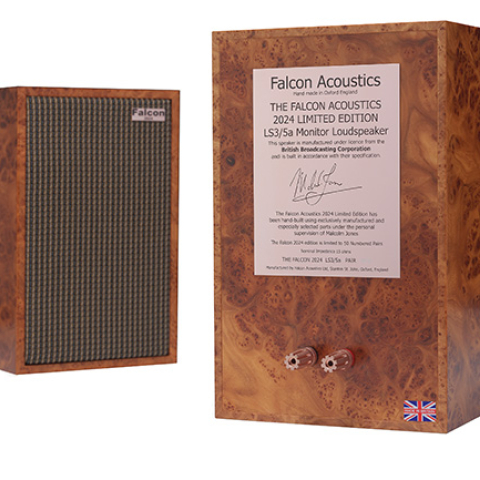
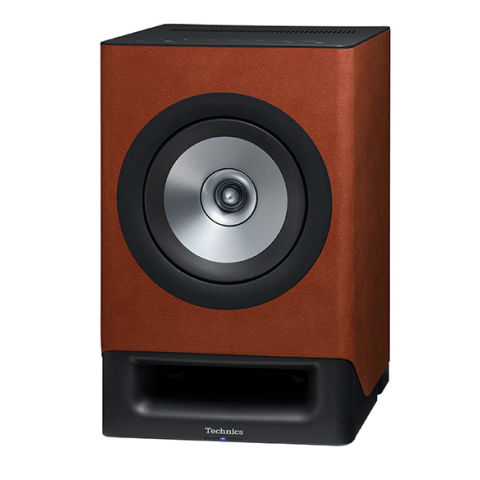
The Diamond 225 had a pacey, easy-flowing transparency that made my KEF LS50s sound slightly thick, my Technics SB-C700s sound slightly dry, my Falcon Acoustics LS3/5as sound a mite bright. I was hoping I wouldn't have to say those things, but that's what I heard.
The Wharfedale's biggest faults seemed to be a modicum of puffy vagueness in the lowest and highest octaves, and a little recession in the presence region. Together, these traits robbed the Diamond 225 of some precision, sharp focus, and punch.
At the beginning of my listening, I was impressed by the easy-flowing naturalness of the Diamond 225's sound. Then I thought its Kevlar cone was too audible. Then, while playing Pepe Romero's album of Rodrigo compositions for solo guitar, it was as if the speakers had walked over and kissed me. And then, when I played the Bartók piano concertos, I leaned back, smiled, and let out my breath. I've been smiling like that, and dreaming, ever since. Highly recommended.
Every time I pull out Rogue's 100W hybrid (tubed/class-D) Sphinx integrated amp, I'm blown away by how ridiculously musical, authoritative, and transparent it sounds for $1300. The Sphinx, and Schiit Audio's Ragnarok ($1699), continue to be the two most satisfying integrated amplifiers I know for less than $2000. You know me: I believe that, subtly or obviously, an audio product expresses the resonant character of whatever stuff it's made of. One day, with the Rogue Sphinx, I realized I could hear the slightly inorganic Kevlarness of the Diamond's mid/woofer cone. (To my ears, all speakers sound like their cone, magnet, and cabinet materials.) The Wharfedale's Kevlar quality was most noticeable with timpani and massed strings. It was least noticeable with jazz, zydeco, or blues. The effect I'm talking about was minuscule; I had to listen extremely closely to hear it.
I don't need synthesizers, pipe organs, or fast-plucked four-string Fenders to suss out a speaker's bass performance. I just need 100W of class-D and Pepe Romero playing his bewitching performance of Joaquín Rodrigo's Bajando de la Meseta on his Miguel Rodriguez guitar (LP, Philips 9500 915). The degree to which a loudspeaker can reproduce the physicality of an acoustic guitar is usually a good indicator of its resolution and transient control. The beauty and verity of any speaker's sound is anchored in the four midrange octaves from 80 to 1280Hz, and the splendor of these four octaves depends entirely on the wizardry of the speaker's design. The meeting of Romero, Rodrigo, and the Diamond 225s was beyond revealing. It was splendorous. This beautiful Philips recording showed me the Wharfedale's true nature.
The body of Romero's guitar was the same size as my chest. I could sense the surface of the soundboard, and where the instrument's neck overlaps and is connected to the body. I listened for the sound hole but couldn't quite find it. Then it got spooky. Suddenly, I realized how good the 225s really were: Sitting on my couch, I could practically see the microphone, about 22" from the air pulsing off the soundboard's surface. The Rogue Sphinx and Diamond 225s were doing everything right. The bass was clear, despite a noticeable softness below 120Hz. Guitar tone was fantastically accurate. Romero's tempos were hyper-noticeable and pleasantly intoxicating. Right here is where my audio-critic DNA shifted and I fell crazy in love with the Diamond 225s. My experience of this excellent recording was profoundly good. My listening notes said, "What? How can this be?"
Raising Kane with the Schiit RagnarokI don't like high-end audio that sounds like high-end audio. What does high-end audio sound like? It sounds like recorded information being pinched out at me in fake, hard, bas-relief detail and exaggerated three-dimensionality. The "black" spaces are really gray, but in a strangely unnoticeable way. To me, hardness represents distortion, as does opacity. Bad high-end audio feels distinctly inorganic—as if everything vital and mammalian has been leached out.
A longtime fan of Martha Argerich, Dietrich Fischer-Dieskau, and Claudio Abbado, I've always collected and used their DG recordings as tests for system musicality. Any system that makes DG discs sound hard, opaque, or less than charming is not for me. So I was pleased when the "not-full tulip" recording of Bartók's Piano Concertos 1 and 2, with soloist Maurizio Pollini and Claudio Abbado conducting the Chicago Symphony (LP, Deutsche Grammophon 2530 901), was reproduced with excellent tone and surprising transparency. Piano and percussion were fairly strong and present for such small speakers, and the space occupied by the orchestra's sound was remarkably deep. Pollini's keyboard playing is usually a bit inexpressive for my taste, but he really revs it up emotionally to lean into these edgy works and nail them down. Bravo, Maurizio! Bravo, Claudio! Bravo, Wharfedale!
ConclusionsEvery day I listened to the Wharfedale Diamond 225s, part of me wanted to write, "Hey, these new speakers are nice, musical, even-tempered, and easy to live with. But they're nothing special. They're not designed in a wizard's shack behind a British row house and manufactured in some quaint Station Road factory with a pub down the way." I almost wished I could say, "The 225s were created by some secret war-room consortium of Dr. Strangelove imperialists," or to declare something like, "They play music just pleasantly enough—in a general, average sort of way—to fool the scruffy underclasses." But none of it was true. Forget the Diamond's modest price. This humble wooden box is actually a connoisseur-level audio component. It could satisfy any sane music collector for decades. I liked the way the Diamond 225 played music more than I did the Elac Debut B6 (now $229.99/pair—reduced from $279.99/pair), which I reviewed in the March 2016 issue. The Elac is extremely good, and it does many things, including soundstaging and resolution, better than the Diamonds. But the Diamond 225 played music with more blushes and warm-blooded charm than the Debut B6. The Wharfedale felt more soulful and relaxed.