

JMlab Chorus 706 loudspeaker

The most exciting development in audio today isn't multichannel surround, single-ended triodes, or $10,000 phono cartridges. It's "trickle down." I get buzzed when an audio designer known for cutting-edge multikilobuck designs claims to have a product that can produce 80% of the sonic realism of his flagship design at 50% of the cost. I get even more excited when he does it again—that is, produces a product that produces 64% of his flagship's performance at 25% of the cost. Designers who have successfully trickled-down their flagship technologies abound in all quarters of audiophilia, from electronics (eg, Audio Research, Conrad-Johnson) to speakers (Alón, ProAc) to cables (MIT).
JMlab Micron & Micron Carat loudspeaker

Let me take you back some 40 years to the mono days of the early 1950s. It's unlikely that the minimonitor genus of loudspeakers, of which this French JMlab is a prime example, would have survived back then. There was the practical problem of available amplifier power. The average amp could squeeze out no more than 10 to 15W into an 8 ohm load—far less power than the typically insensitive minimonitor demands for adequate dynamic headroom. But that in itself would not have sufficed to displace the minimonitor from the marketplace. After all, "high-power" amps (50-watters) could be had at a price.
Joseph Audio Pulsar loudspeaker

I approached this loudspeaker much as some of today's political candidates might approach sex: as a means of reproduction, not pleasure.
I brought it on myself. I asked to review Joseph Audio's stand-mounted, two-way Pulsar because I felt an obligation to step down from the rarified air of some of the absurdly priced gear I've been reviewing lately and sample something more "affordable." The Pulsar costs $7000/pair.
Joseph Audio RM7si loudspeaker

Following my review of two high-performance minimonitors last November (footnote 1), I received a letter asking why I recommended a stand-mounted speaker at all when it was possible to buy a floorstanding design with more bass for the same amount of money. Furthermore, the correspondent went on, when you consider that the minimonitor sitting on its stand occupies as much floorspace as the floorstander, it's hard to see why a market for minimonitors exists at all.
Joseph Audio RM7XL Special Edition loudspeaker
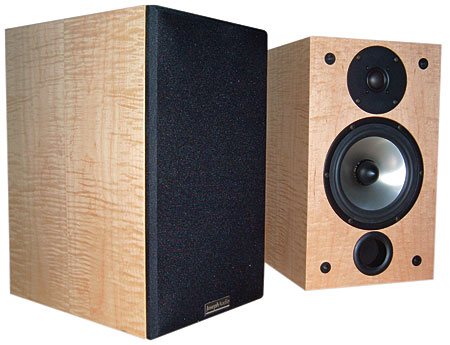
Jeff Joseph always causes a stir at Stereophile's annual Home Entertainment Shows. No matter which speakers he exhibits, he invariably gets wonderful sound in his room. He's fooled more than one Stereophile writer who thought he was listening to Joseph's flagship Pearls when, behind a curtain, it was actually two of his in-wall models that were playing. And his competitors seem to envy his hi-fi show sound more each year.
KEF Home THX Loudspeaker System

KEF's Home THX speaker system is somewhat unusual in that it includes an active subwoofer. (While most Home Theater subs are powered types; it's just that few THX models are.) Although powered speakers have never enjoyed much popularity with American audiophiles, they can yield better results than the mix'n'match approach because each amplifier/driver combination can be optimized.
KEF LS50 Anniversary Model loudspeaker
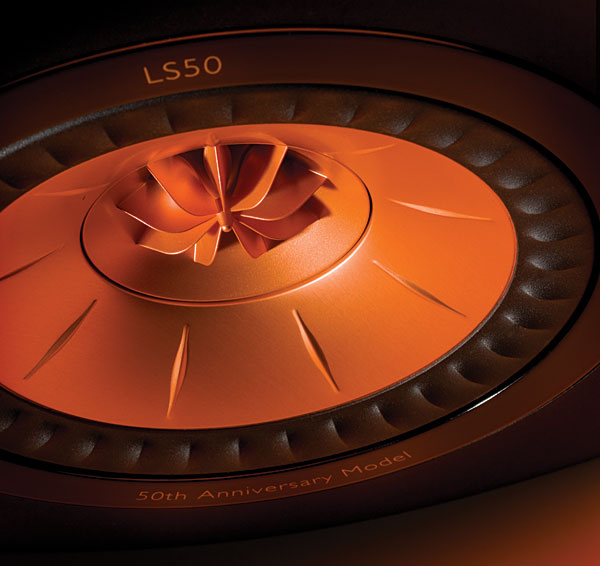
The tale's been told many times: Back in the early 1970s, the British Broadcasting Corporation needed a small nearfield monitor for use in remote-broadcast trucks. A team led by T. Sommerville and D.E. Shorter, both of the BBC's Research Department, developed the two-way, sealed-box LS3/5, based on a small monitor they'd designed for experiments in acoustic scaling. The speaker showed much promise, but problems with the drive-unitsa woofer with a doped Bextrene 5" cone and a 1" Mylar-dome tweeterled to a detailed redesign, the LS3/5a, carried out by Dudley Harwood, also of the Research Department (and later to found Harbeth), and Maurice E. Whatton and R.W. Mills, of the BBC's Designs Department.
KEF LS50 Meta loudspeaker

KEF's LS50 loudspeaker was introduced in 2012 to celebrate the English manufacturer's 50th anniversary. Usually, anniversary models are large, floorstanding "statement" designs with a price to match, but the LS50 was a minimonitor, priced at $1500/pair. I reviewed the Anniversary Edition LS50 in December 2012 (footnote 1), writing that it was rare to find a loudspeaker that offers this combination of clarity and neutrality and concluding that within its limits of dynamic range and bass extension, the KEF LS50 "will provide Class A sound for those with small rooms."
KEF LSX wireless loudspeaker system
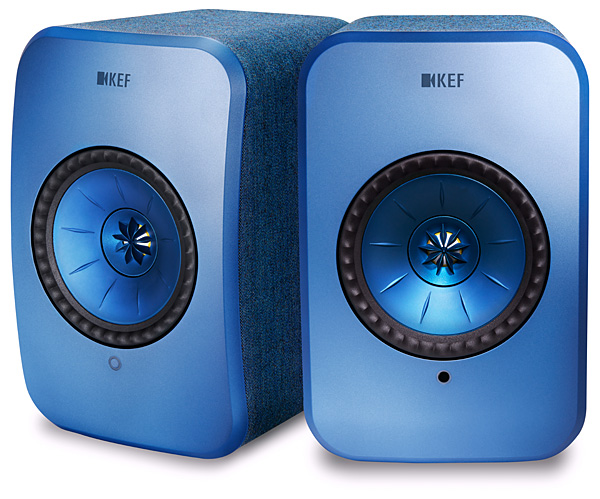
I keep getting older. By the time you read this, I will be genuinely old. When I was genuinely young, I bellyached, "Wires are the worst part of hi-fithere's gotta be a way to get rid of them." I first made that statement when audio electronics and loudspeakers both still nestled inconspicuously in proper bookcases. Back then, people sitting on the sofa weren't forced to stare at diverse audio boxes and ungainly wires.
KEF Q350 loudspeaker
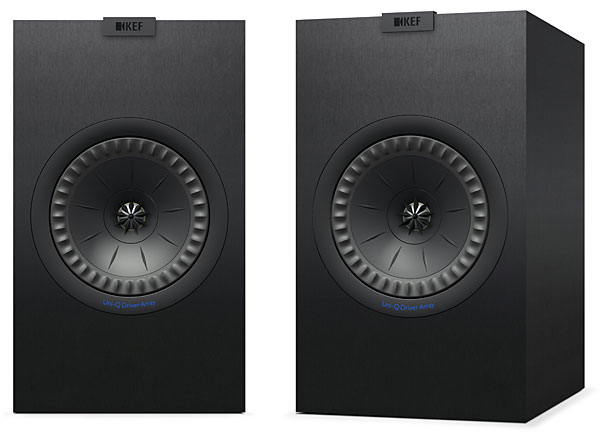
During the hour preceding my removal of the KEF LS50 loudspeakers from their spiked, rough-iron stands, I was lost in the recurring still moments, reverberating tones, and contemplative spirit of Sir John Tavener's Eis Thanaton and Theophany, in the recording by soprano Patricia Rozario, bass Stephen Richardson, and Richard Hickox conducting the City of London Sinfonia (CD, Chandos CHAN 9440).