

King Kong vs Spotify
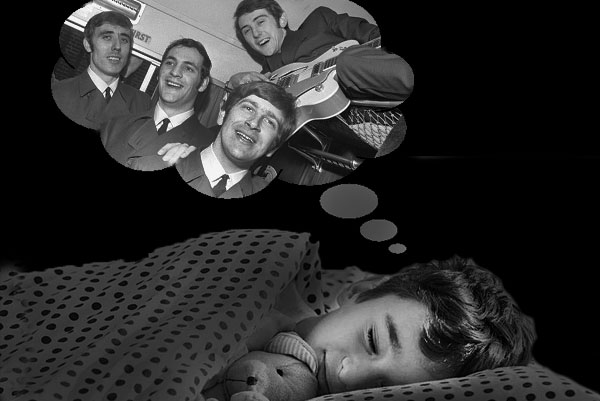
"No one's buying music anymore: They're renting it."John Atkinson, keynote speech, AXPONA 2018
Streaming music isn't new. US companies have been doing it since the 1920s, when it was discovered that multiplexingthe then-new practice of combining multiple signals over a single conductorcould be used to send live or recorded music over public power lines. The first of those companies was Muzak LLC.
File that away.
Know Thyself: Audio Existentialism
Playing recorded music in the home is a complex, coded, cultural experience: We sit, we listen, we think and dreamand, when it feels just right, we admire. We admire who we are and how we arrived at this beautiful moment. This simple act of admiration is usually a happy sort of self-congratulatory expression of our basic desire to have meaningful as well as enjoyable experiences. We are proud of our good taste and love of music. But this type of listening can also provoke anxiety and self-recrimination. We ask ourselves why we like this music and not some other kind. What would my friends think if they knew I was listening to "truckin' wit' th' doo-dah man"or Deodato?
L'Affaire Belt
When I attended Britain's Heathrow Penta hi-fi show in September 1987, I had hoped to come back with big news about some breakthrough cartridge or preamp or loudspeaker system. I didn't. No, the talk of the Penta show was something called the "Belt Phenomenon," which may possibly be a breakthrough of some kind, but then again, it may not.
Late Again!
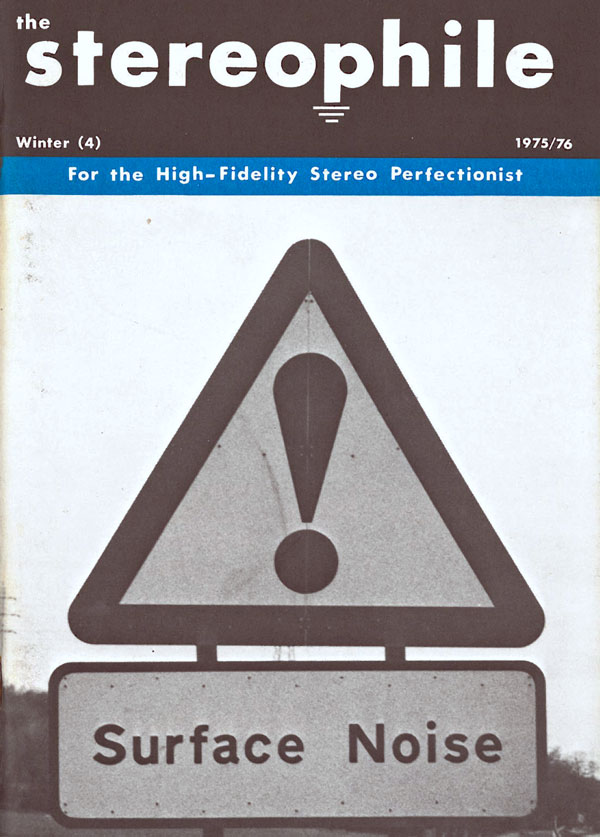
Editor's Note: In Stereophile's second decade of publication, things were starting to unravel, with long gaps between each issue. There were just seven issues published between January 1974 and January 1978. The late Harry Pearson has gone on record that he founded The Absolute Sound in 1973 part because he was tired of waiting for the next issue of Stereophile to reach his mailbox. In this "As We See It" essay from the "Surface Noise" issue in August 1976, founder J. Gordon Holt owns up to it appearing 8 months late!
Lather. Rinse. Repeat.
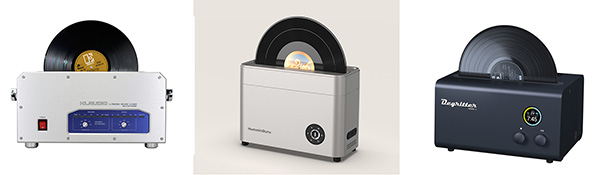
Two recent Stereophile columns have offered thoughts on record cleaning machines (RCMs). Writing about the Klaudio RCM (above left), Michael Trei noted that the manufacturer says to use just water. No surfactant.
Let rolling streams their gladness show

In the 1980s, the CD nearly pushed the LP to extinction. Nearly. For all the claims of "Perfect Sound Forever," the main thing offered by the CD was convenience.
Then, in the mid-1990s, the MP3 and the Internet made it easy to extract and distribute the information encoded on a CD. Secret websites raced to be the first to distribute free MP3s of new recordings, sometimes even before they were released. This went on for years, undermining record-company profits, before Napster came along and gave the record industry a high-value lawsuit target: no more suing widows and small children.
Let's Face the Music and Dance
Does high-end audio have a future? High-end audio most definitely does have a future. So do the Latin mass, chess, leather-bound books, and wooden boats. But the future will not be like the past, and I think we must face the fact that high-end audio's future, both for hardware and software, will be as a minority enthusiasm. We should plan and act accordingly.
Letter From Japan

How many advertisements for hi-fi or head-fi hardware do you see on your morning commute? Two? Three? If you live in Los Angeles, Sydney, or Paris, most likely it'll be zero.
Not so in Tokyo, where commuters, tourists, and shoppers moving through the Shinjuku or Shibuya subway stations will find it almost impossible to ignore Sony's latest advertising campaign, which colorfully announces a new range of affordable portable audio players (né Walkmans). Inside, banners suspended from the cars' ceilings promote Panasonic's latest headphones and shoebox-sized stereo system. Many of the bigger Japanese manufacturers treat audio gear as a mainstream concern.
Leveling the Playing Field
Although you're reading this in October, I had to write it in the middle of summer's dog days—what Washington journalists used to call "the silly season," not so much because there's anything inherently funny about August, but because, in pre-AC DC, all the legislators went home then to escape the heat and humidity, leaving the press corps with little to write about other than "man bites dog" stories.
Life, Love, and The Big Ahh
A fellow member of the Bay Area Audiophile Society recently forwarded to me a link to Wikipedia's entry for audiophile. It's a horror. Even before the page defines the word, it begins with a large question mark, circled in green, and the warning, "This article or section may contain original research or unverified claims. Please help Wikipedia by adding references."