

It Don't Mean A Thing If It Ain't Got That Schwing
Epiphanies only come when you stop looking for them, and mine came in a room full of preschoolers watching cartoons at a Pizza Hut. I was taking my little nieces Alix (4) and Casey (1) out for dinner, and the last thing on my mind was audio; we wanted to PARTY! So my girlfriend Dara and I bundled them up in their car-seats and we high-tailed it over to the Hut, with visions of continuous-loop Tom'n'Jerry and cheap buffet pizza dancing in our heads.
It Isn't Just the Music
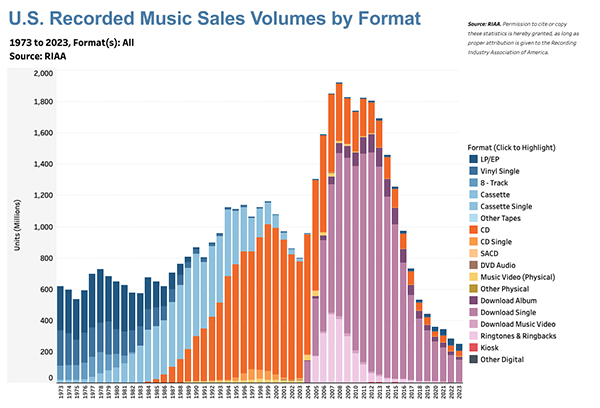
Physical media market shares, from 19732024. From riaa.com/u-s-sales-database.
When the CD is gone, and it will be soon, we'll miss it. New CD releases are winding down (footnote 1). In the classical world, the era of big, bargain-priced boxes of CDsa somewhat recent developmentis ending because, after a long, slow descent, retail sales have fallen off a cliff in the past year or so. In pop and rock, if you discover a new band you like, you may or may not be able to buy a CD. Perhaps they'll self-publish a few to sell at concerts; there's a better chance they'll have LPs, assuming they can get time at a vinyl-mastering studio and a pressing plant, both of which are booked to the max. CDs, though, are an afterthought if they're even that.
Vinyl records will likely stay around indefinitely as a collector's artifact, but new CDs are fading fast. This is momentous. CD will be remembered as the last mainstream physical music format. Its passing marks the death of physical music media.It Takes More than Martinis, Mister!
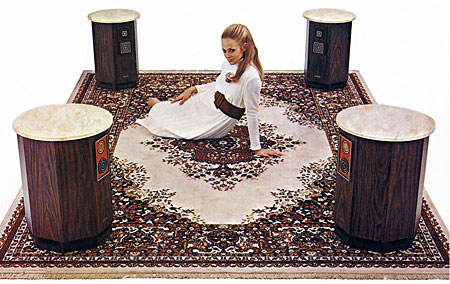
In the 1970s, a small black-and-white ad sometimes ran in the pages of Playboy magazine. The ad pictured an attractive young woman with lots of disheveled hair and a crooked grin. There was little else to the ad other than the headline, which the reader would assume was being spoken by the model: "It takes more than Martinis to build an image, Mister!"
It's Only Hi-Fi!
When I taught a recording engineering program at a California college, one of my first responsibilities to new students was to clarify for them what recording engineering was really about. Many of them entered the program with the impression that recording was nonstop glamor, with a significant part of the job devoted to partying with their favorite rock bands. It was my job to tell them the bad news: Recording was more about lying on your back underneath a recording console on a dirty studio floor with hot solder dripping on your face.
It's Showtime!
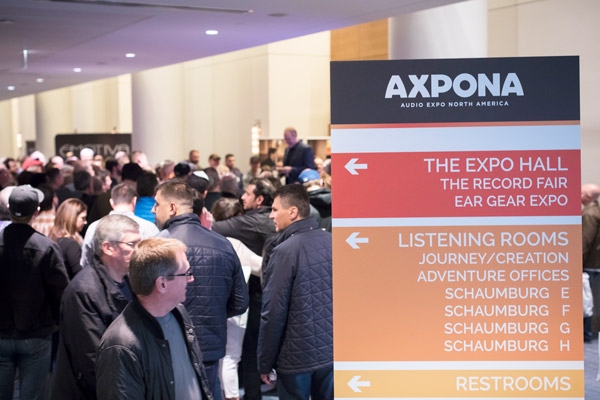
Photo: Jason Victor Serinus
Though I'm writing this in early March, this As We See It column will be published in the May issue, which is the issue that will go to AXPONA, America's largest audio show, held each non-pandemic year at the Renaissance Schaumburg Hotel & Convention Center near Chicago. This year's show takes place FridaySunday, April 1214. The show opens each day at 10am and closes at 6pm Friday and Saturday; Sunday's closing time is 4pm. If you're going to the show, don't forget to stop by the Stereophile booth, Location 9213 in the exhibit hall.It's the Real Thing!
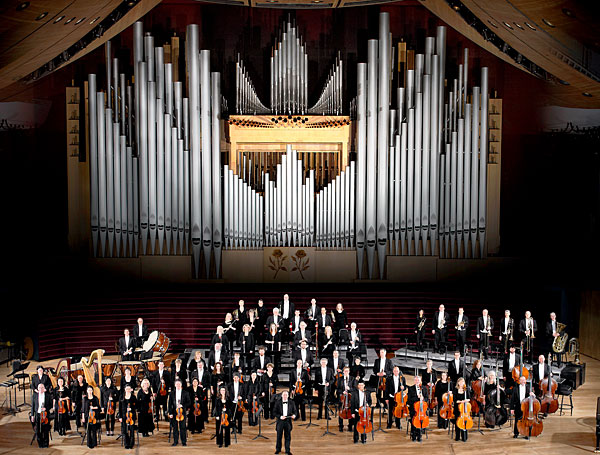
We are aware that much of what we have to say about reproduced sound in these pages goes completely over the heads of a lot of our readers, simply because they have not heard live, un-amplified music recently enough (if ever) to relate their own listening experiences to our observations. These are the people who tend to have developed a strong mental image of what hi-fi ought to sound like, and it is not surprising that that image should bear little if any resemblance to reality. In most cases, this image of hypothetical perfection involves a broadly sweeping sense of spaciousness, awesome power, floor-shaking low end and silky, velvety highsrather similar, one might say, to the sound of a Magnificent Magnavox with a couple of extra octaves at each end.
J. Gordon Holt, 1930–2009

"What about coming over for a little bit of din-din?"
Jump'n'Jive & the Absolute Sound
Although I was trying to earn a living playing in rock bands in the early 1970s, I occasionally used to drag my Fender bass over to a school canteen in the next town for an after-hours session with what used to be called a "rehearsal band." (I have no idea what the derivation of that name is, except that, with the exception of a couple of veterans of the Ted Heath Orchestra, we were certainly in need of all the rehearsal we could get.) I would set up my Marshall stack the other side of the drummer from the pianist and sit behind a set of trumpet players, a brace of trombonists, and a scrum of players of the common saxophone flavors—a couple of altos, three or four tenors, and a baritone wielded by a gentleman with the magnificent moniker of Albert Bags. We played Glenn Miller and Woody Herman charts, and, on one memorable night, a Stan Kenton arrangement. Our technical chops didn't match our musical ambitions, but the feeling that welled up inside us when we all reached the final measure at the same time couldn't be beat.
Just What Is High End?
A man who had just looked through his very first Stereophile---April's "Recommended Components" issue picked up at a newsstand---recently called to ask my advice on a certain inexpensive CD player made by a large mid-fi company. I told him I hadn't auditioned the player and thus couldn't comment on its worth. The man then proceeded to read me the player's specifications, finally informing me that the player "had the new 1-bit thing"---all in the belief that I could make a recommendation based on what he'd just told me. He apparently had been conditioned to believe that not only was "the 1-bit thing" superior, but that choosing a CD player was merely a matter of evaluating technical specs.
Ken Nelson 1928–2004
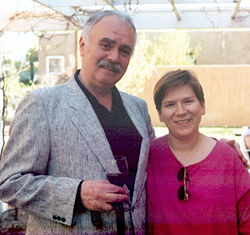
On Friday morning, March 25, 2005, my friend Maura Rieland, Stereophile's show coordinator through the second half of the 1990s, e-mailed me to say that she had just learned of the passing of Ken Nelson.