

The Truth About High End
The October 1982 issue of Stereo Review published what must be hailed (or derided) as the first reasoned assessment of high-end audio ever presented in a mass-circulation hi-fi publication. We disagreed with a few of the author's points, but our main gripe about the piece prompted a letter to Stereo Review. This is what we wrote:
The Truth Should Out
This issue contains a report on a truly ingenious little device called the ABX Comparator, which takes the fraud out of subjective testing. It does this by making its own selection of source A or source B for each listening trial, without telling you which was selected. Only after all the tests will it reveal what you were listening to each time. "Score" sheets are provided so you can list your guesses, compare them with the cold, uncompromising truth, and file the results for posterity. Or better still, for the first hard evidence that has ever been presented that a lot of people can hear differences that cannot as yet be measured.
The Upside of Negative Reviews
Most readers of Stereophile are in it to read about great products—things that make the hobby and art of home sound reproduction exciting. In this respect, reviewers aren't too different—we love sound reproduction and music in general, and products that help bring this to life are the cat's meow. Reviewers that can't respond with this kind of excitement don't have a place writing for this magazine.
The Upward Price Spiral

On January 5, 2011, I was flying to Las Vegas for the Consumer Electronics Show (footnote 1). On January 5, 1914, Henry Ford announced that he would pay a minimum of $5 to eligible employees who worked an eight-hour day. (At that time, a good wage was $2.50 for a workday of 10 hours.) Ford was not being altruistic; he wanted to motivate his employees both to become more productive and to stay loyal to their employer. And there were strings attached: A Ford employee "must show himself to be sober, saving, steady, industrious and must satisfy . . . staff that his money will not be wasted in riotous living." But Ford also wanted his workers to be able to afford the products they made. It was Ford's action, I believe, that triggered the rise of the American middle class, and it was that middle class's combination of disposable income and increased leisure time that fueled the growth of high-end audio.
The Weakest Link
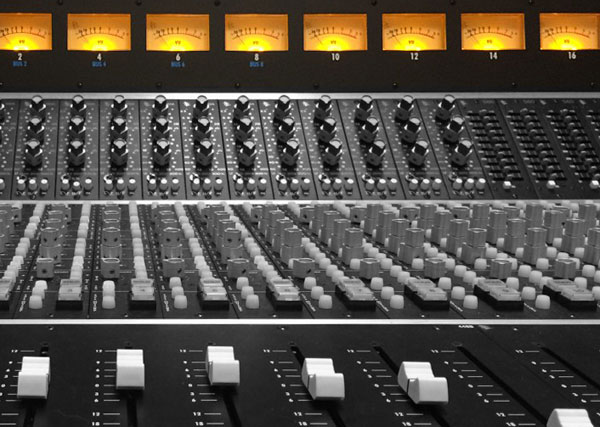
While we will not pretend for a moment that the millennium of high fidelity has arrived, we are finally having to face up to a fact that has been staring us in the face and nudging us in the ribs increasingly rudely of late: The state of the art of sound reproduction has gotten to be pretty damned sophisticated. Perfection is just as unattainable as it was almost 100 years ago when Thomas Edison was diddling with different diaphragm materials on his phonograph because some sounded better than others.
The Weakest Link
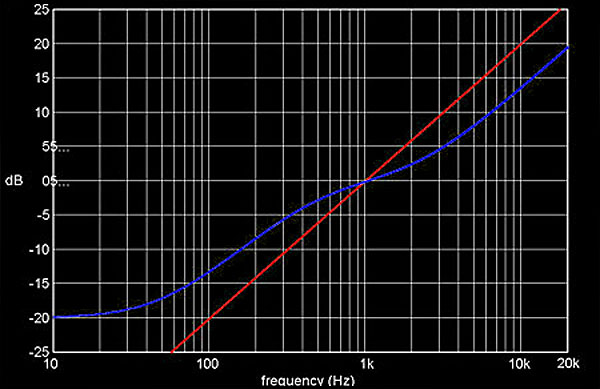
When the Record Industry Association of America adopted its standard disc playback equalization curve in 1954, hi-fi enthusiasts heaved a sigh of relief and bade fond farewell to years of confusion, doubt and virtual pandemonium. Before the RIAA curve there were six "standard" curves in use, and since nobody seemed to know who was using what, getting flat response from a disc was often more a matter of luck than anything else. The adoption of the RIAA standard playback curve heralded an end to all this.
There's No Business like the Audio Show Business

With this year's Consumer Electronics Show behind us, readers of our on-line show reports know the sad truth: that the largest industry-only technology show in North America attracted even fewer "high-performance" audio exhibits in 2019 than it did in 2018. The phrase "CES is dead" is now a mantra, and no one should be surprised if this year's poor showing proves to be the final nail in CES's coffin as far as high-end audio is concerned.
There's No Business Without Show Business

Cole Porter: An All-Star Tribute (DVD, VAI) includes outtakes of the great Ethel Merman filming for TV, in 1960, a performance of Irving Berlin's "Alexander's Ragtime Band." In take after take, something goes wrong. Each time the director shouts "Cut!," Merman stops in her tracks, almost as if deflating; when the director yells "Action!" she starts from the top, fresh as new, the model showbiz professional.
Thinking Outside the Niche

With increasing frequency, many audiophiles and industry professionals have accepted that the quest for highest-quality sound quality is a luxury and esoteric pursuit that, by its very nature, can appeal to only a small niche market. According to this view, the massesthe 99%, if you willare either satisfied with Pioneer, Bose, Samsung, Dr. Dre, and iPhone/Android/tablet sound; can't tell the difference between quality and dreck; or will never have the money or imagination to move beyond lowest-common-denominator sound. To the extent that the vast majority knows anything about high-end audio, it regards it as an absurdly overpriced indulgence and a target for their disdain.
This Magic Moment

I remember the Tuesday night that music broke free of my hi-fi. The sound stirred my souleverything was so right that I was tempted to call over my audiophile pals to earwitness its magnificence. But I didn't, fearing that sharing the sound might break the spell cast first by the Allman Brothers Band's At Fillmore East (2 LPs, Capricorn ST-CAP 712223 VSRP), then by Jimi Hendrix's Live at the Fillmore East (CD, MCA MCAD2 11931). By the time Hendrix got to "Machine Gun," I could almost smell the pot wafting up to the Fillmore's top balconies.