

Legend Audio Design Starlet integrated amplifier
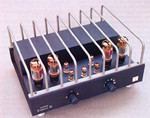
In the ongoing audiophile debate over the relative merits of solid-state vs tube amplification, compelling cases can be made for the overall musicality of both methods. And while there's a lot to be said for the dynamic headroom, bass focus, clarity, frequency extension, and silent performance of solid-state gear, it's funny how much you can come to miss the aural verities of tube electronics after a prolonged absence.
Line Magnetic Audio LM-518IA integrated amplifier

When I began writing for Stereophile, I heard people whispering:
"Herb is one of those triode-horn guys."
Wrong. Most of my life, I've favored solid-state integrated amplifiers driving small, British-made speakers.
"I'm sure he hates digital."
Line Magnetic LM-845IA integrated amplifier

If you've ever paused in front of a painting by Peter Paul Rubens, you may have noticed that the canvas seems to glow. Everything in Rubens's paintings celebrates abundance. A golden light bathes his landscapes, and his figures are epitomes of radiant healththe women ample and voluptuous (a body type sometimes called "Rubenesque"), the men vigorous and athletic. Invariably, these expanses of rosy European flesh appear to be in motion, an effect Rubens mastered more thoroughly than arguably any artist of his age.
Linn Majik DS-I D/A integrated amplifier

My quandary on receiving for review the Linn Majik DS-I: What, precisely, is it supposed to do? Does the Majik DS-I contain a hard disk and music-ripping software, so I can use it to store all the music in my CD collection? Does it have a graphical user interface (GUI) that at least matches the one provided by the endearingly free Apple iTunes? Does it include a DAC that allows it to play the music files I've already put on my computer?
LSA VT-70 integrated amplifier

I like to think that my musical tastes are pretty eclectic: jazz, pop, blues, Americana, metal, world music, ambient, prog rock, more. Operatic music and classical singing, though? Thanks, I'll pass.
There are exceptions. I find tear-tugging beauty in "Ebben? Ne Andrò Lontana" from Alfredo Catalani's La Wally, whether sung by Donij van Doorn or Wilhelmenia Wiggins Fernandez (footnote 1). The German Lieder of Kurt Weill, as interpreted by soprano Teresa Stratas, produce gladness in my heart but confusion in my uncomprehending wife and children. Maybe it's because the often sarcastic, gruff songs about the travails of the lumpenproletariat contrast with the purity of Stratas's classically trained voice. That clash is precisely what I love about it.
Luxman L-509X integrated amplifier

We're well past the day when the sound of top-tier tube amplifiers can be described as "syrupy" or "too warm" or producing "soft bass." Equally true, solid-state designs have reached a level of maturity at which "sweetness," "fluidity," and "flow" are similarly applicable descriptors, thus smashing the cliché of "cold transistor sound."
Luxman L-509Z integrated amplifier
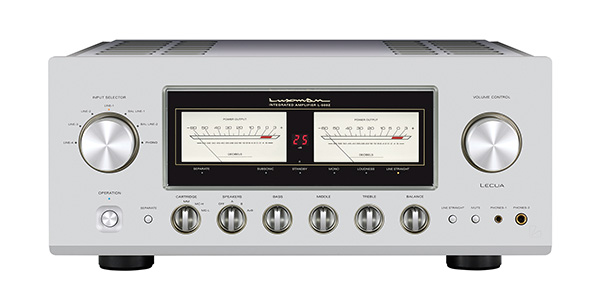
When I reviewed Luxman's L-509X flagship integrated amplifier, in May 2018, that sleek machine shook me to my vitals. I wrote, "Record after record, the L-509X illuminated every important aspect and area of the recording. It lived and breathed in the air around the notes, consistently creating big, solid, spatially natural images that presented me with a) the roundness and complexity of each instrument, b) a holistic sense of the musicians' intent, c) excellent touch and texture and impact, and d) a unified whole, regardless of musical style or dynamic level." I concluded, "the Luxman L-509X integrated amplifier takes a different path to musical involvement. The L-509X is one of the most intimate-sounding, dynamic, texturally nuanced, truthful purveyors of music of my experience."
Luxman's new flagship integrated, the L-509Z, has the same thick aluminum top plate and steel casework as its forebear and weighs a similarly knee-crushing 64lb. The older L-509X cost $9495; its newer, younger sibling rachets that up to $12,495. The front-panel controls are nearly identical, including those big, eye-catching dual VU meters; except for a new 4.4mm Pentaconn five-conductor mini headphone jack and a mute button, the Z matches the cosmetics of the X to a T. But as in all things, appearances can be deceiving.
Luxman SQ-38u integrated amplifier

Let's not beat around the bush: this is what an amplifier is supposed to look like. The silver front panel contains over a dozen knobs and switches, yet somehow avoids seeming cluttered. The solid wood cabinet wouldn't look out of place next to Hugh Hefner's cognac decanter. And the controls! The SQ-38u is as full-function as they come ("as they used to come" would be closer to the truth), with a Balance knob, separate Bass and Treble Tone Controls, a low-frequency cutoff (aka "rumble") switch labeled Low Cut, a Mono/Stereo switch, and a mute button; plus switching and connectors for two pairs of loudspeakers. Everything but curb feelers.
Luxman SQ-N150 integrated amplifier

In 2007, Luxman Corporation released the SQ-N100 tubed integrated amplifier as part of the company's NeoClassico Series, which focused on smaller, space-saving designs. The 12Wpc (into 6 ohms) SQ-N100 proved very popular, both in Japan and internationally, possibly owing to its use of EL84 pentode power tubes, cherished among audiophiles and electric guitar players alike for their midrange-to-treble luster and visceral sense of drive.
Magnum Dynalab MD 208 receiver
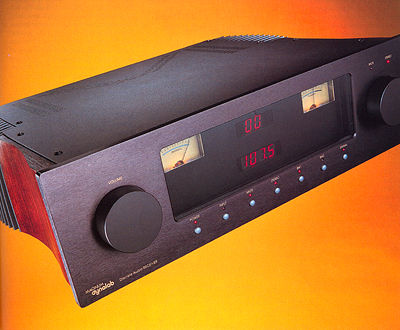
Musical arguments in favor of separate components are compelling and well-documented. But there's also something musical to be said about reducing the number of power sources, keeping signal paths short and direct, and hard-wiring connections between components rather than employing multiple sets of interconnects. So while a designer must inevitably confront certain tradeoffs, the explosive growth and popularity of single-box products in the past few years contradicts the received wisdom passed down by some of the more sniffy audiophiles: that such unduly proletarian products are terminally compromised in terms of absolute levels of music reproduction.