

NuForce Icon USB-input integrated amplifier

In a world of me-too products, NuForce distinguishes itself from all those other components whose names begin with i by actually using a capital I. Actually, that statement is unkind, even unfair—unlike the myriads of products designed to capitalize on the Apple iPod's current sexiness, the NuForce Icon isn't designed to be portable (although NuForce does offer an Icon Mobile). What the Icon unquestionably is is a fine little piece of audio engineering, which most of those other i components are not.
NuPrime MCX-800AD Immersive multichannel integrated amplifier
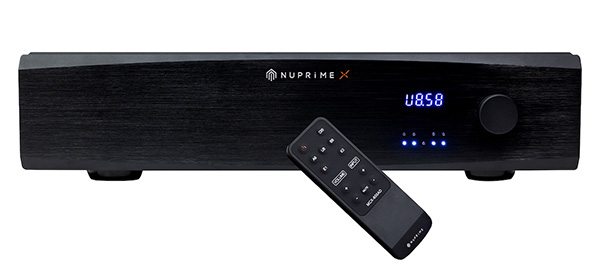
NuPrime calls the MCX-800AD ($3995) an "Immersive Audio Processor," but that's not really what it is, so I don't know why they call it that. NuPrime lists it on its website under both "Amplifiers" and "Multi-Channel DACs." So what is it, a floor wax or a dessert topping?
Octave Audio V 40 SE integrated amplifier

They spoiled all my fun.
When I receive a product sample for review, I look forward to taking photos while I unpack the thing, as a guide to repacking for later on. This company provided an illustrated packing listit was the first thing I saw on slitting open the carton. I look forward to crafting amusing remarks about poorly written or whimsically translated owner's manuals; this company provided the clearest, most comprehensive manual I've ever seen. I look forward to having some sort of anomalous eventsmoke, noise, or smoke and noiseto write about. This product offered nothing of the sort.
Octave Audio V 80 SE integrated amplifier

As a salt-and-pepperhaired bachelor living in present-day Manhattan, I admit to participating in mating rituals that have included electronic divining tools and computer-aided pleasure machines. In a phrase: online dating.
From various sites whose names begin with O or M, and which can lead to S or M with a stranger who may or may not be who or what she claims to be, I've had private zones tickled silly, and as often have found the process to be confusing, depressing, or both. I've been happily hijacked by a flexible Broadway singer, met a she who was really a he, and even found employment, all through online dating.
Octave Audio V70 Class A integrated amplifier
It may be strange to read what I'm about to say in the pages of Stereophile, but it's the cold hard truth so here goes: Audio reviews are inadequate. They don't tell the whole story. They come up short and can even misdirect.
It's not their fault, or at least sometimes it isn't. Even the good ones can't tell you how something will sound to youlet alone make you feel, the ultimate pointin your own room. As helpful as they may be, they can't address the elephant in the listening room: synergy.
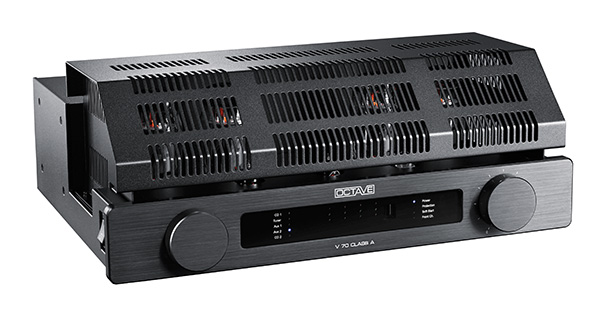
In reviewing the Octave Audio V 70 Class A integrated amplifier ($12,000 and up; $15,900 as reviewed), I was reminded of the importance of synergy in our hobby.
Onkyo A-9555 integrated amplifier

"Onkyo Returns to its Stereo Roots to Debut New Digital Amplifier Technology." This heading of the press release for Onkyo's A-9555 digital integrated amplifier was surely intended to warm the cockles of the two-channel audiophile's heart. Some of us remember the Onkyo Grand Integra amplifiers of the 1980s, which were considered competitive with the big Krells and Mark Levinsons of the day. To refresh my memory, I looked through my Stereophile archives and found the December 1985 issue (Vol.8 No.8), which included Larry Greenhill's review of the Grand Integra M-510, a 300Wpc power amplifier covered in lacquered persimmon wood, weighing 139 lbs, and costing $4200 (about $8000 in 2007 dollars). Larry was most impressed with the M-510, describing it as "a very powerful amplifier with outstanding sonics across the board—power with delicacy."
Onkyo Icon Series A-50 streaming integrated amplifier

There are craftspeople and companies in high-end audio doing admirable work. Those at the cost-no-object end of the business are pushing performance limits and doing new and better things with new and better materials. The ones I especially admire, though, are in the high-value end of the business, making extraordinary equipment at approachable prices.
Outlaw Audio RR2150 stereo receiver
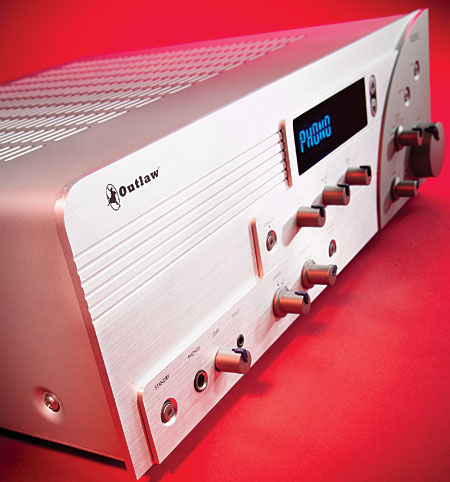
Wilson Audio Specialties' David Wilson likes to say that you should build a stereo system from the speakers down. Of course he does—he sells speakers. But that doesn't mean he's wrong. So recently, when offered an inexpensive new product for review, I decided it would be a good test of Wilson's theory. I tried driving Wilson's $45,000/pair MAXX2http://www.stereophile.com/floorloudspeakers/805wilson">MAXX2; speakers with Outlaw Audio's RR2150, a $599 stereo receiver.
Outlaw Audio RR2160 stereo receiver
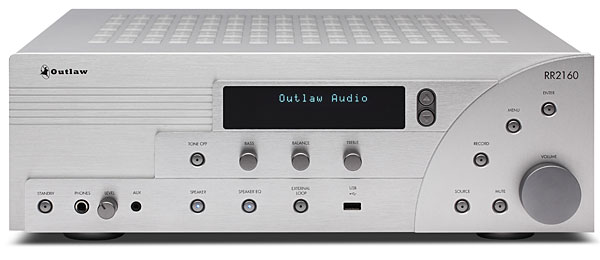
For audiophiles of a certain age, the mere mention of NAD Electronics' original 3020 integrated amplifier (1980, designed by Erik Edvardsen), or Adcom's GFA-555 stereo power amplifier (1985, designed by Nelson Pass), conjures up happy memories of audio's last Golden Agean idyllic time when working stiffs could luxuriate in the same audio arcadia as bankers and brokers. Since then, few, if any, audio components have achieved that level of iconic high value. Which caused me to wonder: What would it take, nowadays, to manufacture a genuinely high-value audiophile product: one that delivers exciting, satisfying sound at a price most audiophiles can afford?
Parasound Halo Hint 6 integrated amplifier
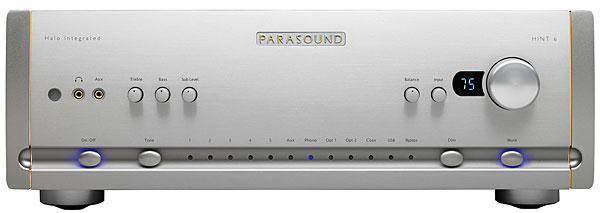
In his review in the November 2015 issue, Herb Reichert wrote that Parasound's Halo Integrated amplifier "has a recognizable sonic personality: easy flowing, mostly smooth, and decidedly mellow. . . . But don't worryit's not milquetoast mellow or unwashed-hippy-stoner mellow. It is, instead, an everything's-under-control, don't-worry-now mellow."