

Parasound Halo Integrated integrated amplifier
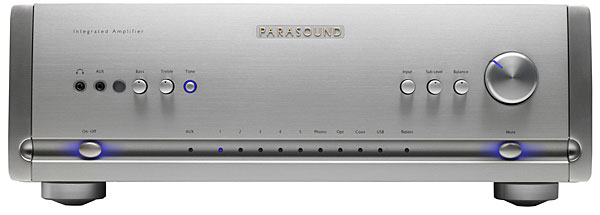
Like baking bread or watering my garden, playing records in my monk's cell is an expression of my devotion to living mindfully. It is part of my search for identity and comfort. It shows me how my thoughts, feelings, and poetic imagination fit in with yours, Keith Jarrett's, and everyone else's. The only problem: Often, the stereo components that most enhance my experiences of devotion and identity are not those that I can sincerely declare to be the most accurate or neutral.
Pass Laboratories INT-60 integrated amplifier
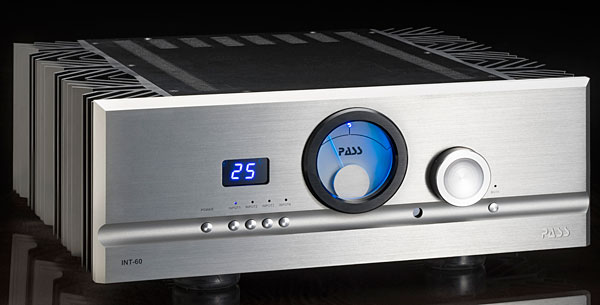
If I told you that Pass Laboratories' INT-60 integrated amplifier ($9000) was engineered by meth-lab trolls, its faceplate was wonky, its transformers buzzed, and it made every instrument sound like a tambourine, you'd think I was a crackpot with some kind of axe to grind, right? Because I suspect that, like me, you've never experienced or even read about a Pass Labs amp that didn't sound good.
Pass Labs INT-150 integrated amplifier
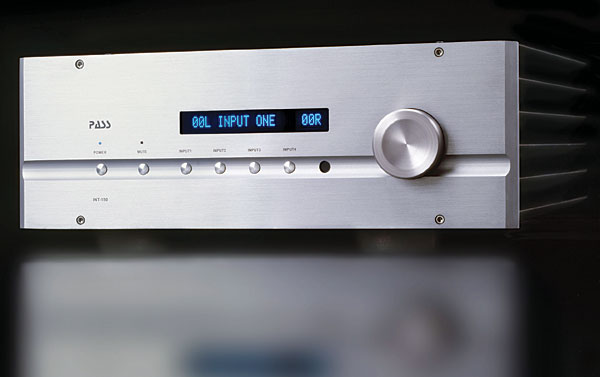
Ten thousand hours. According to Malcolm Gladwell, in his book Outliers: The Story of Success, it takes 10,000 hours of practice to become truly exceptional in your field. For any endeavor, Gladwell contends, what will get you to Carnegie Hall isn't inborn talent but practice, practice, practice.
Pass Labs INT-25 integrated amplifier
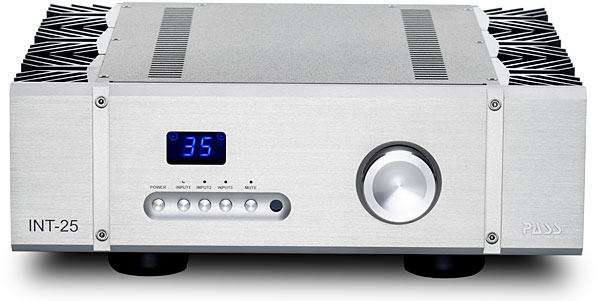
In my personal life I prefer the minimalist, one-box architecture of integrated amplifiers. Always have. Before I started writing for Stereophile, my only audio system consisted of a pair of 15 ohm Rogers LS3/5a loudspeakers (with factory wall mounts) and an ancient Creek integrated amplifier, connected to my computer via a Halide DAC HD, and to an Oppo CD player. That system had pitch-perfect tone and was satisfying with all types of music.
Pathos InPoL Legacy integrated amplifier
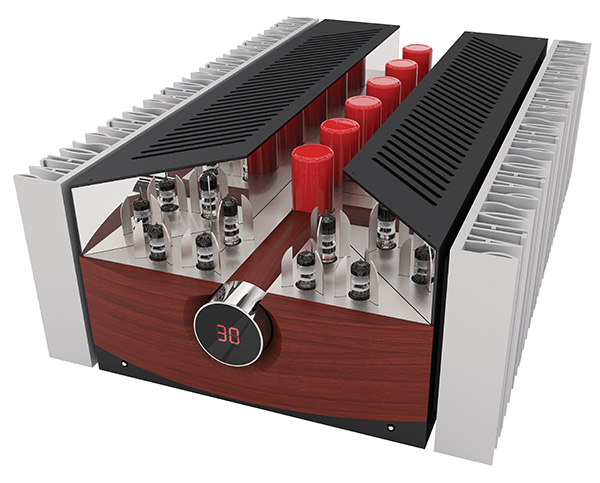
Back when gasoline had lead in it and amplifiers came with circuit diagrams in the back of the manual, there was an unspoken understanding that power meant weight. A professional camera was a Graflex Speed Graphic or a Hasselblad 1000F, built like a small battleship and nearly as heavy. Powerful car engines were cast-iron V8s with cylinders you could stick a fist in. And of course, serious amps had transformers that could double as boat anchors.
These days, amplifier design often emphasizes efficiency. Class-D amps in particular have come a long way. Many are terrific, and they're undeniably practical. But there's still something uniquely satisfying about a design that prioritizes timeless expression over economy of electricity or space.
The Pathos InPoL Legacy, a class-A design, is unapologetically massive and so gloriously overbuilt that moving it requires a tactical plan and a chiropractor.
Pathos InPol Remix MkII integrated amplifier

Sometimes when the world shouts too loudly, I immerse myself in other sounds: in music. I escape the cacophony by diving into my stash of vinyl records (not literally, although that's a fun image) and reveling in the soundwaves they release. The soundwaves liberated from those physical grooves, combined with impressions stored deep in my hippocampus, never fail to soothe, energize, fascinate, excite.
Peachtree Audio decco65 D/A integrated amplifier
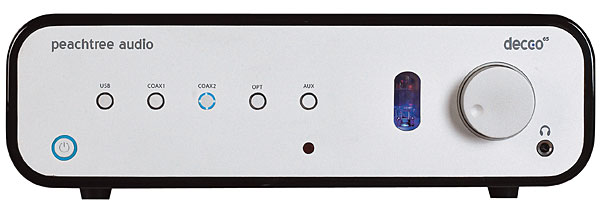
Whether one was surprised, in 2010, by the success of Peachtree Audio's iDecco may have more to do with age than anything else. My peers and I wondered, at first, who would want their high-end integrated amps to come bundled not only with digital-to-analog converters but with iPod docks, of all things; at the same time, younger hobbyists wondered who in the world still wanted their integrated amps to contain phono preamplifiers. (Respect for the elderly, myself especially, prevents me from adding "and mono switches.") Color me chastened.
Peachtree Audio nova125 integrated amplifier

With Peachtree Audio's new nova125 integrated amplifier, most decisions are made for you.
Need a DAC with three S/PDIF inputs (two coax, one optical)? An asynchronous USB DAC? A line stage? A tubed output buffer? A power amp that should be able to drive even difficult speaker loads? Remote control? You've got them all for $1499. Just add speakers. (I assume you have a laptop computer and several disc spinners.) You may want a separate phono stage, because there is none onboard.
Peachtree Audio nova300 integrated amplifier

One year ago almost to the day as I write, Peachtree Audio invited me and other members of the audio press to the New York City retail shop Stereo Exchange, where various announcements regarding the brand were bundled, by the company's Jim Spainhour and David Solomon, under the virtual banner "PEACHTREE 2.0." Among the news: Peachtree, based in Bellevue, Washington, would now be manufacturing their nova integrated amplifiers in Canadathe company's previous offerings were all made in Chinaand they'd signed up a new design and engineering team.
Peachtree iDecco D/A integrated amplifier

As with so many other things, from cell phones to soy milk, the idea of a portable MP3 player was something I at first disdained, only to later embrace with the fervor of any reformed sinner. But not so the idea of a high-fidelity iPod dock: Given that I now carry around several hundred high-resolution AIFF files on my own Apple iPod Touch, the usefulness of a compatible transport seemed obvious from the start. Look at it this way: In 1970, whenever I bought a music recording, I could enjoy it on any player, in any room in the house. In 2010, why shouldn't I enjoy at least that degree of convenience and flexibilitywithout resorting to a pair of tinny, uncomfortable earbuds?