

Music in the Round #1

Multichannel music is the future. The two-channel reproduction that we have enjoyed for the past four decades is but the first step from monophonic (single-source) sound to true stereophonic reproduction. I intend to preach that to Stereophile readers who believe it and to convert the obstinate objectors.
Music in the Round #10
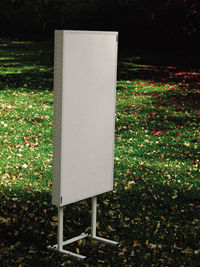
Along with speakers and their placement, the greatest influence on the sound of a music system are the acoustics of the room itself. With two-channel stereo, some reflections and reverberations are necessary in order to maintain the perception that one is listening in a real space. So, while many experts recommend having a "dead" end behind and near the speakers that absorbs most sound, few suggest such treatment for the rest of the room. With too few sonic reflections, the stereo image would narrow; without the aid of "room gain" to enrich the bass, the sounds of instruments and voices would be thin. Listening in an anechoic chamber is interesting and informative, but far from pleasurable.
Music in the Round #100: Multichannel & Merging Anubis
This is the 100th andsurprise!final edition of Music in the Round. MitR began in mid-2003, shortly after SACD and DVD-A discs made high-quality multichannel music convenient and widely available. At the time, I was convinced that multichannel reproduction was superior to stereo because it was able to reproduce the full sound of the performancenot just the performers. Stereophile's founder, J. Gordon Holt, had promoted this idea many times, but the appearance of the new media finally brought it to a wider audience.
Music in the Round #11

When I was a young amateur photographer, I subscribed to all the major photo magazines and avidly read all the articles. However, I was bugged when I realized there was a cycle of repetition—that I was reading about the basics of Ansel Adams' Zone System for the third time.
Music in the Round #12
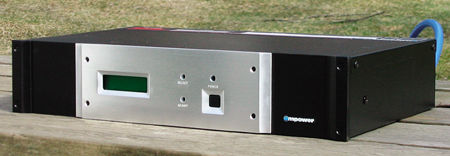
Ever since I installed dedicated power lines for my multichannel system, I've been wrestling with the issues of surge protection, power conditioning, and voltage regulation. I start with a bias based on decades of happy listening without being concerned about any of these problems, and my belief that competent electronic components must be, and are, designed to perform in the real world. After all, whether the device's AC power supply is a traditional transformer-bridge-reservoir or a switching supply, its output should be a DC source that is sufficient to let the active circuitry meet its specifications. Many manufacturers, such as Bryston, recommend bypassing any line conditioners and plugging their components directly into the AC outlet.
Music in the Round #13

The ongoing reissues of Mercury Living Presence and RCA Living Stereo recordings, have been the signal successes of the SACD format. Despite having been recorded in only (!) three channels, these releases have given us very good justifications for going beyond two-channel stereo to get as unrestricted a hearing as possible of live performances.
Music in the Round #14
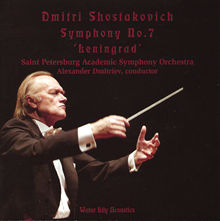
Looking back to see which of the multichannel discs I've reported on that have made a splash in the market, I detect an ominous trend. Most are reissues of classic performances, including all the RCA Living Stereo and the Mercury Living Presence SACDs, as well as a number of classic jazz and rock albums (including yet more editions of Kind of Blue, Dark Side of the Moon, and Brothers in Arms).
Music in the Round #15

In the past few installments of this column I've promised to talk about another subwoofer equalizer system. Now I'm going to pull the old switcheroo and discuss a different subwoofer EQ. The SMS-1 is a new, standalone digital equalizer system from Velodyne, based on the EQ built into their DD-series subwoofers. Larry Greenhill went gagahttp://www.stereophile.com/subwoofers/604velodyne">gaga; over the Velodyne DD-18 in the June 2004 Stereophile, particularly because of the ease and sophistication of the EQ system. Apparently, one of the Velodyne sales guys asked the obvious: What about making the EQ available separately for use with other subwoofers?
Music in the Round #16
In September 2005, for the first time, I attended the Expo of the Custom Electronic Design & Installation Association (CEDIA), in Indianapolis. Although I saw many familiar faces and companies, it was apparent that the event was dominated by a spirit very different from the one that pervades this magazine or the high-end exhibitions at the annual Consumer Electronics Show (CES). That spirit, however, does suffuse the rest of CES, and is well represented at Primedia's own Home Entertainment shows. That spirit encompasses video, and a view of audio that differs significantly from that of traditional audiophiles. Multichannel surround sound is taken as read, and novel technologies are prized higher than the proverbial "straight wire with gain."
Music in the Round #17

When I got married, my mother pulled my bride aside and said, "Now it can be your fault!" You see, I have always practiced blame-avoidance. Now I get to do it again.