

Music in the Round #28
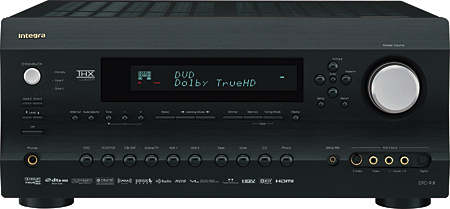
I had planned to feature a few intriguing new products I saw at CEDIA's Expo 2007 held last September in Denver, but I did that on the Stereophile websitehttp://blog.stereophile.com/cedia2007">website;. Instead, I'll just tell you about the only big audio trend I saw there: HDMI.
Music in the Round #29
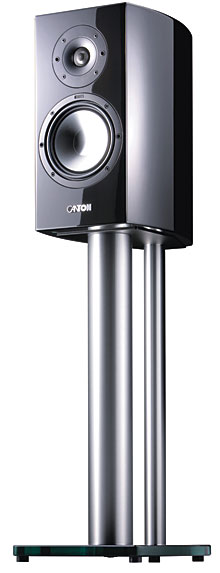
For years, I have espoused the use of the same speakers (except subwoofer) in all positions for multichannel music. To have no speaker in the system contributing a different voice to the choir seems as intuitive as having the room acoustics not color the sound. Of course, this still doesn't guarantee perfect timbral match—positioning and room acoustics usually impose some unique characteristics under all but the most perfect and symmetrical conditions. You can hear tonal imbalances even between the left and right speakers of most two-channel systems simply by switching pink noise between them. On the other hand, there's no reason to superimpose on these unavoidable differences the additional imbalances inevitable with using different speakers in a multichannel array.
Music in the Round #3
Bass management? We don't need no stinking bass management. We use full-range speakers all around!
Music in the Round #30
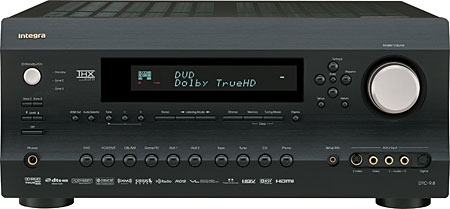
In Januaryhttp://www.stereophile.com/musicintheround/108mitr">January;, I reported on my experiences with the Integra DTC-9.8 preamplifier-processor, which I found to be outstanding with digital sources. That assessment was due, in no small part, to the performance of the Audyssey MultEQ XT room-correction system, which is included in the DTC-9.8. With only a little serious effort, MultEQ opened up the entire soundstage, making possible a better appreciation of the hi-rez sources now available on all sorts of discs. I have no doubt that any careful user can achieve similar satisfaction.
Music in the Round #31
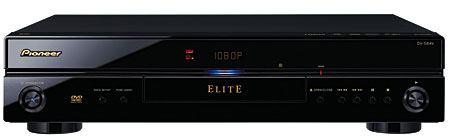
Recently, I got an e-mail from a colleague at another audio magazine complaining about the paucity of new SACD hardware. We've been hearing about the slowing pace of new SACD releases, and about Sony's neglect of a format they themselves developed, but I now realize that, apart from the High End (footnote 1), machines that can play SACDs have been fast disappearing from the middle of the market. When the battle of SACD vs DVD-Audio was raginghttp://www.stereophile.com/asweseeit/305awsi">raging;, universal players that could play both formats were available from almost every major manufacturer. Even John Atkinson jumped on the bandwagon, acquiring a Pioneer DV-578A universal player for $150 to use as a reference. The exceptions were the very companies that had developed the new formats: Sony offered only SACD players, and Panasonic, at least at first, only DVD-A players. No matter—you could buy a universal player at any national electronics chain store, even if that store didn't stock recordings in either format and their staff had never heard of DVD-As or SACDs. Some things never change.
Music in the Round #32
Last time in "Music in the Round," I wrote about the fading presence of SACD in the hardware and software markets. However, the enduring interest in LPs seems to tell us that where there is a demand for high quality by discerning audiophiles, there will be a supply.
Music in the Round #33
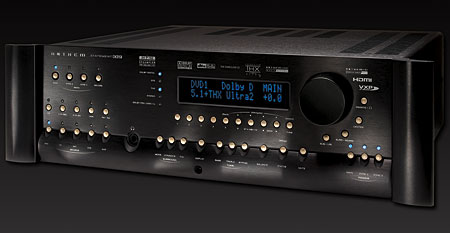
Welcome to the wonderful world of firmware and software updates. With almost every audio device now microprocessor-controlled, and the tasks to be performed increasingly complex, it's not surprising that "finished" products leave the factory only to be stymied by reasonable but unpredicted user practices. It's not that we're all becoming beta testers, but we are contributing to the intelligent evolution of product capabilities.
Music in the Round #34

Sometimes, I think life would be easier if I were an audio customer. If I didn't have to wait on the priorities of the electronics companies, I might have gone out and bought a Blu-ray player months ago. Had I done so, I would have been shocked to find that almost all BD players are released with fewer than the advertised number of features, and sometimes require firmware updates—sometimes even a return to the manufacturer—to have them installed.
Music in the Round #35
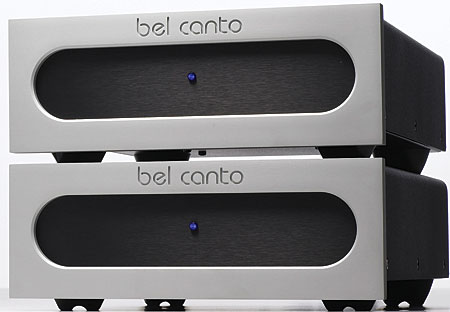
I've been enthusiastically tracking the development of Bel Canto's class-D amplifiers, from their original TriPath-based">http://www.stereophile.com/amplificationreviews/442">TriPath-based models to their more">http://www.stereophile.com/musicintheround/1106mitr">more recent designs based on Bang & Olufsen's ICEpower modules. With each step, Bel Canto has improved their amps' sound quality and reliability.
Music in the Round #36
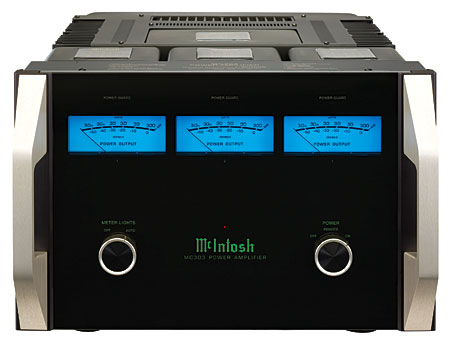
The first time I ever heard stereo sound, it was in a shop on Manhattan's Radio Row. In addition to the Studer staggered-head tape deck, the system consisted of pairs of McIntosh C8 preamps, MC60 power amps, and monster Bozak B-310 speakers. I can still picture the room and almost hear the sound. I was then an impecunious high-schooler, and while I always strived to buy the best equipment I could afford, I unfortunately was never able to own any of these iconic products. However, when I saw McIntosh's new MC303 three-channel power amp glowing brightly on silent display at the 2008 CEDIA Expo, a light bulb went on over my head: I'd been assessing a series of three-channel and monoblock amps, and the MC303 would fit nicely into my New York City system.