

Music in the Round #46
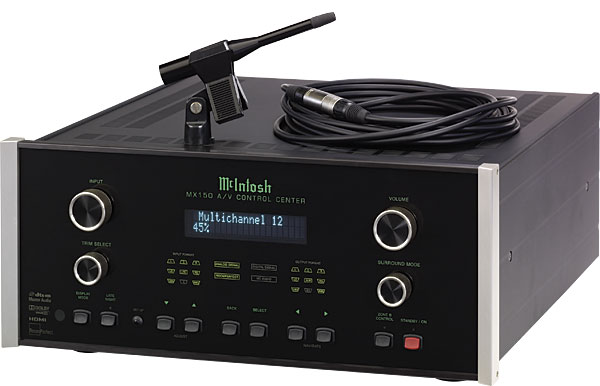
As I wandered the displays and demonstrations at the 2010 CEDIA Expo last September, I found few multichannel products worth writing about. Sure, there were many interesting new speakers from Pioneer, GoldenEar, Atlantic Technology, Adam Audio, MartinLogan, and others, but really, you could just use two for stereo. I saw the requisite number of new multichannel players, processors, and receivers, but most boasted no more than some new features that made them easier to use (iPad apps were rife) and/or gave them access to new sources (audio and video streaming were obligatory).
Music in the Round #47

The AV7005 is Marantz's second multichannel preamplifier-processor and, at $1499.99, the least expensive pre-pro I've used or reviewed. The Integra DTC-9.8, which has been resident in my stable since 2007, when it cost $1600, and its successors, have since then steadily risen in price. The Marantz's predecessor, the AV8003 ($2599.99), was highly praised in many quarters. I never got my hands on one because, like a churlish child, I felt it lacked features I considered essential. Other reviewers didn't seem bothered by those limitations, or were unaware of them. The AV7005, however, looks and feels like a winner for music and home theater. I see no evidence of skimpingthe AV7005 sports such high-end features as balanced outputs, network controllability and streaming, and, of course, HDMI v1.4a for compatibility with 3D and all audio codecs.
Music in the Round #48
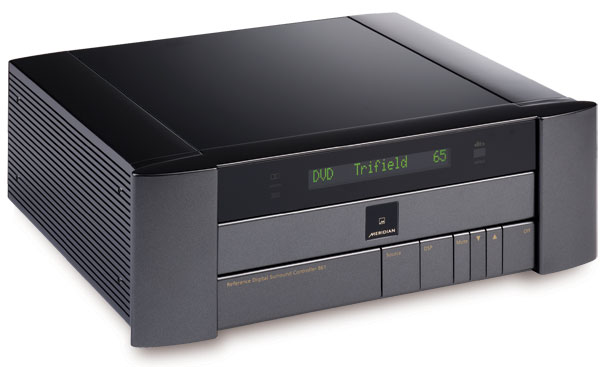
Kal reviews the Yamaha Aventage BD-A1000 universal Blu-ray player and remarks "a sharp-looking, great-sounding machine that will play any extant digital format well. It sounded better in my better system, where I could really relish its low-frequency performance." He also takes a listen to the Meridian 861 Reference v6 Digital Surround Controller and ponders "how to reconcile the internal complexity of Meridian's 861 Reference v6 with the disarming purity of the sounds it reproduces?"
Music in the Round #49
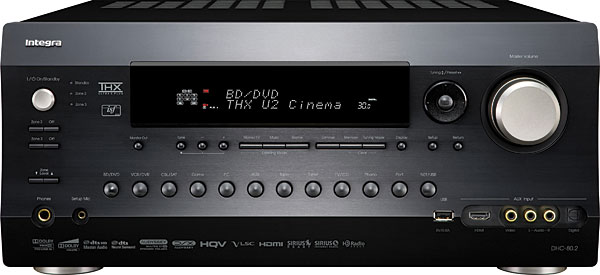
Things move fast in multichannel. No, I'm not referring to the speed of sound effects as they whip around a roomlet's leave that for the home-theater mags. I'm talking about audio technology. Since I began writing this column in June 2003, we've seen serious technological changes almost annually, some driven by real needs, some imposed by marketing considerations. To me, the rate of change seems strikingly rapid, compared to that of the products I review for the main portion of Stereophile, based, as they are, in the two-channel world.
Music In The Round #5

As noted in the March">http://www.stereophile.com/musicintheround/304round">March installment of "Music in the Round," there are so many new multichannel hardware goodies to talk about that we need this bonus appearance of the column just to keep up. Nor do I expect the rush of gear to stop—I've just returned from CES in Las Vegas, where there was lots of new multichannel hardware and software that I will report on in June, including a luscious all-tube analog multichannel preamp. This month I report on a universal disc player, a comparison of Sony's top-of-the-line SCD-XA9000EShttp://www.stereophile.com/digitalsourcereviews/1203sony">SCD-XA9000ES<…; multichannel SACD player with its respected predecessor, and a multichannel preamp that's almost too good a deal.
Music in the Round #50

I began my July column by talking about how quickly things are changing these days in multichannel audio. What I didn't pay enough attention to is that some things can change quickly enough to create inefficiency. Given that most multichannel digital products are based on digital signal processing (DSP), and many are network-enabled, they can be updated with relative ease. Almost every preamplifier-processor or A/V receiver I've reviewed has needed a firmware update during the reviewing process, and such updates are de rigueur for Blu-ray players, as more and more features (!) are added to new releases. And in addition to providing new performance features, firmware updates often also include corrections for operational glitches that have slipped by the designers and their alpha and beta testers, no matter how assiduously they've done their work.
Music in the Round #51

As I write this, in early August, the global economy is in flux and the stock market gyrates, seeming in stark contrast with the gleaming, luxurious audio components that surround me. Perhaps there is some prescience in my rising interest in reasonably priced, high-performance products, as exemplified by the Oppo Digital BDP-95 universal Blu-ray player, which I reviewed in this column in September. Surely there must be other products that provide truly excellent sound at prices strikingly lower than expected.
Music in the Round #52

In my last column, in November 2011, I mentioned that preamplifier-processors are generally at a price disadvantage in comparison to the same manufacturer's A/V receivers. The economies of scale almost ensure this. Typically, to design a pre-pro, a manufacturer uses one of its AVR models as a platform; the result is most distinguished from its parent AVR by its lack of power amplifiers.
Music in the Round #53
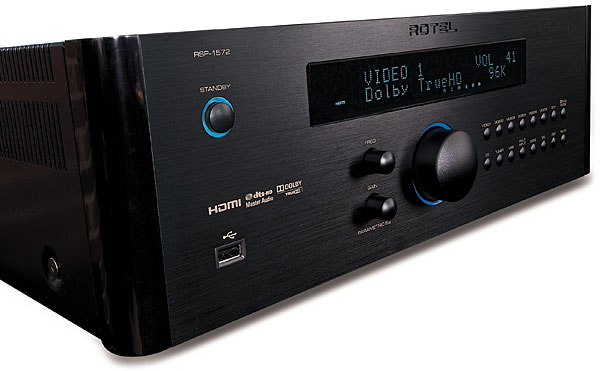
When I attended the 2011 CEDIA Expo last September, one thing I was looking for was a rumored top-of-the-line preamplifier-processor from Rotel with all the bells and whistles and a large TFT display. It was nowhere to be seen or even rumored, but the Rotel folks did introduce me to a less exalted pre-pro, their RSP-1572 ($2199). I've always liked Rotel's styling; I guess you could say that the pretty RSP-1572 caught me on the rebound (footnote 1).
Music in the Round #54
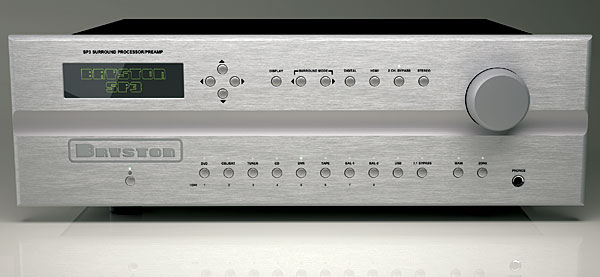
Bryston describes its SP-3 ($9500) as comprising a true analog preamp plus a full-featured multichannel digital audio processor, and claims that none of those functions compromises any of the others. That statement is a slight modification of the sentence that began my September 2006 review of the SP-3's predecessor, the SP2. It is indicative of the enduring philosophy of the manufacturer that, in the more than five years since, Bryston has worked to create a new pre-pro that fully reflects new developments in audio and video but without compromising analogquality. Audio is extracted from an input HDMI signal for processing while the video signal is routed, unprocessed, to the two HDMI outputs. Digital audio of all formats, including high-definition audio codecs, are supported, and stereo and multichannel analog inputs are handled by discrete class-A circuitry. Completely separate power supplies support the analog and digital functions, and the internal construction is highly modular, to ease future updating of the SP-3 to keep pace with evolving technology.