

Music in the Round #37

HDMI is the invention of the Devil. I grant that the Devil is very smart—he has put on a single cable both hi-rez audio and video, and paid tribute to the gods of industry by incorporating obligatory content protection. However, he has confounded the rest of us by using a connector that, while it relies on friction to maintain physical contact, has so little friction that the cable connector can be easily displaced from or misaligned with the chassis connector. The traditional audiophile predilection for heavy cables is, in this case, actually counterproductive—exerting just a bit of torque on a stiff HDMI cable can be enough to break the connection.
Music in the Round #38
We all recognize that the Super">http://www.stereophile.com/features/374">Super Audio Compact Disc, despite being an almost ideal format for high-resolution audio, has not replaced the "Red Book" CD. However, Sam Tellig's comments in the June and July issues of Stereophile, and Steve Guttenberg's "As">http://www.stereophile.com/asweseeit/whatever_happened_to_51-channel_mu… We See It" in July, unleashed e-mails urging me to champion multichannel sound (don't I do this already?) and smite the unbelievers (not a chance).
Music in the Round #39

It began when my oldest brother, 13 years my senior, returned from military service and told me about "hi-fi." Until then, all I'd known was our ancient tabletop radio-phonograph with its insatiable appetite for osmium styli. Back then, in the early 1950s, audio componentry was scrappy, still evolving from World War II military electronics and public-address systems. I began reading the electronics magazines and learned that, to get started, I needed a record player connected to an amplifier and a speaker. I toured the shops and stalls on old Cortlandt Street, before the building of the World Trade Center, and made my selections based on appearance, reputation, and specifications rather than on sound. Still, compared to what we were used to, the results sounded hair-raisingly good.
Music in the Round #4
For audiophiles who love multichannel music, the center-channel speaker is a problem second only, perhaps, to that of bass management. In many ways, the rerouting of bass to a subwoofer or to the front left and right main speakers is dictated by room acoustics or the bass limitations of the other speakers. On the other hand, most of us had no real need for a discrete center-channel to fill in the middles of our traditional stereo systems. In fact, one of the glories of really good stereo is the simulation of a convincing central image, such that there's a seamless soundstage from beyond one speaker, across the room, to beyond the other speaker.
Music in the Round #40

It seems only yesterday, but it's been 10 years since I began using the original Paradigm">http://www.stereophile.com/subwoofers/955">Paradigm Reference Servo-15 subwoofer in my system. It was good then, and it still is, although a lot around it has changed. At first, I hooked it up via Paradigm's X-35 crossover, then via a Technics SH-AC500D surround processor, and finally to the subwoofer/LFE outputs of the various preamplifier-processors and A/V receivers I've used. Y'see, the Servo-15 is just a powered sub. It has an amp and a level control, but no crossover, no channel mixing, and no phase control. Just plug in the signal and it plays it. Along came in-room response correction from Audyssey, Anthem, Velodyne, etc., and the Servo-15 became an even better sub. For music, it entirely satisfies my needs.
Music in the Round #41
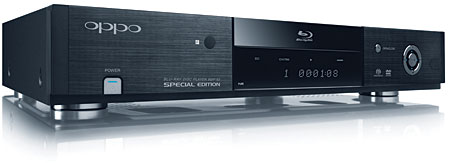
It was only a few">http://www.stereophile.com/musicintheround/music_in_the_round_37/index2… months ago that I greeted Oppo Digital's BDP-83 universal Blu-ray player as a breakthrough consumer component, and it became a Runner-Up for Stereophile's Budget Product of 2009. It now appears that Oppo is using the design as a base on which to develop similar and more advanced products, both for themselves and for a good many other manufacturers. Some may take exception to my use of the word manufacturers—if it's an Oppo under the skin, what, precisely, are these other "manufacturers" contributing? Well, that's hardly a new question.
Music in the Round #42
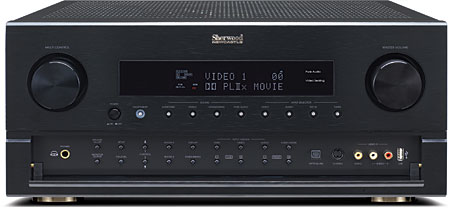
An audio/video receiver in Stereophile? Heresy!
Music in the Round #43
The debate over which audio component is most important in determining the quality of a system's sound is one that has been with us for decades. Recently, it came up in a conversation I had during a visit to a Manhattan high-end shop, when I was told about a discussion on the topic by Ivor">http://www.stereophile.com/interviews/1101ivor">Ivor Tiefenbrun (of Linn) and David">http://www.stereophile.com/interviews/690wil">David Wilson (of Wilson Audio Specialties). You don't have to be a seasoned audiophile to predict their respective positions, but when I was pressed to take a stand, I paused.
Music in the Round #44
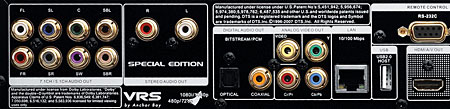
When I started">http://www.stereophile.com/musicintheround/854">started out on my multichannel mission in 2000, it was with an all-digital Meridian">http://www.stereophile.com/floorloudspeakers/201">Meridian system that relied on lossy, compressed sources like the original Dolby Digital and DTS formats, or on synthesized surround based on Dolby Pro-Logic or Meridian's own TriField. With the appearance of first SACD and DVD-Audio and then Blu-ray, discrete lossless multichannel recordings became available, but there was no way to output those signals in digital form for interconnection to other components for playback or further manipulation. Most audiophiles, me included, already had analog preamps and power amps. It was only with the appearance of HDMI and the accompanying HDCP content protection that we could output those digital signals, and over a single cable to boot. Today, there are A/V receivers, some costing less than $500, and more than a handful of audiophile-oriented preamp-processors, that can accept such lossless high-resolution multichannel content as PCM, DSD, Dolby TruHD, and dtsHD Master Audio.
Music in the Round #45
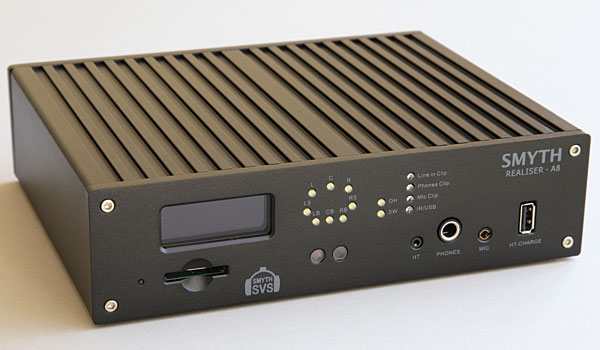
I remember my first experience with headphones. In 1960, I bought a set of Trimm dual 'phones (less than $5) and rewired them for stereo. The experience was remarkable for several reasons. First, it brought the sounds into my headI was thrilled with the impact. Second, stereo effects, especially with Enoch Light's ping-pong LPs (eg, Provocative Percussion, Command RS800SD), were striking. Third, I could play them really loud without bothering others. Of course, they had no bass, brittle treble, distorted at high levels, and their wire headband and Bakelite earpieces were uncomfortable. My fascination with this gimmick quickly faded.