

Mark Levinson No.36 D/A converter
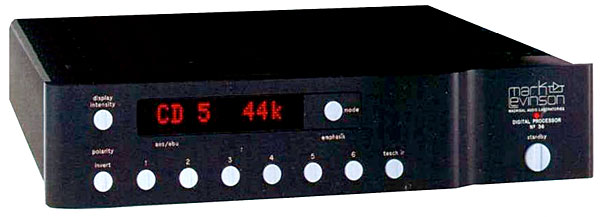
To echo Audio Cheapskate Sam Tellig, who was in turn paraphrasing Thomas R. Marshall, what the world needs is a great $299 CD player. Certainly there's no shortage of expensive units vying for your attentionmost of them consisting of separate transports and D/A converters.
Mark Levinson No.360 D/A converter
Unlike the imposing mbl and Burmester DACs that I review elsewhere in this issue, the Mark Levinson No.360 is New England conservative in appearance. Its operation was simple to master despite the sophistication and flexibility on tap. Flanked by Fasolt and Fafner, the Levinson No.360 seemed as amiable as Freia.
Mark Levinson No.390S CD Processor
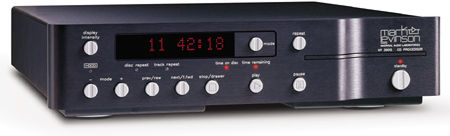
It was 20 years ago that I appeared on one of the UK's equivalents of NBC's Today show to comment on the launch of CD. I wanted to talk about digital technology, but my host was more interested in the medium's lack of surface noise, which he demonstrated by showing that a disc smeared with butter and marmalade—this was breakfast television, remember—would play without skipping. (Actually, it wouldn't play; after the jammy CD was loaded, the program cut to a pretaped segment in which the player had a pristine disc inside it.)
McIntosh DS200 streaming D/A processor
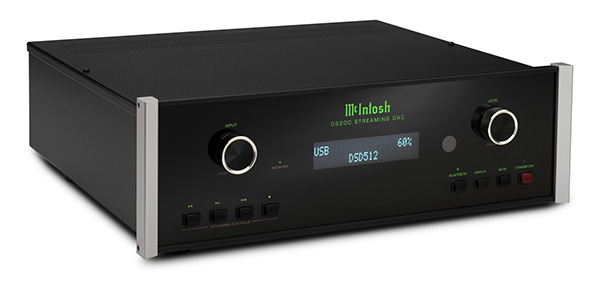
McIntosh, which is based in my home state of New York, has long been in my audio life. It was the "house sound" where I grew up. My parents' stereo system was powered by a pair of MC75 tubed amplifiers (fed by a Marantz 7B preamp, driving Bozak Concert Grand speakers). In my father's recording studio, McIntosh amplifiers powered the monitors.
McIntosh MDA 1000 D/A converter

"You want to review the MDA 1000 along with the MC">http://www.stereophile.com/tubepoweramps/704mac/">MC 275 amplifier in the same column?" Ron Cornelius, product manager and field training manager of McIntosh Laboratory, was incredulous.
Meitner IDAT D/A processor
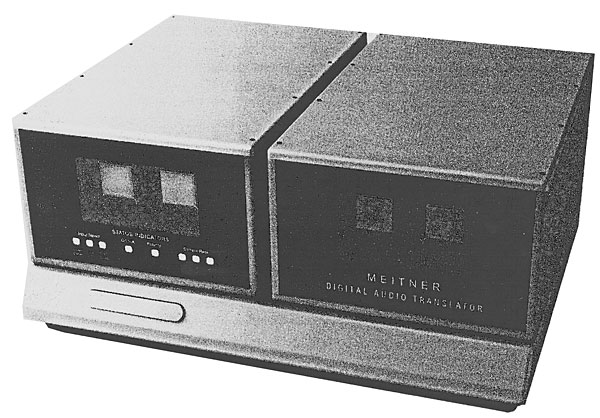
There are as many ways of designing a digital-to-analog converter as there are engineers. One approach is to select parts from manufacturers' data books and build the product according to the "application notes" provided by the parts manufacturers. This is the electronic equivalent of a paint-by-numbers kit.
A more creative engineer may add a few tricks of his own to the standard brew. Bigger and better regulated power supplies, careful circuit-board layout, tweaky passive components, and attention to detail will likely make this designer's product sound better than the same basic building blocks implemented without this care. Indeed, the vast range of sonic flavors from digital processors containing very nearly the same parts attests to the designer's influence over a digital processor's sound.
Meitner MA3 Integrated D/A processor
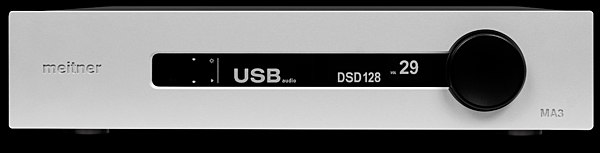
Music lovers (and reviewers) long for those listening moments when their entire being lights up with joy. For me, that divine spark surfaced unexpectedly one February afternoon when, late for an appointment, I dashed into the music room, searching for my keys. That's when I heard a bit of the 24/96 WAV files of this issue's Recording of the Month, conductor Andris Nelsons's mammoth survey of the complete orchestral works of Richard Strauss, which I'd cued up on repeat to help Meitner's MA3 integrated D/A converter ($10,500) settle in.
Meitner MA3i Integrated D/A processor
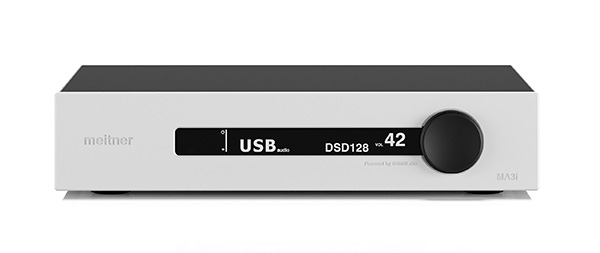
"Is the Meitner MA3i integrated DAC ($11,500) sufficiently different from its predecessor to warrant a full review?" That's the question Editor Jim Austin posed as he contemplated the alternative: a shorter follow-up to my 2022 review of the now discontinued MA3 ($10,500).
Merging Hapi MkII multichannel digital processor
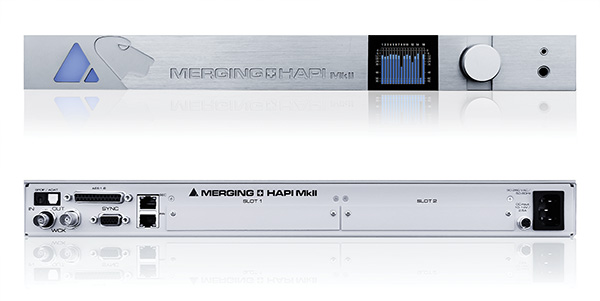
I've been running a 5.1 system for years. Recently, I expanded it to 5.3 with the addition of two more subwoofers. This system is manageable with one of my eight-channel DACs.
Even more recently, I dipped my toe into Dolby Atmos, which made it necessary to lash up at least four more channels. That was a big problem, since neither JRiver nor Roon can support and sync more than one output device at a time, and the multichannel DACs I already owned tap out at eight channels.
I turned to the Arvus H2-4D Renderer, which offers 16 channels of digital output over AES3 and 16 channels of balanced-analog output. This worked, but piping everything through the Arvus meant forswearing DSP, including DiracLive. I really needed a DAC with at least 12 channels.
The Merging+Hapi has been around for years...
Meridian 203 D/A processor

Gotta get this one written up right away—you never know with digital products. Always something new.