

The Discreet Charm of Paolo Fresu
A few months ago, I reviewedhttp://blog.stereophile.com/fredkaplan/111007jazz/">reviewed; Carla Bley’s wonderful CD, The Lost Chords Find Paolo Fresu, a deceptively Dada title that referred simply to the nature of the session—Bley’s quartet, called the Lost Chords, joined by the Sardinian trumpeter, Paolo Fresu. I praised Fresu’s “appealing” sound, its “clarion tone with a slight huff of breathiness,” but confessed that I’d never heard him before. Now comes a trio album, Mare Nostrum (on the German label, ACT), with Fresu as co-leader—along with the French-Italian accordionist, Richard Galliano, and the Swedish pianist, Jan Lundgen—and, though it’s not as quirkily magical as the Bley, it’s a charmer. There’s at once a twilight intimacy and a panoramic insouciance to this music. Imagine a gentler Nina Rota, as if he’d scored the soundtracks for early Truffaut instead of boisterous Fellini; toss in some Argentine spice (Galliano, who also plays bandoneon, was close to Astor Piazzolla); and you get a sense of the mood. It’s a bit fluffy and sentimental, but in a good, lively way (though there’s also a spirited arrangement of Ravel’s “Ma Mere L’Oye” and a darkly stirring piece, a Fresu composition, inspired by the Turkish poet Nazim Hikmet). The sound quality is quite good, though I wish there’d been less reverb on the trumpet.
The Genius of Herman Leonard
Herman Leonard’s first New York show in 20 years got underway last week at the Morrison Hotel Gallery in SoHo. It’s open to the public every day until June 1, and anyone with a taste for classic jazz, gorgeous black-and-white photography, or both should take a look. If you don’t know Leonard’s name, you probably know him by his work. He has taken some of the most iconic shots of Sarah Vaughan, Billie Holiday, Miles Davis, Louis Armstrong, Dexter Gordon, Duke Ellington, Frank Sinatra, Ella Fitzgerald, Charlie Parker, Dizzy Gillespie, Art Blakey, Thelonious Monk—the list goes on. There are, or were, half-a-dozen great jazz photographers covering the same era of the late 1940s through early ‘60s, but Leonard was the genre’s Cartier-Bresson—a genius at capturing the “decisive moment,” when the essence of the man or woman and the music are revealed. Monk at Minton’s Playhouse, one hand on his chain, contemplative, the other hitting just the right-wrong note on the piano (you can almost hear it). Blakey beaming with delight as he bangs out a solo on his trapset. Sinatra, back to the camera, singing before the kliegs, and still, somehow, his very tone comes through. Leonard (who, at 85, is still hearty and good-humored) also captured the human side of jazz: Parker and Gillespie cracking laughs during a studio break; Ellington and Strayhorn sharing a cigarette break; Miles, late in life, fixated on an oil painting; Dexter, in perhaps Leonard’s most famous shot, sitting with his tenor and blowing more smoke than one would have thought human lungs could hold. The lighting is dreamy but not at all soft; these pictures are amazingly sharp, printed on gelatin silver. They’re signed and for sale. I own one of his prints (the Parker-Gillespie, from 1949). A jazz critic gets paid in Leonard photos for one of his regular columns. They are sources of endless pleasure, and they’re probably as safe an investment as any in the art world.
The House of Armstrong
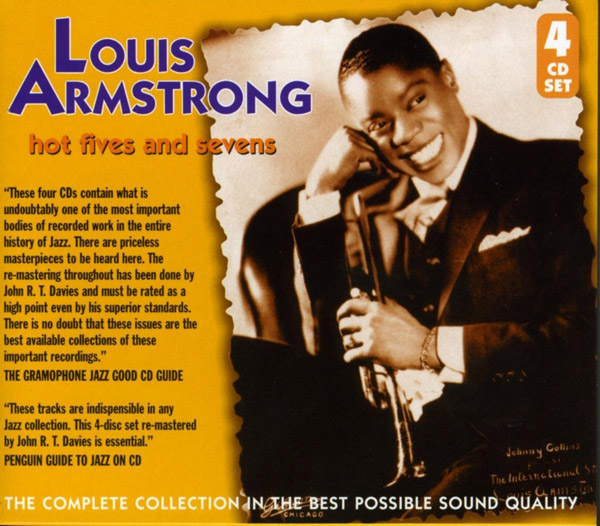
I've lived in New York City for 20 years, but until last weekend, I'd never visited the Louis Armstrong House and Museum in the borough of Queens. My lapse was inexcusable. The place, which has been opened to the public since 2003, isn't a difficult destination: a nice ride out on the No.7 subway line (to the 103rd StreetCorona station), followed by a five-minute walk. The place is a sheer delight. I plan to go again. You should, too.
The Jaki Byard Project
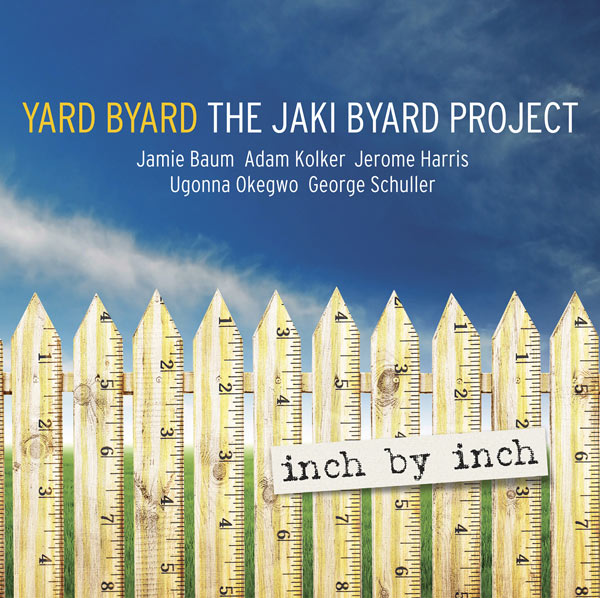
Sometimes a good album passes me by, unnoticed (so much music, so little time), but few turn out, upon discovery, to be as very, very good as the Jaki Byard Project's Inch By Inch, Yard Byard (on the GM Recordings label)...
The Jazz Book of the Year
The jazz book of the year is called, simply,Jazz. Written by Gary Giddins, the best living jazz critic, and Scott DeVeaux, one of the most astute jazz historians, it’s a vital reference for those well versed in the subject and an essential guide for those who get lost in its thickets and want to know how to listen to the music so that it at least makes sense.
The Jazz Loft Radio Project
The Jazz Loft Project is one of the most fascinating documents of multiple obsession—an obsession about an obsessive’s obsession—and it’s worth checking out in multiple media.
The Return of the Black Saints (and Soul Notes)
In some of the standard histories, jazz went to hell in the 1970s—first losing its structure to the avant-garde, then losing its harmony and rhythm to rock-funk fusion—before recovering its senses and sensibility in the ‘80s, thanks mainly to Wynton Marsalis. As with most myths, there’s a little bit of truth to this chronicle; things did take a bumpy turn in the ‘70s (though some of the avant-garde and the fusion was a lot more interesting than the broad-brush detractors would have you believe). But the revival of melody, structure, beauty and wit was hardly the doings of Mr. Marsalis. A movement was well afoot—the critic Gary Giddins called it “neo-classicism”—a few years before the young trumpeter moved from New Orleans to New York. Many other, somewhat older musicians had already been making their ways to “the jazz tradition” through the path of the avant-garde. It was on that anti-traditional road that they found their voices; so when they shifted course, they had something distinctive to say. They breathed life into the music of old and so, ironically, embodied the creative impulses at the heart of jazz with far greater fidelity than those who solemnly recited the phrasebooks of Pops, Bird, and Miles.
The Ryan Keberle Double Quartet's Heavy Dreaming
The best new jazz album of 2010 so far: the Ryan Keberle Double Quartet’s Heavy Dreaming (on the Alternate Side Records label). I’ve played it a dozen or so times in the month since I received an advance copy. It’s infectiously joyous, except when it’s movingly melancholic, and it’s head-spinning, too.
The Van Gelder mystique
Music Matters Jazz, a new audiophile label, starts up this month, reissuing classic Blue Note albums on 180-gram virgin-vinyl LPs pressed at 45 rpm. The test pressings I’ve heard sound extremely promising. The people involved in the company certainly know what they’re doing (Joe Harley of AudioQuest, Steve Hoffman and Kevin Gray of AcousTech, Michael Cuscuna of Mosaic Records, who is more familiar with the Blue Note vaults than anybody).
Thelonious Monk: Les Liaisons Dangereuses 1960
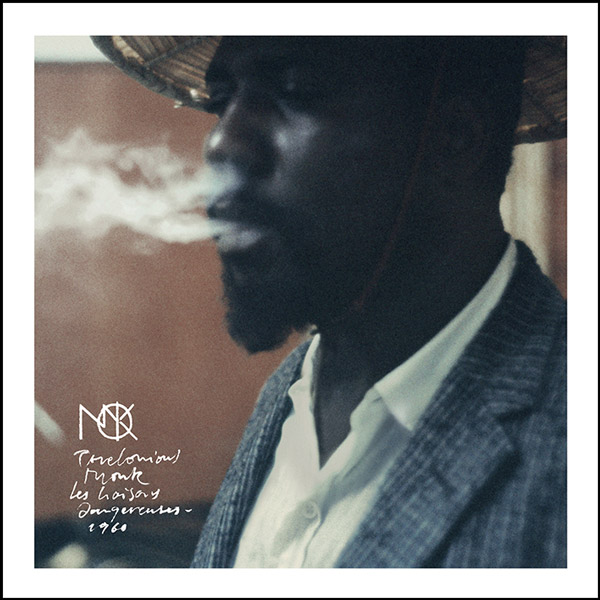
Et tu, Thelonious? We've come to expect new discoveries from the vaults, annually or more often, by Miles Davis, Charlie Parker, Bill Evans, and Sonny Rollins. But who knew there were hidden gems by the gnomic Monkand from a professionally recorded studio session, no less!