

Waning Shorter
Wayne Shorter marked his 75th birthday with a concert at Carnegie Hall last night. The show began with the Imani Winds, a spirited quintet of woodwinds and French horn, briskly traversing Villa-Lobos’ “Quintette en Forme de Choros,” followed by the world premiere of Shorter’s own classicial composition, “Terra Incognito.” (Let’s just say Gunther Schuller has nothing to worry about.) Exit Imani Winds, enter the Wayne Shorter Quartet, sparking lusty applause but not much after. Shorter’s band was, as usual, great. Danilo Perez, piano; John Patitucci, bass; Brian Blade, drums—not many rhythm sections can whip up such a turbulent swing. But it’s incomplete by design, it screams out for some saxophone colossus to rise up against the storm with a mind-blowing solo or a lyrical cri de coeur, something that sharpens the tension or takes your breath or simply excites. Shorter was once a master at this art, the designated heir to Coltrane and a more agile composer to boot. Check out his sessions with the early-‘60s Jazz Messengers and mid-‘60s Miles Davis, or his own albums, especially See No Evil and Juju or his 2001 recording with this same quartet, Footprints Live! But in recent years he’s been prone to laziness, and last night fit the bill. Occasionally, he’d lock into a groove and start to slide into a melody, a coherent passage that lasted a few bars, but then he’d back away and retreat to riding scales and wailing random whole notes. For the last few numbers, the Imani Winds returned, and the two ensembles played together. The arrangements, by Shorter, weren’t bad; his playing had its moments, but fell well below his peak potential. Toward the end of the quartet segment, Shorter quoted his old boss Art Blakey as saying, “When you get to a certain age, you don’t got to prove nothin’!” Maybe so, but, as Blakey demonstrated till the very end, when he was only a few years younger than Shorter is now, you’ve still got to come out and play.
Warhol Album Covers
I have an article in the Arts & Leisure section of today’s New York Times about Andy Warhol’s album covers. Everyone’s seen the covers he designed for The Velvet Underground & Nico, with the banana that peels, and the Rolling Stones’ Sticky Fingers, with the zipper that unzips. But who knew that the pioneer of Pop art designed over 50 covers over the entire span of his career, and not just for pop albums but also for jazz, classical, and opera? His work, often signed, appeared on Blue Note, RCA, Columbia—all the giants—and echoed, or often anticipated, the style that he would cultivate not just as a commercial designer but as a gallery-and-museum artist (though he rarely distinguished between the two). A new, lavishly illustrated, fastidiously documented book, Andy Warhol: The Record Covers, 1949-1987, lays them all out. Read about it http://www.nytimes.com/2009/04/26/arts/music/26kapl.html?ref=music >here. Buy the book http://www.amazon.com/Andy-Warhol-1949-1987-Catalogue-Raisonne/dp/37913… >here.
Watch Out, Wynton
Oy!
Wayne Shorter, Herbie Hancock, Grant Green on Blue Note 45
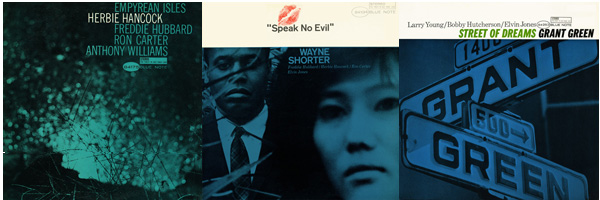
Three great new offerings from Music Matters Jazz, the house that reissues Blue Note classics on gatefold-covered, double-disc vinyl 45rpm LPs: Wayne Shorter's Speak No Evil, Herbie Hancock's Empyrean Isles, and Grant Green's Street of Dreams. All were recorded in 1964: the first two are among the best titles in Blue Note's catalogs; the third is one of the more purely pleasurable.
When all my dime dancin' is through...
Steely Dan’s Aja isn’t exactly jazz, but given (a) the presence of such jazz luminaries as Wayne Shorter and Victor Feldman, (b) the jazz sensibility of Walter Becker and Donald Fagen, (c) my blogger’s prerogative to step outside genres once in a while, and (d) the fact that my host, Stereophile, is, after all, an audiophile magazine, I feel entitled to mention—and wholeheartedly recommend—Cisco Music's LP
http://store.acousticsounds.com/browse_detail.cfm?Title_ID=39750 >
reissue.
http://store.acousticsounds.com/browse_detail.cfm?Title_ID=39750 >
reissue.
Who Says Jazz Isn't Commercial?
The ad team at Dolce & Gabbana seems to think it can be. Would Charles Mingus’ “Moanin’” become a best-seller if more people knew it sounded so cool—or if the millions who watched this">http://www.youtube.com/watch?v=HMWofLZ6gH8">this TV commercial knew that’s what they were hearing? Could it be that jazz just needs shrewder marketing? (The whole song can be heard on Mingus’ great 1959 album, Blues & Roots.)
Who'd a thunk it?!
It just goes to show, you never know what lurks in some men's souls. White House press spokesman Tony Snow playing a not-at-all-terrible blues flute. For the video (via YouTube and Matt Yglesias' blog), click herehttp://matthewyglesias.theatlantic.com/archives/2007/06/your_moment_of_…;.
William Parker Quartets, Meditation / Resurrection
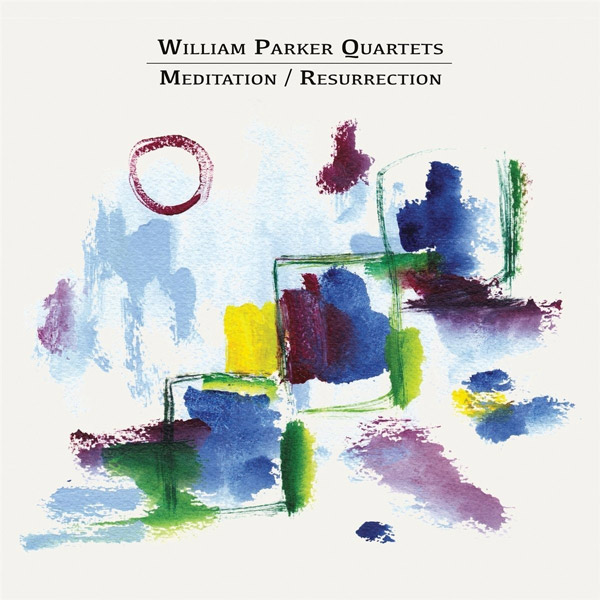
William Parker, Bronx-born bassist-composer extraordinaire, is one of the few jazz musicians who came up through the avant-garde (making his first big marks as a sideman to Cecil Taylor and David S. Ware) yet manages to fuse its techniques and innovations with standard rhythms, a sense of blues that might have wafted up from the Delta, a dash of wit, and a seemingly effortless swing.
His new two-CD album, Meditation / Resurrection (on the AUM Fidelity label), was recorded in the course of a single day last October, at Brooklyn's System Two Studio by Michael Marciano, who also mixed it live, to give it the feel of a spontaneous set at a club.
Winter Jazzfest in NY Starts Thursday

It's cold in New York City, but don't expect that to keep jazz fans from dashing through the streets of Greenwich Village this weekend, darting in out of various clubs and theaters, to see a dozen or more topflight musicians playing in the 2015 Winter Jazzfest.
Wondrous Lee
Lee Konitz, who turns 80 in October, ambled on stage last night at New York’s Zankel Hall, blew a note, asked his audience to hum it, then, as we all hummed it continuously like a dirge, he blew over it on his alto sax, an improvised solo, darting and weaving, choppy then breezy, sifting changes, shifting rhythms, and all so very cool. It lasted five minutes, it probably could have gone much longer. Then two old pals, bassist Steve Swallow and drummer Paul Motian, joined him, and they played standards. Tenor saxophonist Joe Lovano came out to trade fours and eights. They all left, and on came a string quartet, which played ballads and Debussy, Konitz cruising over the sweet strings in his signature airy tone, with its syncopated cadences and wry, insouciant swing.