Stand Loudspeaker Reviews

Sort By: Post DateTitle Publish Date

Wilson Audio Specialties Duette loudspeaker

I had had it in the back of my mind for some time to try to hear the Wilson Duette, if only because celebrated classical recording engineer Tony Faulkner had, some time ago, shared with me his opinion that the Duette's simpler crossover made it the most coherent speaker in Wilson's line. Faulkner told me that when a cramped recording venue makes it impossible for him to use his favorite Quad electrostatic speakers for monitoring, he uses Duettes.

Paradigm Reference Studio 20 v5 loudspeaker


I have fond memories of the Paradigm Reference Studio 20. When I reviewed the original version for the February 1998 issue of Stereophile, it was the model that started me on my quest to seek out the best affordable loudspeakers. I believe that of all the speakers I've reviewed, the original Studio 20 remained in the magazine's "Recommended Components" longest. When I checked out the speaker's fourth generation, in May 2008, I felt it had significantly progressed in terms of sound quality and value for money. This didn't surprise me, however, as pushing the envelopes of sound quality and value has long been Paradigm's trademark. They've done with this with every one of their speakers I've heard, including the third and fifth iterations of the Atom (which I reviewed in September 2002 and February 2008, respectively), and the more expensive models I've heard at audio shows. So when I was given the opportunity to review the Studio 20's fifth generation, I jumped.

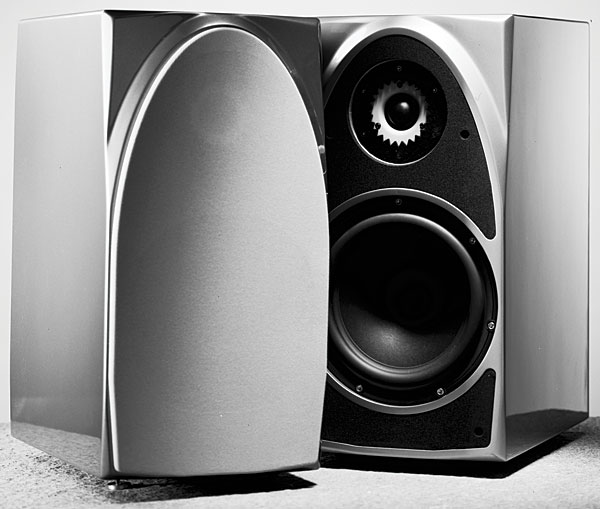
Stenheim Alumine loudspeaker

The sound of the Stenheim Alumine loudspeaker—its openness, transparency, and freedom from temporal distortions, not to mention its good bass extension for such a small enclosure—reminded me at once of my favorite small loudspeaker from the late 1980s, the Acoustic Energy AE1. On reflection, the comparison is extraordinary: The two products are as different as night and day, the AE1 being a wooden loudspeaker with a metal-cone woofer, the Alumine a metal loudspeaker with a pulp-cone woofer. I suppose one can skin a catfish by moving the knife or by moving the fish.

Sonus Faber Guarneri Evolution loudspeaker

At present, my writing chores are divided between two fields: domestic audio and lutherie. Having invested considerable time in both, and having by now met a number of builders who are distinguished in one or the other, I can say with all confidence that the best share a simple, single point of view: Everything makes a difference.

TAD Compact Reference CR1 loudspeaker

High-end audio is in some ways a dynastic beast, though without as many "begats." One of the world's most successful loudspeaker manufacturers in the years following World War II was the Wharfedale company, from Yorkshire in the North of England. Wharfedale was founded by Gilbert Briggs in 1932, who in the 1950s handed over the reins of Technical Director to fellow Yorkshireman Raymond Cooke. Cooke left Wharfedale in 1961 to found KEF Electronics Ltd., where he subsequently appointed Goodmans designer Laurie Fincham as Chief Engineer in 1968. Fincham led a team of young engineers, including Mike Gough, who eventually joined B&W, and Yorkshire-born Andrew Jones, who became KEF's Chief Engineer in 1989, before Fincham was lured to Harman's Infinity division, in Northridge, California, in 1993. Jones followed Fincham across the Atlantic, where he worked on Infinity's Prelude, Overture, and Reference Series speakers, before joining Pioneer in 1997. The Japanese company had established a state-of-the-art speaker-design facility in Southern California, and Jones was invited to lead the design team.

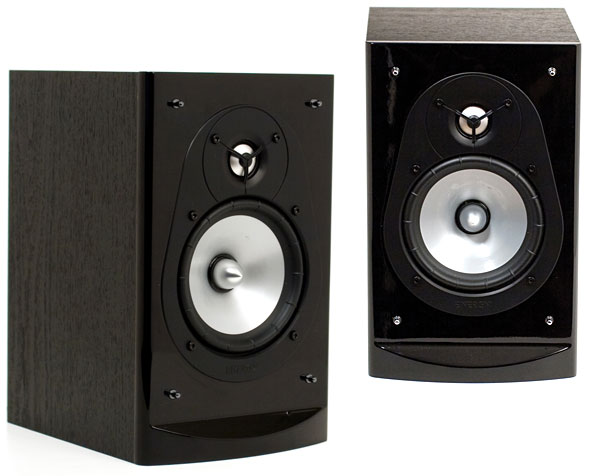
Epos Epic 2 loudspeaker

Roy Hall has his famous Music Hall MMF (Make Money Fast) turntables made for him in the Czech Republic.


Roy has also long been associated with Epos Limited, since a chap named Robin Marshall started the company in 1983. Their first product was the ES-14 loudspeaker, followed by the smaller ES-11. Both were largish, stand-mounted models, and both offered a lively, expressive, unstuffy sound. The speakers have always been fun to listen to, even if they lacked—and still lack—the refinement of some far more expensive speakers.

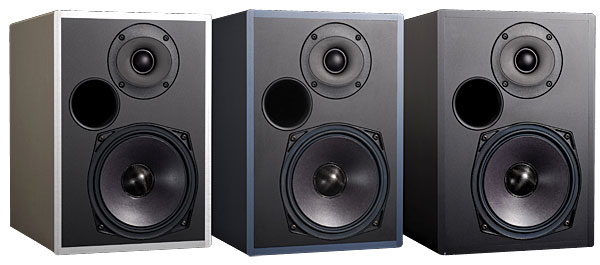
Energy Connoisseur CB-10 loudspeaker

The two-way Energy CB-10 ($269.99/pair) is a bass-reflex design. A large rear-firing port has an internal diameter of 2" and flares out to 2.75". The speaker uses a 1" aluminum-dome tweeter and a 5.5" woofer with a ribbed elliptical surround, the latter said to increase excursion, decrease distortion, and create a larger piston area for greater efficiency, making the CB-10 an easy match for amplifiers. The CB-10's frequency range is listed as 66Hz–20kHz, its in-room sensitivity as 90dB, and its nominal impedance as 8 ohms. In Energy's Convergent Source Module design, the tweeter and woofer are meant to act as a coincident source working together to provide wide bandwidth, constant dispersion, and a flat frequency response. In theory, this would all add up to easy setup and satisfying listening from anywhere in the room.

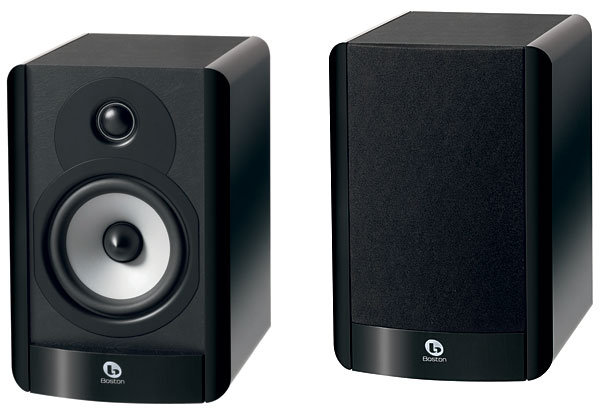
Boston Acoustics A 25 loudspeaker

While listening to Boston Acoustics' A 25 loudspeaker ($299.98/pair), I kept thinking about magic.


Paul Messenger introduced Boston Acoustics' A Series in the April 2011 "Industry Update." With the creation of the A Series, Paul reported, BA wanted to create a "global loudspeaker," one that would be appreciated by music lovers worldwide.

Advertisement
Advertisement
Advertisement