Stand Loudspeaker Reviews

Sort By: Post DateTitle Publish Date

KEF LS50 Anniversary Model loudspeaker
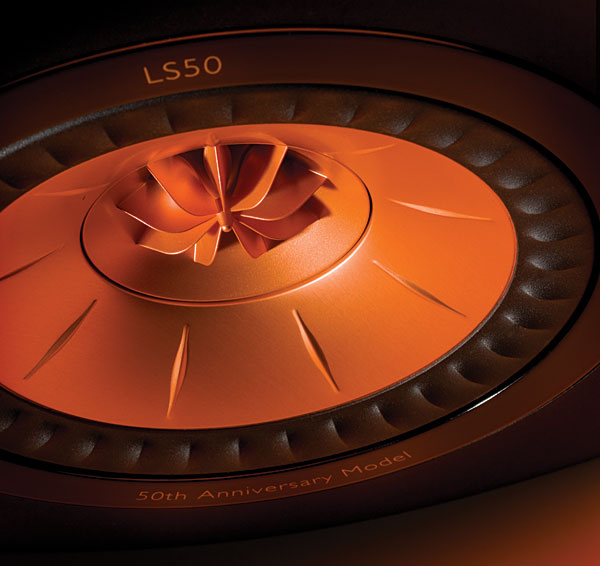
The tale's been told many times: Back in the early 1970s, the British Broadcasting Corporation needed a small nearfield monitor for use in remote-broadcast trucks. A team led by T. Sommerville and D.E. Shorter, both of the BBC's Research Department, developed the two-way, sealed-box LS3/5, based on a small monitor they'd designed for experiments in acoustic scaling. The speaker showed much promise, but problems with the drive-units—a woofer with a doped Bextrene 5" cone and a 1" Mylar-dome tweeter—led to a detailed redesign, the LS3/5a, carried out by Dudley Harwood, also of the Research Department (and later to found Harbeth), and Maurice E. Whatton and R.W. Mills, of the BBC's Designs Department.

Bowers & Wilkins CM5 loudspeaker

With all the affordable loudspeakers I've written about in recent years, I couldn't remember the last time I reviewed one from the revered British firm Bowers & Wilkins. When I searched www.stereophile.com, I learned that the last time a B&W speaker had graced my listening room's carpet was more than seven years ago: the DM603 S3, reviewed in the August 2005 issue. I thought it was time to revisit the brand, and as the DM603 S3 was a floorstanding speaker, this time a bookshelf model seemed in order.

Definitive Technology StudioMonitor 55 loudspeaker

Recently, I thought about all the audio shows I've attended over the last 27 years, looking for any pattern that all of them might have shared. I came up with a handful of audio manufacturers that have earned at shows a reputation for getting, year after year, consistently good sound—rooms in which I could reliably depend on being able to chill out and enjoy music in good, involving sound. Those companies include Audio Research, Music Hall (distributor of Creek and Epos), Vandersteen Audio—and Definitive Technology. Since their founding, in 1990, Maryland-based DefTech has been a major presence at shows, displaying an increasingly wide range of high-value speakers for two-channel and surround-sound systems. But I'd never reviewed one of their models. I thought it was about time.

Tannoy Mercury V1 loudspeaker

The last few decades have seen dramatic improvements in the art (and science) of loudspeaker design. Tannoy's budget-priced Mercury series is now in its fifth iteration. The two-way, front-ported Mercury V1 ($320/pair) measures 11.8" high by 6.7" wide by 10" deep and weighs 9.9 lbs. My samples came in a very handsome Dark Walnut finish (Sugar Maple is available) with simple black cloth grilles. I left the grilles off to reveal the speakers' attractive front baffles and accentuate their equally attractive high frequencies (more on the latter later).

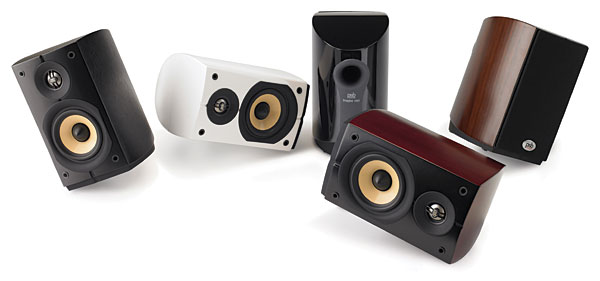
PSB Imagine Mini loudspeaker

The first loudspeaker I heard from the Canadian company PSB was the Stratus, an affordably priced ($1400/pair), two-way tower with a soft-dome tweeter and an 8" woofer. The Stratus had benefited from designer Paul Barton's being able to use the anechoic chamber at the Canadian government's National Research Center, in Ottawa. The Stratus was reviewed for Stereophile by J. Gordon Holt in our May 1988 issue; he described the speaker as "eminently listenable," though Gordon also felt that it was "a little lacking in guts and liveliness." I had sat in on some of his listening sessions and had been impressed by what I heard.

Definitive Technology StudioMonitor 45 loudspeaker

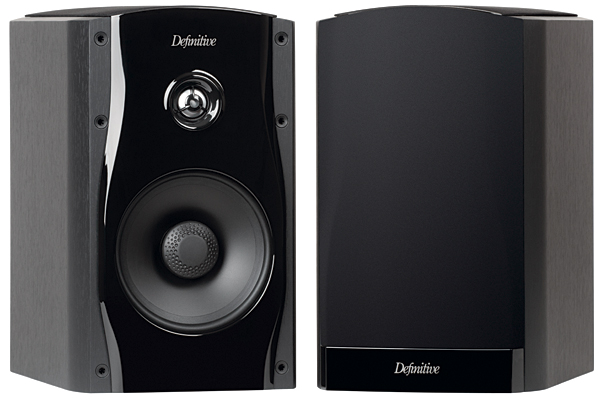
The Definitive Technology StudioMonitor 45 measures a very room- and back-friendly 11 11/16" (297mm) high by 6¾" (172mm) wide by 11 11/16" (297mm) deep, but these dimensions are attractive for reasons other than simple, efficient transport and placement. I noticed right away that something about the speaker just looked right. Paul DiComo, DefTech's senior vice president of marketing and product development, explained that while the number and size of drivers used in any DefTech design will largely dictate that speaker's height and width, the company nevertheless aims for Fibonacci, or golden-ratio, dimensions. According to DiComo, these efforts help minimize standing-wave and "organ-pipe" resonances inside the speaker's cabinet.

Polk Audio RTi A3 loudspeaker

Back at home, I'd recently set up Polk Audio's RTi A3 loudspeakers ($399.95/pair), which, at 14.75" H by 8.58" W x 14" D, are by far the largest bookshelf models I've had in my listening room. Right out of the box, the RTi A3 impressed me with its fit and finish. In Polk's Damped Asymmetrical Hex Laminate Isolation (DAHLI) cabinet design, five layers of MDF are glued together to form a damping system, then topped by a real-wood veneer of black ash or, in the case of my review samples, an impeccable cherry. The gracefully curved cabinet narrows in width from 8.58" at the front to about 5" at the rear, and is said to create a stronger, more rigid, more acoustically inert enclosure. (Knocking on the speaker's side panels resulted in a hollow resonance.)

DALI Zensor 1 loudspeaker

I thought I'd review the procedure I typically use to seek out affordable speakers for review as, in the case of the Denmark-designed DALI Zensor, made in the company's facility in China, there was a twist at the end.


In preparing to review affordable loudspeakers, I typically put together a list of potential candidates I've discovered at audio shows, or that have been recommended to me by other Stereophile writers. I add to that list products I've learned about from press promotions, usually from companies whose products have impressed me in the past. I boil this down to a short list, then run it by Stephen Mejias to make sure I'm not tripping over The Kid's own quest for budget sonic nirvana.

Joseph Audio Pulsar loudspeaker

I approached this loudspeaker much as some of today's political candidates might approach sex: as a means of reproduction, not pleasure.


I brought it on myself. I asked to review Joseph Audio's stand-mounted, two-way Pulsar because I felt an obligation to step down from the rarified air of some of the absurdly priced gear I've been reviewing lately and sample something more "affordable." The Pulsar costs $7000/pair.

Advertisement
Advertisement
Advertisement