Stand Loudspeaker Reviews

Sort By: Post DateTitle Publish Date

Monitor Audio Studio 15 loudspeaker

I believe Ken">http://www.stereophile.com/interviews/232">Ken Kantor said it first: a couple of years ago, in his September 1990 interview with Robert Harley (Vol.13 No.9), he remarked that "there's no reason why a two-way 6" loudspeaker can't be the equal of almost the best speaker out there from a certain frequency point upward, with the possible exception of dynamic range." When I read those words, they rang true. If you put to one side the need to reproduce low bass frequencies and can accept less-than-live playback levels, a small speaker can be as good as the best, and allow its owner to enjoy the benefits of its size—visual appeal, ease of placement in the room, and the often excellent imaging afforded by the use of a small front baffle.


Celestion 100 loudspeaker

I believe Ken">http://www.stereophile.com/interviews/232">Ken Kantor said it first: a couple of years ago, in his September 1990 interview with Robert Harley (Vol.13 No.9), he remarked that "there's no reason why a two-way 6" loudspeaker can't be the equal of almost the best speaker out there from a certain frequency point upward, with the possible exception of dynamic range." When I read those words, they rang true. If you put to one side the need to reproduce low bass frequencies and can accept less-than-live playback levels, a small speaker can be as good as the best, and allow its owner to enjoy the benefits of its size—visual appeal, ease of placement in the room, and the often excellent imaging afforded by the use of a small front baffle.
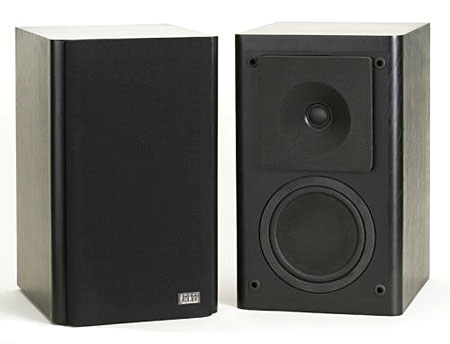

Westlake BBSM-6F loudspeaker

I've been musing much of late on what enables some hi-fi components to sound natural while others always seem to add an edge of artificiality to their sound. This dichotomy was examined in last month's "As">http://www.stereophile.com/asweseeit/109">As We See It," where I asked a representative group of Stereophile writers to discuss the fact that many high-end components regarded as being neutral in their sonic character, with apparently little wrong in their measured performance, can actually sound quite unmusical. This would seem to suggest that the nature of what a component does wrong is of greater importance than the level of what it does wrong: 1% of one kind of distortion can be innocuous, even musically appropriate, whereas 0.01% of a different kind of distortion can be musical anathema.


Acoustic Energy AE3 loudspeaker

Back in the Spring of 1988, I was sent a pair of diminutive two-way speakers that totally redefined for me what miniature loudspeakers were supposed to be about. That model, Acoustic">http://www.stereophile.com/standloudspeakers/526">Acoustic Energy's AE1, may have offered short measure in the low-bass department, but its apparently effortless dynamics, musically natural balance, and tangible imaging made it a winner. It also broke the mold of modern audiophile speaker design by featuring a 4.5" woofer with a metal cone just 3.5" in diameter. (Various companies have experimented with metal-cone drive-units in the past, only Ohm and pro-sound company Hartke having had any previous commercial success, though Monitor Audio now also offers a range of speakers with metal-cone woofers, their Studio line.) Since that time, Acoustic Energy has tried to produce a full-range speaker that built on the success of the AE1, but with only limited success, in my opinion. While their AE2 added a second identical woofer, and offered useful increases in bass extension and dynamic range, I felt it to be too colored in the midrange to be a real audiophile contender (see Vol.13 No.2, February 1990, p.134.)


JMlab Micron & Micron Carat loudspeaker

Let me take you back some 40 years to the mono days of the early 1950s. It's unlikely that the minimonitor genus of loudspeakers, of which this French JMlab is a prime example, would have survived back then. There was the practical problem of available amplifier power. The average amp could squeeze out no more than 10 to 15W into an 8 ohm load—far less power than the typically insensitive minimonitor demands for adequate dynamic headroom. But that in itself would not have sufficed to displace the minimonitor from the marketplace. After all, "high-power" amps (50-watters) could be had at a price.


Phase Technology PC80 loudspeaker

In some ways, building an inexpensive yet musical two-way loudspeaker is a greater design challenge than creating a cost-no-object reference product. Although the latter is a much more complex endeavor, the venerable two-way box seems to bring out the creativity and resources of the designer. Rather than throw money at the product in the form of more expensive drivers, enclosures, or components, the designer of a low-cost two-way is forced to go back to the basics, rethink closely-held tenets, and rely on ingenuity and sheer talent to squeeze the most music from a given cost. Consequently, the inexpensive two-way is the perfect vehicle for designers to develop their skills. If one has mastered this art form, one is much more likely to achieve success when more ambitious designs are attempted.


Snell Type K/II loudspeaker

In some ways, building an inexpensive yet musical two-way loudspeaker is a greater design challenge than creating a cost-no-object reference product. Although the latter is a much more complex endeavor, the venerable two-way box seems to bring out the creativity and resources of the designer. Rather than throw money at the product in the form of more expensive drivers, enclosures, or components, the designer of a low-cost two-way is forced to go back to the basics, rethink closely-held tenets, and rely on ingenuity and sheer talent to squeeze the most music from a given cost. Consequently, the inexpensive two-way is the perfect vehicle for designers to develop their skills. If one has mastered this art form, one is much more likely to achieve success when more ambitious designs are attempted.


Infinity Modulus loudspeaker & Modulus subwoofer

As much as I'm tempted by the impressive sweep and scale with which some of the large, full-range loudspeakers endow music, for some reason I find myself more at home with more compact examples of the breed. This is not through lack of familiarity with large speakers, a pair of B&W">http://www.stereophile.com/floorloudspeakers/506">B&W Matrix 801s occupying pride of place in our living room (which also serves as my wife's listening room). Yet I find myself hankering after that ultimate soundstage precision that only minimonitors seem capable of producing: the loudspeakers totally disappearing, vocal and instrumental images hanging in space, truly solid—the prefix "stereo-" is derived from the Greek word stereos, which means solid—so that a rectangular, totally transparent window into the concert hall opens at the rear of your room. In addition, the necessarily limited low-frequency extension offered by small speakers makes it much easier to get the optimum integration with the room acoustics below 100Hz.


Monitor Audio Studio 10 loudspeaker

As much as I'm tempted by the impressive sweep and scale with which some of the large, full-range loudspeakers endow music, for some reason I find myself more at home with more compact examples of the breed. This is not through lack of familiarity with large speakers, a pair of B&W">http://www.stereophile.com/floorloudspeakers/506">B&W 801s occupying pride of place in our living room (which also serves as my wife's listening room). Yet I find myself hankering after that ultimate soundstage precision that only minimonitors seem capable of producing: the loudspeakers totally disappearing, vocal and instrumental images hanging in space, truly solid—the prefix "stereo-" is derived from the Greek word stereos, which means solid—so that a rectangular, totally transparent window into the concert hall opens at the rear of your room. In addition, the necessarily limited low-frequency extension offered by small speakers makes it much easier to get the optimum integration with the room acoustics below 100Hz.


Fried Q/4 loudspeaker

During the late 1970s and early '80s, I worked my way through college by selling hi-fi, or more precisely, mid-fi. During those years, I heard and sold several hundred different loudspeakers costing under $1000/pair. Despite the fact that I experienced them under less than ideal conditions, I was nevertheless able to get a feel for their relative performance. When switching between speakers, the differences between them were drastically juxtaposed. No two loudspeakers sounded even remotely similar tonally, indicating that they all had severe colorations.


Advertisement
Advertisement
Advertisement