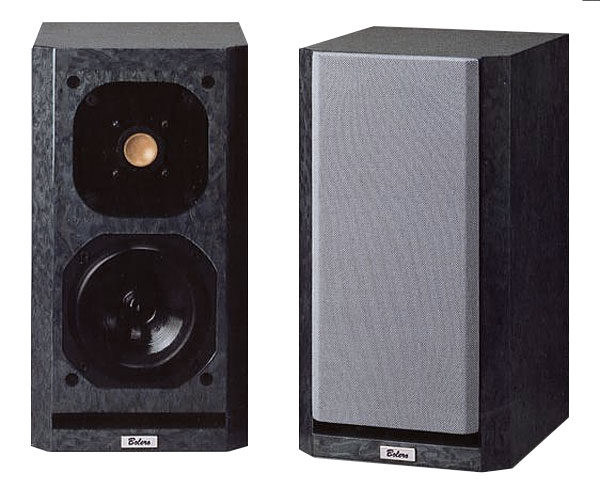
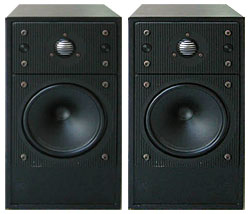
Celestion 3000 loudspeaker

Some reviews seem ill-fated from the get-go: samples break; systems go wrong; test equipment gives anomalous measurements; and at times the reviewer starts to doubt his or her ears when it seems impossible to get the component being reviewed to sound anywhere as good as reported by other writers. Such was the case with this review of the Celestion 3000. When Celestion's Barry Fox visited Santa Fe three days before Christmas 1989 with early samples of the speaker, we were dismayed to find that the ribbon of one of the pair was crinkled and immobile, apparently due to the extruded-aluminum magnet frame warping in transit. Fortunately, Barry had brought a spare tweeter with him, to show how it worked, so we replaced the broken one in order to do some listening.


 "Why does John Atkinson devote so much of his time to loudspeakers selling for under a [sic] $1000?" wrote a correspondent to The Audiophile Network bulletin board in August, there being a clear implication in this question that "more expensive" always equates with "better" when it comes to loudspeakers. While it is true that the best-sounding, most neutral loudspeakers possessing the most extended low-frequency responses are always expensive, in my experience this most definitely does not mean that there is an automatic correlation between price and performance. I have heard many, many expensive loudspeakers whose higher prices merely buy grosser sets of tonal aberrations. For those on modest budgets, provided they have good turntables or CD players, a good pair of under-$1000 loudspeakers, coupled with good amplification, will always give a more musical sound than twice-the-price speakers driven by indifferent amplification and a compromised front end.