Recording of the Month

Sort By: Post DateTitle Publish Date

Recording of July 1988: Baroque Music for Trumpets


788rotm.jpgWynton Marsalis: Baroque Music for Trumpets

Vivaldi: Concerto for 2 Trumpets, RV 537; Telemann: Concertos for 3 Trumpets, in B-flat and D; Pachelbel: Canon for 3 Trumpets (arr. Leppard); M. Haydn: Concerto for Trumpet; Biber: Sonata for 8 Trumpets & Orchestra

Wynton Marsalis, piccolo trumpets; Raymond Leppard, English Chamber Orchestra

CBS M 42478 (LP), MK 42478 (CD). Bud Graham & Steven Epstein, engs.; Steven Epstein, prod. DDD. TT: 47:18


There are very few musically satisfying compositions for solo trumpet. A great deal of the standard repertoire is Baroque, and that primarily of the Paradestuck (parade, or showoff piece) school. Of Wynton Marsalis's five Masterworks releases, at least three fall into this category, the present one most of all. There are gimmicks galore here, of composition, arrangement, and recording—Wynton Marsalis, genius of all trades, overdubbing himself ad infinitum through digital wizardry. The fact is, given the music, such an approach is probably the most appropriate; certainly no one listens to the Biber Sonata for 8 Trumpets for profound spiritual insight, and none of this music was written to stretch the boundaries of anything but the trumpeter's chops. In the recording of such antiphonal works, the 18th century's version of "special effects" or "stereo spectaculars," it makes sense that the soloists seem as telepathically in tune with one another's playing as possible. So why not use the same single player?

Recording of June 1988: Songs My Mother Taught Me

Songs My Mother Taught Me

Arturo Delmoni, violin; Meg Bachman Vas, piano

Kreisler: Tempo di Menuetto; Brahms: Hungarian Dance No.1; Valdez: Gypsy Serenade; Paradis: Sicilienne; Sarasate: Romanza Andaluza; Massenet: Meditation; Tartini: Variations on a Theme of Corelli; Smetana: From the Home Country; Gluck: Melodie; Vieuxtemps: Romance "Desespoir"; Faure: Apres Un Reve; D'Ambrosio: Canzonetta; Mendelssohn: Song Without Words ("May Breeze"); Kreisler: Sicilienne et Rigaudon; Dvorak: Songs My Mother Taught Me

Mobile Fidelity Sound Lab MFCD 877 (CD), North Star DS 0004 (LP). David Hancock, eng.; Bruce Foulke, prod. A-D. TT: 52:51


Here, at last, is one huge exception to the "Rule": an outstanding musical performance superbly recorded. Songs My Mother Taught Me is the product of a love affair between violinist Arturo Delmoni and the almost defunct practice of programming only short pieces in recitals. Delmoni's aim was to recreate that lost practice, and the result is stunning.

Joint Recordings of May 1988: Get Rhythm & Bring the Family

Ry Cooder: Get Rhythm

Warner Bros. 25639 (LP). Ed Cherney, eng.; Ry Cooder, prod. TT: 40:43

John Hiatt: Bring the Family

A&M SP5158 (LP). Larry Hirsch, eng.; John Chelew, prod. TT: 45:26


There are a few white men in American music—Delbert McClinton, Jerry Jeff Walker, John Fogarty, Van Morrison, Joe Ely, and Steve Earle all come to mind—whose music is consistently true, believable, honorable, and unpretentious. Ry Cooder has been one of those names since his solo debut in 1970; with Bring the Family, John Hiatt's must now be added to the list.


Bring the Family is what Robbie Robertson's overrated new album should have been (sorry, Gary Krakow): simple, strong, mature, its feet rock-solid on the ground. "Thing Called Love," in fact, sounds much like the album The Band might have made between The Band and Stage Fright.

Recordings of April 1988: The First Colossus Recordings

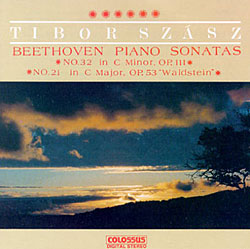
Beethoven: Sonata No.32, Op.111; Sonata No.21, Op.53 ("Waldstein")

Tibor Szasz, piano

Bainbridge BCD-6275 (CD). Leo de Gar Kulka, eng. & prod. DDD. TT: 58:03


Mozart: Piano Concerto No.13, K.415; Overture to Lucio Silla, K.135

Jeremy Menuhin, piano; George Cleve, 1987 Midsummer Mozart Festival Orchestra

Bainbridge BCD-6273 (CD). Leo de Gar Kulka, eng. & prod. DDD. TT: 36:58


Prokofiev: Alexander Nevsky, Lieutenant Kije

Andre Previn, Los Angeles Philharmonic

Telarc CD-80143 (CD). Jack Renner, eng.; Robert Woods, prod. DDD. TT: 63:37


Rachmaninov: Sonata for Cello and Piano, Op.19

Steven Kates, Montagnana cello; Carolyn Pope Kobler, Bösendorfer piano

Bainbridge BCD-6272 (CD). Leo de Gar Kulka, eng. & prod. DDD. TT: 40:42


The Sounds of Trains, Vols.1 & 2*

Bainbridge BCD-6270, -6271* (CDs). Brad Miller, eng. & prod. DDD. TTs: 60:45, 50:14*


If you read my article in these pages about recording the Cumbres and Toltec Scenic Railway steam trains (January 1987, Vol.10 No.1), you may recall the mention of Colossus. Colossus is the name of a new digital recording system which designer Lou Dorren claims to be different from every other digital system in several ways, none of which has ever been disclosed to us. I had a chance to listen to some tapes made on it shortly after writing the C&TSRR article, but since they were made with a completely unfamiliar microphone (Mobile Fidelity Productions of Nevada's own design) and featured mainly the sounds of trains, airplanes, and other sources of potential ear damage, I couldn't really tell anything about the recording system, except that it had the kind of low end I expect from any respectable digital audio. A sonic evaluation had to wait until I heard Colossus on more familiar terms—that is, with music recordings. Now, that time has come.

Recording of March 1988: Wagner: Lohengrin

Wagner: Lohengrin

Placido Domingo, Lohengrin; Jessye Norman, Elsa; Eva Randova, Ortrud; Siegmund Nimsgern, Telramund; Hans Sotin, Heinrich; Dietrich Fischer-Dieskau, Heerrufer; Vienna State Opera Chorus; Georg Solti, Vienna Philharmonic Orchestra

London 421 053-1 (4 LPs), 421 053-2 (4 CDs). James Lock, John Pellowe, engs.; Christopher Raeburn, prod. DDD. TT: 222:54


It's always surprised me that Lohengrin, Wagner's most awkward, transitional, and static opera, was, for its first 100 years, his most popular. It didn't help, I suppose, that I began my study of things darkly Teutonic with The Ring and Tristan, working forward and backward from there. In Lohengrin we can hear the last reluctant pullings away from operatic conventions—especially choral—of the first half of the 19th century, and the gropings toward full-blown musikdrama—especially in Act II, scene i.

Recording of February 1988: The Moscow Sessions

The Moscow Sessions

Barber: First Essay for Orchestra; Copland: Appalachian Spring; Gershwin: Lullaby (for string quartet); Glazunov: Valse de Concert in D; Glinka: Russlan and Ludmilla Overture; Griffes: The White Peacock; Ives: The Unanswered Question; Mussorgsky: Khovanshchina Prelude; Piston: The Incredible Flutist (ballet suite); Shostakovich: Symphony 1, Festive Overture; Tchaikovsky: Symphony 5

Lawrence Leighton Smith, Dmitri Kitayenko, Moscow Philharmonic Orchestra

Sheffield Lab CD-1000 (3 CDs); TLP-1000 (3 LPs). CDs DDD. LPs AAA. TT: 180:40


The ecumenical collaboration between Sheffield Lab, the Moscow Philharmonic Orchestra, conductors Lawrence Leighton Smith and Dmitri Kitayenko, an imposing gaggle of businessmen and bureaucrats, and partial sponsorship by The Absolute Sound's Fund for Recorded Music, if somewhat short of epoch-making, is, nonetheless, a positive example of free enterprise and socialism bedding down together, liberally (pardon the expression) lubricated with glasnost. Art, we are told, is universal. It transcends philosophical, racial, political, and religious differences of opinion. Yet, despite the implied altruism of this international cooperative effort, the actual genesis of the project was essentially pragmatic, fundamentally bottom line.

Recording of January 1988: Renaissance


Branford Marsalis: Renaissance

Branford Marsalis, tenor & soprano sax; Kenny Kirkland & Herbie Hancock, piano; Bob Hurst & Buster Williams, bass; Tony Williams, drums

CBS FC 40711 (LP). Dennis Ferrante, Bob Margoleff, Howard Siegel, engs.; Delfeayo Marsalis, prod. DDA. TT: 57:09


These are heady days for those who believe that jazz may have reached its height in the mid- to late '60s, before its disastrous 15-year romance with fusion. With such strong new talents as the Marsalis and Brecker brothers and Chico Freeman embracing the spirit of that time, and fusion-scarred veterans like Freddie Hubbard and Joe Henderson returning to the basics of acoustic trios, quartets, and quintets in recent recordings and concerts, jazz has attained a new and cherished seriousness valued all the more for its unexpectedness.

Recording of December 1987: Marsalis Standard Time, Vol.1

Wynton Marsalis: Marsalis Standard Time, Vol.1

Wynton Marsalis, trumpet; Marcus Roberts, piano; Robert Leslie Hurst III, bass; Jeff Watts, drums

CBS CK 40461 (CD), FC 40461 (LP). Tim Geelan, eng.; Steve Epstein, prod. DDD. TT: 62:54


When someone has garnered as much hoopla as has Wynton Marsalis over the last five years, it becomes harder and harder for a critic to believe that the hype continues to be justified. Nor does winning Grammys in the jazz and classical categories help the situation's believability. Worse, Marsalis's own bristly demeanor and portentious pronouncements on the state of jazz—see "Book Reviews" elsewhere in this issue—make it all the more important that he put his money where his mouthpiece is. (As Miles Davis, never known as the soul of tact himself, groused a while back when leaving a Grammy Award ceremony at which Marsalis had held forth: "Who asked him?")

Recordings of November 1987: Pärt: Tabula Rasa and Arbos

Arvo Pärt: Tabula Rasa and Arbos

Tabula Rasa: Fratres (2 versions); Cantus in memory of Benjamin Britten; Tabula Rasa

Gidon Kremer, Tatjana Grindenko, violins; Keith Jarrett, piano; Alfred Schnittke, prepared piano; Staatsorchester Stuttgart, Dennis Russel Davies, conductor; Lithuanian Chamber Orchestra, Saulus Sondeckis, conductor; cellists of the Berlin PO

ECM New Series 1275 (CD). Heinz Wildhagen, Peter Laenger, Eberhard Sengpiel, Dieter Frobeen, engs.; Manfred Eicher, prod. AAD. TT: 55:04


Arbos: Arbos; An den Wassern zu Babel; Pari Intervallo; De Profundis; Es sang for langen Jahren; Summa; Stabat Mater

Gidon Kremer, violin; Christopher Bowers-Broadbent, organ; The Hilliard Ensemble; Brass of the Staatsorchester Stuttgart; others

ECM New Series 1325 (CD). Peter Laenger, Andreas Neubronner, engs.; Manfred Eicher, prod. DDD. TT: 59:21

Recording of October 1987: Duruflé & Fauré Requiems

Duruflé: Requiem; Fauré: Requiem

Blegen, Morris, Shaw, Atlanta SO and Chorus.

Telarc 80135 (CD). Robert Woods, prod.; Jack Renner, eng. DDD. TT: 74:23


To have two Requiems by French composers on the same disc certainly invites comparisons. Superficially similar, the works are actually quite different: both are conceived for small-scale performance, both rely on the organ, and neither places any great demands on chorus or orchestra. The differences concern mood and even intent. Fauré's Requiem, composed between 1887 and 1890, has survived all kinds of performances, both amateur and professional, without losing its ability to move hearers with its gentle hymn for the dead. The Duruflé, composed in 1947, has not achieved this kind of public appeal. A commissioned work, and not unified in style, this requiem is enjoyed by those who sing it; audiences tend to find it bland.

Advertisement
Advertisement
Advertisement