Wynton Marsalis Quartet: Live at Blues Alley
Wynton Marsalis, trumpet; Marcus Roberts, piano; Robert Leslie Hurst III, bass; Jeff Watts, drums
Knozz-Moe-King (4 takes), Juan (3 takes), Just Friends, Cherokee, Delfeayo's Dilemma, Chambers of Tain, Au Privave, Do You Know What It Means To Miss New Orleans, Autumn Leaves, Skain's Domain, Much Later
Columbia PC2 40675 (2 LPs), C2K 40675 (2 CDs). Tim Geelan, eng.; Steve Epstein, prod. DDA/DDD. TT: 117:39
Branford Marsalis: Random Abstract
Branford Marsalis, saxes; Kenny Kirkland, piano; Delbert Felix, bass; Lewis Nash, drums
Yes and No, Crescent City, Broadway Fools, LonJellis, I Thought About You, Lonely Woman, Steep's Theme, Yesterday's,* Crepuscule With Nellie*
Columbia OC 44055 (LP), CK 44055 (CD*). Tomoo Suzuki, eng.; Delfeayo Marsalis, prod. ADA/ADD. TTs: 58:46, 74:10*
Harrison/Blanchard: Black Pearl
Terence Blanchard, trumpet; Donald Harrison, saxes; Cyrus Chestnut, piano; Reginald Veal, bass; Carl Allen, drums
Selim Sivad, Black Pearl, Ninth Ward Strut, Infinite Heart, The Center Piece, Somewhere, Dizzy Gillespie's Hands, Toni, Birth of the Abstract
Columbia FC 44216 (LP), CK 44216 (CD). Tim Williams, eng.; George Butler, prod. ADA/ADD. TT: 53:09
"Jazz isn't deadit just smells funny," said Frank Zappa in 1974. Back then, in those dark days of Fusion, one could be forgiven for thinking that jazz's greatest years were over, that the form
had died, or at least mutated enough, in its wooing of the huge, bucks-wielding rock audience, to be unrecognizable, or at least unlovable. Then, in 1982, fresh from Art Blakey's band (Blakey remains a seemingly bottomless well of fresh young talent; Harrison/Blanchard, too, worked with him), Wynton Marsalis's eponymous debut LP was released. This was possibly one of the most important jazz releases of all time, not so much because of its musical content as its stylistic choices: intelligent, hard-edged, fully fledged
acoustic jazz in the style of Miles Davis's second great quintet. Marsalis, in fact, used most of that quintet on half of that release, the other half his new band of Kirkland, Watts, Moffatt, and brother Branford.


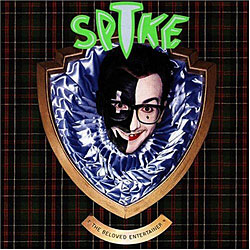 The ideal rock singer/songwriter? Someone who addresses adult issues with all the passion of adolescence (than which, believe me, there is none more monomaniacalthere's no righteous indignation like a teenager's). Someone who can sing about him- or herself and strike the universal; someone who can tell a story of what the swells call "the human condition," or of some social injustice, in terms of how it affects a single life in all that life's unique details. In this case, some musical near-illiterate like "The Beloved Entertainer," as it says on the little brass nameplate under the harlequin-painted face exploding from the golden Warner Brothers shield on the cover of SpikeThe Little Hands of Concrete himself.
 It is often said that anyone with a recorder and a couple of microphones can record an orchestra. It's true, assuming you can get permission to do it (another story entirely). But that statement fails to address an important question: "How well?"
 KEITH JARRETT: Dark Intervals
 RAMEAU: Works for Harpsichord
 BOBBY KING & TERRY EVANS: Live and Let Live!
 CHARLIE PARKER: Bird (Original Soundtrack)
 A useful test CD has recently come my way, courtesy of the Stereophile editorial staff in Santa Fe (a copy was provided to each of the contributing equipment editors). Digital Test was produced in France by Pierre Verany (PV.788031/788032, 2 CDs), and is distributed in the USA by Harmonia Mundi. It provides a wide variety of tests and useful musical selections, but the subject of special interest here is its test bands for evaluation of laser-tracking and error-correction capability.
 Lyle Lovett: Pontiac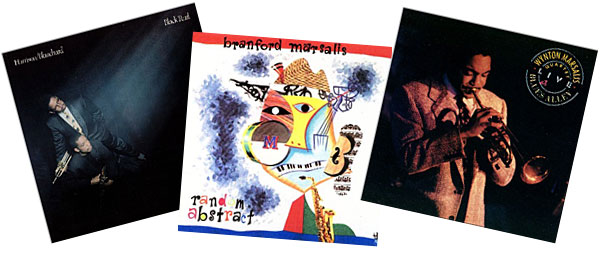
 Jane Siberry: The Walking