Features

Sort By: Post DateTitle Publish Date

Tubes Do Something Special

Most people who now listen to tube amplifiers began with a transistor amp, and know from experience that a tube amp of a given measured power output sounds louder than its nominally identical transistorized equivalent. The unofficial consensus is that you need two to four times the transistor power to achieve the same loudness as you would using tubes. In other words, given the (subjectively) undistorted sound level a 25W (footnote 1) tube amplifier can provide, if you want the same loudness from solid-state technology you would have to replace it with at least a 50W transistor amp (footnote 2).

Elvis Presley: Baby What You Want Me To Do

"Here's somebody who just loves to sing." Over the telephone, Peter Guralnick sounds sad, incredulous. "But he's unable at the end of his life to force himself into the recording studio—the fear of completion, fear of exposing your untrammeled idea to execution. What a terrible thing to lose that ability, that faith in yourself."


God is in the Nuances

This journal has seen a number of thoughtful ruminations on what it is that attracts us to music or to a given audio component, and how we should describe that attraction. The "Letters" pages have been filled by readers who have taken us to task for not adhering to rigorous scientific methods in the evaluation of components, those rigorous scientific methods usually being equated with double-blind listening. Other readers have praised the magazine for its stance that an educated listener in a familiar, relaxed environment will be more accurate in his or her assessment than an average of trained and untrained listeners in unfamiliar, stressful circumstances. Overall, sonic descriptions from diverse reviewers in different publications show a remarkable consensus of observation (not opinion).


In Search of the Perfect 300B Tube

In the last two years, the available choices in 300B output tubes for one's low-wattage single-ended power amplifier have become an embarrassment of riches. If we include the souped-up versions—which, in fact, deviate from the original 1930s Western Electric (WE) specifications—the number of 300Bs to choose from now includes about 15 different brands and types.


Elite DV-05 DVD player (SGHT Review)

When we reviewed Pioneer's flagship Elite DV-09 DVD player in our September 1998 issue, it blew us away so much that it garnered an Editors' Choice award (see the February 1999 issue) as the best DVD player we had reviewed up to that time. This opinion has not changed in the intervening months, but at $2000, the DV-09 is more than many home-theater fans can afford (or justify) for a DVD player. The Elite DV-05, introduced earlier this year, provides many of the features and most of performance capabilities of the DV-09 at a more affordable price.


Elite DV-09 DVD player (SGHT Review)

The new DV-09 is Pioneer's first DVD player in its Elite line. More than simply an upscale version of a standard Pioneer DVD player, the DV-09 was built from the ground up to be a flagship product. It's also the first DVD player I've seen to have been certified under THX's DVD-player certification program (see sidebar, "THX DVD Players").


PDP-501MX 50" Plasma Monitor (SGHT Review)

The advance of plasma-display technology speeds on, and the Pioneer PDP-501MX is at the front of the line. This is the first plasma monitor on sale in the United States that is capable of displaying high-definition images, making it the world's most advanced, commercially available product of this type.Squeezing almost 1 million pixels into even a 50" display (measured diagonally) is quite an accomplishment. As soon as I pulled the unit out of the box and set it in its unobtrusive tabletop stand, I connected it to Panasonic's high-definition tuner box and fed the monitor an over-the-air HDTV signal. Without so much as a hiccup, the set accepted the 1920x1080i signal and displayed a bright, clear, sharp picture that made me smile. All this from a big-screen set less than 4" thick!


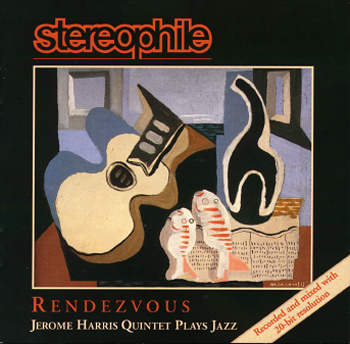
Two Days in August: Stereophile's First Jazz Recording

The genesis of this project goes back nearly 17 years, when my wife, Joan, and I moved into a brownstone floorthrough in Brooklyn. As we were about to sign the lease, our soon-to-be landlord said, "Oh, one more thing: your upstairs neighbor is a musician." This did not exactly discourage us from signing the lease, however, and soon I began to see a steady stream of musicians trudging up the stairs outside our apartment: Oliver Lake, Sonny Rollins, Pheeroan akLaff, Bob Moses, Marty Ehrlich, and a whole bunch of other people I was reading about in the jazz press. Just who was this guy?

4DTV Satellite receiver

When it comes to delivering audio/video programming to the home, there's no substitute for bandwidth. Typically measured in megahertz (MHz) for analog signals or megabits per second (Mbps) for digital datastreams, the amount of bandwidth your system can access determines how much programming you can receive and at what level of quality.


Advertisement
Advertisement
Advertisement