Features

Sort By:  Post Date TitlePublish Date

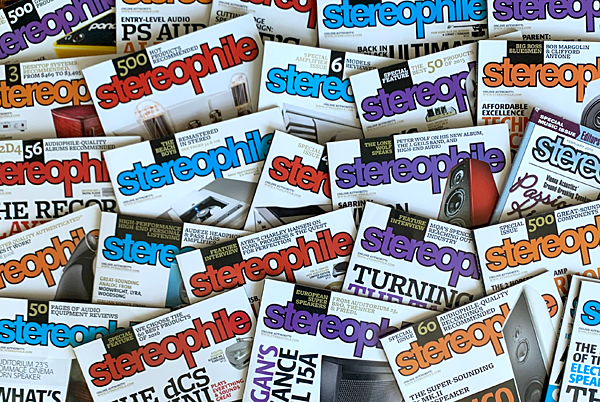
500 Issues And Counting: a Publishing Milestone

We're all involved with the world we live in. Friends from 20 years ago? Hey, nice to see ya, put on a little weight I see. Generally, you hang with your crew, although you might miss the bigger picture that way.

I wrote for Stereophile from 1993 through 2002, and I remember my experiences fondly, including the pure pleasure of listening to music on all that wonderful audio equipment. But I hung with my tribe and never fully appreciated the crucible in which Stereophile was formed. It's a genuine saga; cue Ennio Morricone's soundtrack to Once Upon a Time in the West.

A Visit to the DALI Factory

DALI's loudspeaker factory in Nørager, Denmark. (Photo: DALI.)

Seen from the air, Denmark is a vista of farms and wind turbines. But once your plane touches down, it is a land of loudspeakers. Perhaps this is because audio has a long history in Denmark—it was a Dane, Valdemar Poulsen, who developed a magnetic wire recorder in 1898—but there are more loudspeaker manufacturers per person than any other country. According to Wikipedia, Denmark is home to 5.75 million people, compared with New York's five boroughs, which have a population of 8.67 million However, as well as drive-unit manufacturers Audio Technology, Peerless, Vifa (which merged with Peerless to form Danish Sound Technology), and ScanSpeak, there are Bang & Olufsen, DALI, Dynaudio, Gamut, Gryphon, Jamo, Lyngdorf Audio, Peak-Consult, and Raidho all making loudspeakers. Lots of loudpeakers.

Getting Real

If you: 1) live in an apartment, condo, townhouse, dorm, or share a house or apartment with someone;

2) are going to, have recently graduated from, or have never gone to college and are not working at all, are working a minimum-wage job, or have just gotten your first job but have loans, Visa/MasterCard/American Express bills, a brand-new car payment, and can't afford to eat anything but macaroni and cheese anyway. . .

Jitterbuggin'

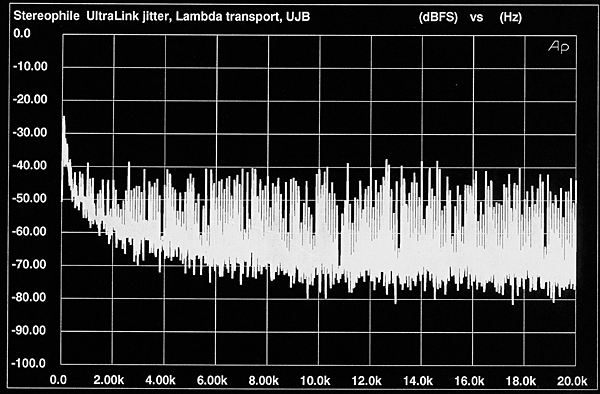
If there's one buzzword in high-end audio for the 1990s, it's undoubtedly jitter. "Jitter" describes timing variations in the clock controlling the ones and zeros that represent the analog audio signal. If that clock isn't stable to an extraordinarily precise degree, the sound quality of the digital processor will be degraded.

A CD transport/digital processor combination introduces jitter in three ways: 1) the transport puts out a jittered signal; 2) the S/PDIF or AES/EBU interface between the transport and processor creates jitter; and 3) the digital processor adds its own jitter to the clock. These additive factors are largely responsible for the great range in sound quality we hear from different transports and interfaces.

Lighting Strikes: a Bolt From the Blue

One evening late last summer I took the most expensive workout of my life. In my hurry to meet a friend at the gym, I left the house, leaving my computer and hi-fi on despite the ominous look of the sky. In the South, experience teaches you to dash about disconnecting everything at the first sign of a thunderstorm. Usually I do, but this time my mind was elsewhere.

Snake Oil: A Short History

If there's one thing audiophiles agree on, it's that snake oil is bad—even if they can't agree about what snake oil actually is.

In audio, snake oil means fake science or fake technology—anything that's claimed to improve the sound of a system but that looks like an obvious rip-off. For some people, expensive speaker cables and interconnects are snake oil. A few objectivists consider AC power treatments snake oil: most modern audio components, after all, can correct for AC line-voltage flaws and reject "ripple" in a power supply's output. A handful of hard-core objectivists maintain that every new digital technology since the advent of the Compact Disc is snake oil.

Advertisement
Advertisement
Advertisement