Features

Sort By: Post DateTitle Publish Date

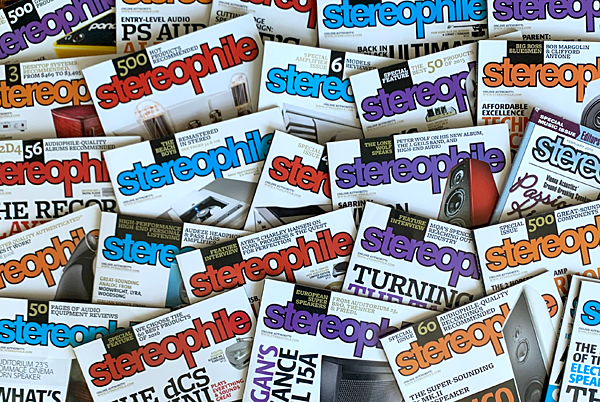
500 Issues And Counting: a Publishing Milestone

We're all involved with the world we live in. Friends from 20 years ago? Hey, nice to see ya, put on a little weight I see. Generally, you hang with your crew, although you might miss the bigger picture that way.


I wrote for Stereophile from 1993 through 2002, and I remember my experiences fondly, including the pure pleasure of listening to music on all that wonderful audio equipment. But I hung with my tribe and never fully appreciated the crucible in which Stereophile was formed. It's a genuine saga; cue Ennio Morricone's soundtrack to Once Upon a Time in the West.

A Visit to the DALI Factory

DALI's loudspeaker factory in Nørager, Denmark. (Photo: DALI.)


Seen from the air, Denmark is a vista of farms and wind turbines. But once your plane touches down, it is a land of loudspeakers. Perhaps this is because audio has a long history in Denmark—it was a Dane, Valdemar Poulsen, who developed a magnetic wire recorder in 1898—but there are more loudspeaker manufacturers per person than any other country. According to Wikipedia, Denmark is home to 5.75 million people, compared with New York's five boroughs, which have a population of 8.67 million However, as well as drive-unit manufacturers Audio Technology, Peerless, Vifa (which merged with Peerless to form Danish Sound Technology), and ScanSpeak, there are Bang & Olufsen, DALI, Dynaudio, Gamut, Gryphon, Jamo, Lyngdorf Audio, Peak-Consult, and Raidho all making loudspeakers. Lots of loudpeakers.

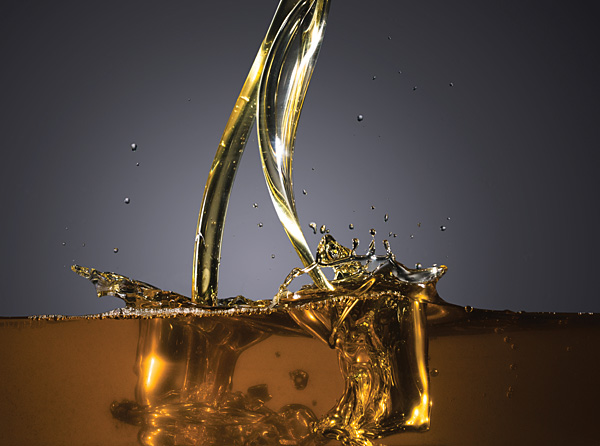
Snake Oil: A Short History

If there's one thing audiophiles agree on, it's that snake oil is bad—even if they can't agree about what snake oil actually is.


In audio, snake oil means fake science or fake technology—anything that's claimed to improve the sound of a system but that looks like an obvious rip-off. For some people, expensive speaker cables and interconnects are snake oil. A few objectivists consider AC power treatments snake oil: most modern audio components, after all, can correct for AC line-voltage flaws and reject "ripple" in a power supply's output. A handful of hard-core objectivists maintain that every new digital technology since the advent of the Compact Disc is snake oil.

Noise, Resolution & Benchmark

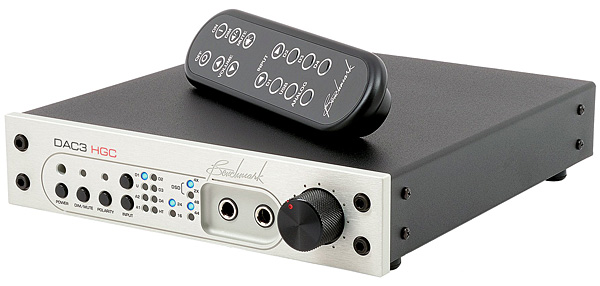
The most notable aspect of Benchmark Media Systems' DAC3 HGC ($2195), which I favorably reviewed in the November 2017 Stereophile (footnote 1), is its low noise floor. John Atkinson's measurements corroborated Benchmark's claim that the DAC3 is capable of "at least" 21-bit performance. While significantly less than the theoretical potential of a 24-bit data format, 21 bits is still the state of the art, and corresponds to a dynamic range—the ratio of the highest achievable digital-domain volume to the DAC's internal noise—of 128dB. That's well above the dynamic range that most power amplifiers can achieve. A good-measuring high-end solid-state amplifier is likely to have a dynamic range—the highest attainable ratio of signal to noise—of about 100dB ref. its maximum power.

Devialet Diary

It's day five of our planned month-long stay à Paris, late April through most of May. My wife is here for work—for me, it's strictly for pleasure—and we're enjoying Paris's rich, sensual goodness: food, museums, architecture, coffee, people, food. And yet, earlier today, when we were out for a walk—we've been walking close to 10 miles each day, exploring the city—I realized that my life here has been missing something important.

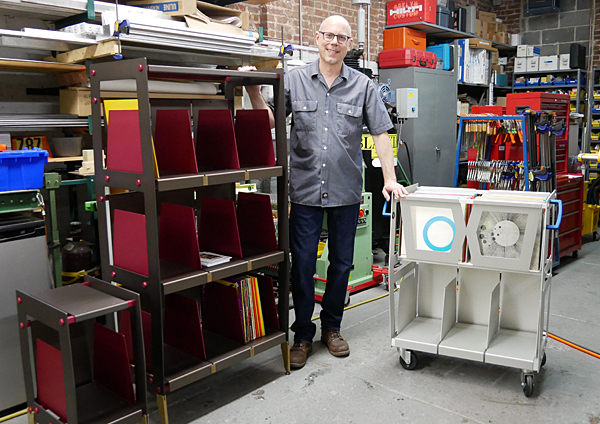
Vinyl Apocalypse: the LP Shelving Dilemma

The three most traumatic events anyone can experience in life? The death of a loved one? A surprise audit by the IRS? Your entire LP collection purloined by a disgruntled ex-lover?


And, oh yes—moving.


As 2016 turned to 2017, my wife and I were forced to move from an apartment we wrongly assumed we'd never ever have to leave, which in New York City means a lot. Perhaps we were just a tad naïve?

Book Review: The New Analog

The New Analog: Listening and Reconnecting in a Digital World, by Damon Krukowski. The New Press, 2017. Hardcover, 240 pp., $24.95. Also available as an e-book.


Defining noise is tricky business.


In high-end audio, noise is often defined as the enemy—of music, beauty, truth. Engineers and enthusiasts alike spend significant amounts of time, energy, and money attempting to minimize or control noise so that it has the least possible impact on the source signal: music. In this way—if we are intelligent, careful, and fortunate—we can extract from our stereos cleaner, clearer, more naturally beautiful sound for listening experiences that are enriching, emotionally compelling, and, above all, fun. On the other hand, when noise is allowed to excessively modulate the signal, music can sound relatively abrasive, more mechanical, and, ultimately, less engaging.

Building a Sound Room: A Personal Journey

By the time we had finished the house tour and admired the quiet beauty of the fir-canopied neighborhood, we sensed that we would follow our hearts from unsafe and increasingly unaffordable East Oakland, CA to the serene hamlet of Port Townsend, WA. We also knew that the only suitable place for my reference/review system would be in the 22' x 22' detached garage
Advertisement
Advertisement
Advertisement