Is it possible to make a $700 "mainstream-audio" power amplifier sound exactly like a high-priced perfectionist amplifier? Bob Carver, of Carver Corporation, seemed to think he could, so we challenged him to prove it.
The issue is this business of "single-speaker" listening and demonstration, which has become fashionable in the UK.
The premise: bringing a second pair of loudspeakers into your auditioning room upsets the sound of the pair you're listening so badly that the first speaker's ability to correctly reproduce the timbre of musical instruments is destroyed. This observation is almost surely correct.
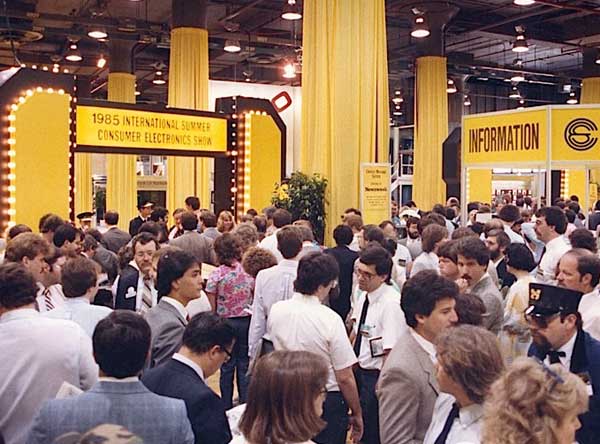
There were no surprises, innovations, or breakthrough designs in loudspeakers at the 1985 Summer Consumer Electronics Show in Chicago. By and large, those on display were nothing more than refinements of, or variations on, previous speaker designs. Of course, there's nothing the matter with that; any improvement in a product is a step in the right direction. It merely perpetuates the pattern of the past ten years: evolution but no revolution.
Editor's Note: In 1985 and 1986, an argumentative thread ran through Stereophile's pages, discussing the benefits or lack of double-blind testing methods in audio component reviewing, triggered by J. Gordon Holt's review">http://www.stereophile.com//asweseeit/121/">review of the ABX Comparator. As this debate is still raging nearly 15 years later, we present here the entire discussion that bounced back and forth between the magazine's "Letters" section and features articles. It was kicked off by a letter from C.J. Huss that appeared in Vol.8 No.5.—John Atkinson
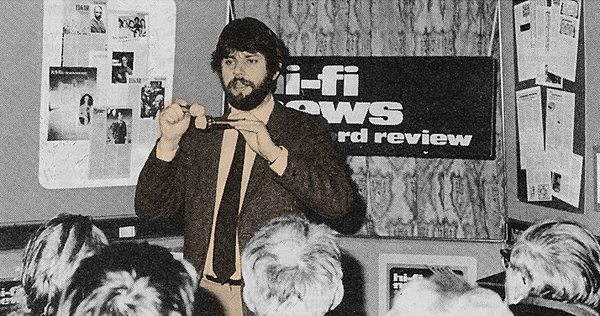
The author demonstrating stereo microphone techniques at an English audio show in 1981.
For most people the terms hi-fi and stereo are synonymous, and yet it is clear that there is still a great deal of confusion over what the word "stereo" actually means. There isn't even a consensus of opinion amongst producers of records, designers of hi-fi equipment, audio critics and music lovers as to the purpose of stereo, and considering that the arguments show no sign of diminishing in intensity, it is instructive to realise that 1981 sees both the 100th anniversary of Clement Ader's first stereo experiments and the 50th anniversary of Alan Blumlein's classic patent on stereo.
The problem confronting the magazine reviewer when organising the necessary listening tests to accompany/reinforce the measured behavior of a device under test is complex. There has never been a problem with the measurement aspect; as long as someone has access to the same test gearand full knowledge of the test conditionsthen he should be able to replicate the critic's findings exactly (assuming an infinitely narrow spread of behaviour from sample to samplea rasher assumption with some manufacturers' equipment than of others). However, when it comes to determining reliably the audible (or inaudible?) effects on music program by an amplifier/cartridge/loudspeaker etc. then the going gets tough.
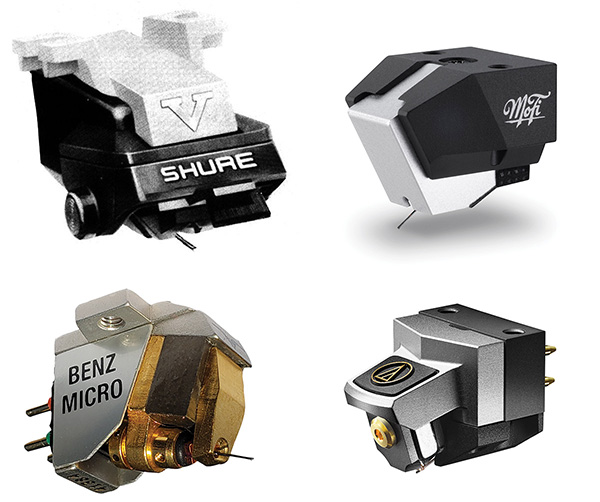
In the context of a modern hi-fi system, phono cartridges are most akin to loudspeakers in that both are electromechanical transducers. Cartridges convert the mechanical movements of a stylus tracing a record groove to an electrical current.
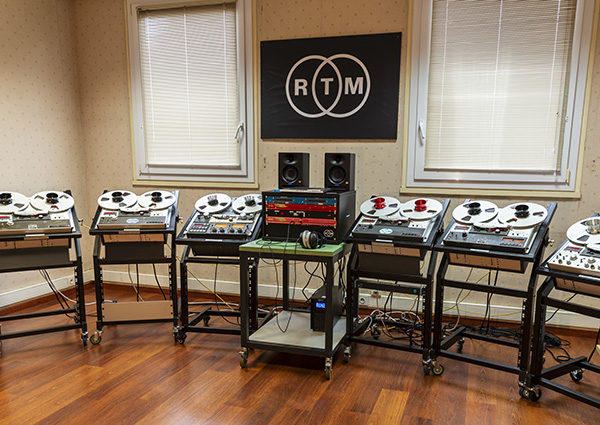
Rhino Records, Warner Music Group's back-catalog label, has jumped into the rarified niche of prerecorded reel-to-reel tapes. Under the Rhino High Fidelity brand, the first two titles were announced in October 2025: T. Rex's Electric Warrior and The Yes Album. Both are limited editions; no more than 500 tapes will be made and sold.