Features

Sort By: Post DateTitle Publish Date

The Silverman Concert
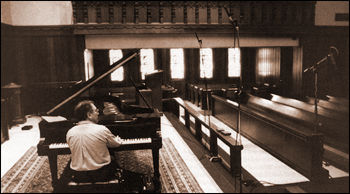
"What's that noise?" Bob Harley and I looked at each other in puzzlement. We thought we'd debugged the heck out of the recording setup, but there, audible in the headphones above the sound of Robert Silverman softly stroking the piano keys in the second Scherzo of Schumann's "Concerto Without Orchestra" sonata, was an intermittent crackling sound. It was almost as if the God of Vinyl was making sure there would be sufficient surface noise on our live recording to endow it with the Official Seal of Audiophile Approval. Bob tiptoed out of the vestry where we'd set up our temporary control room and peeked through a window into the church, where a rapt audience was sitting as appropriately quiet as church mice.
Balance: Benefit or Bluff?

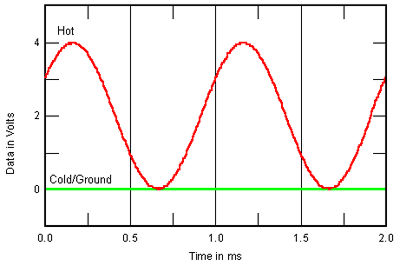
If you read much promotional literature for recently introduced high-quality equipment, you'll notice a common theme emerging: balanced connection. Balanced inputs and outputs are becoming a must for any audio equipment that has any claim to quality. The word itself has promotional value, suggesting moral superiority over the long-established "unbalanced" connection (for the purpose of this discussion, I will call this "normal"). What's my problem with this? Simply this: The High End could be paying dangerous, costly lip service to the received wisdom that balanced operation is the goal for an audio system.


Jitterbuggin'

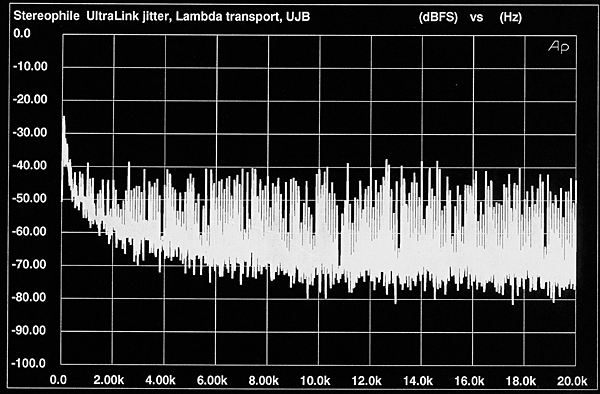
If there's one buzzword in high-end audio for the 1990s, it's undoubtedly jitter. "Jitter" describes timing variations in the clock controlling the ones and zeros that represent the analog audio signal. If that clock isn't stable to an extraordinarily precise degree, the sound quality of the digital processor will be degraded.


A CD transport/digital processor combination introduces jitter in three ways: 1) the transport puts out a jittered signal; 2) the S/PDIF or AES/EBU interface between the transport and processor creates jitter; and 3) the digital processor adds its own jitter to the clock. These additive factors are largely responsible for the great range in sound quality we hear from different transports and interfaces.

Getting Real

If you: 1) live in an apartment, condo, townhouse, dorm, or share a house or apartment with someone;


2) are going to, have recently graduated from, or have never gone to college and are not working at all, are working a minimum-wage job, or have just gotten your first job but have loans, Visa/MasterCard/American Express bills, a brand-new car payment, and can't afford to eat anything but macaroni and cheese anyway. . .

Space...the Final Frontier

High-end audiophiles are space freaks---we relish the warmth and spaciousness of a fine, old performing hall almost as much as we do the music recorded in it. But my attendance at a series of orchestral concerts held last summer brought home to me---as never before---the sad fact that our search for the ultimate soundstage is doomed to failure: we're trying to reproduce three-dimensional space from a two-dimensional system, and it simply can't be done.


Lighting Strikes: a Bolt From the Blue

One evening late last summer I took the most expensive workout of my life. In my hurry to meet a friend at the gym, I left the house, leaving my computer and hi-fi on despite the ominous look of the sky. In the South, experience teaches you to dash about disconnecting everything at the first sign of a thunderstorm. Usually I do, but this time my mind was elsewhere.

R.I.P High-End Audio?

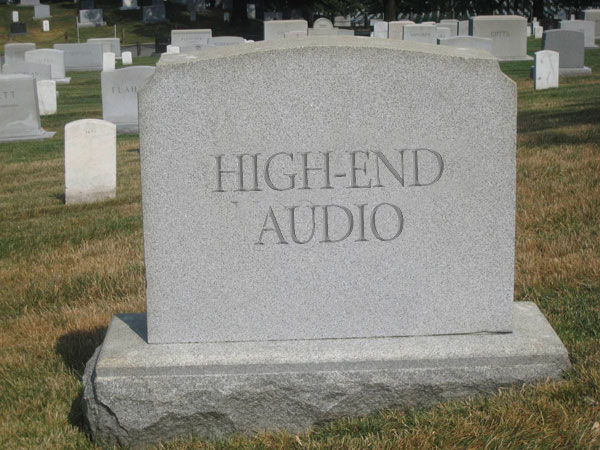
Slowly, painfully, high-end audio seems to be dying. We all know it but we're apparently unable to resuscitate the patient. US dealers are closing at alarming rates—it must be the economy. Women continue to avoid the High End—it must be the technobabble combined with male equipment fetishism. Younger people aren't hopping aboard—it must be all those other things competing for their money. (Then again, it might be the High End's abhorrence of rock'n'roll.)

A Transport of Delight: CD Transport Jitter

Not that long ago, digital audio was considered perfect if all the bits could be stored and retrieved without data errors. If the data coming off the disc were the same as what went on the disc, how could there be a sound-quality difference with the same digital/analog converter? This "bits is bits" mentality scoffs at sonic differences between CD transports, digital interfaces, and CD tweaks. Because none of these products or devices affects the pattern of ones and zeros recovered from the disc, any differences must be purely in the listener's imagination. After all, they argued, a copy of a computer program runs just as well as the original.


How To Write Manufacturers' Comments

"Equipment Reports," "Record Reviews," "Letters," "Industry Update," "Sam's Space," "As We See It," "The Final Word"---I read and enjoy them all. But the section of Stereophile I especially look forward to reading is "Manufacturers' Comments." How is the manufacturer going to respond to a review that's considerably less than 100% positive? Can they take criticism gracefully, or do they have an attitude? If I were a consumer considering purchase of one of their products, would their comments convince me that they'd be a good company to deal with? Are they uptight beyond reason, or do they have a sense of humor? Can they respond to a positive review without gloating?
Advertisement
Advertisement
Advertisement