Art Dudley Listening

Sort By: Post DateTitle Publish Date

Listening #130

Whether the subject is hi-fi equipment, films, restaurants, power tools, or condoms (see the April 2005 "Listening"), reviewing should be off-limits to the perennially unhappy. I'm reminded of that dictum by the flap over the recent film Identity Thief, which was savaged by reviewer Rex Reed—not because the film is weak, but because its star, Melissa McCarthy, is heavy. Reed, whose career as the Paul Lynde of film reviewing was punctuated by a starring role in a flop called Myra Breckenridge, mentioned in his review McCarthy's size not once but numerous times, thus exposing himself as a bullying hack who wields his harshest criticisms not when they are merited but as unconscious expressions of his own personal anguish. Hate speech of any sort is the crayon of the unhappy; that is doubly true of people who write for a living.
Listening #129

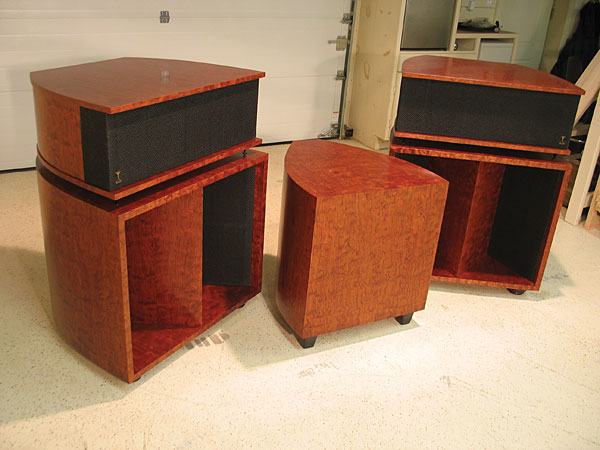
Volti Audio's Vittora, a borrowed pair of which now sit at the far end of my listening room, is a great loudspeaker and, at $17,500/pair, a seriously great value. After a few weeks with the Vittora, I find myself convinced by the naturalness, momentum, and force that it found in every record I played: This is surely one of the finest horn-loaded speakers made in the US.

Listening #127

The closest I've come to airing my thoughts about live vs recorded music was in the "As We See It" of the December 2005 Stereophile, "Resistance Is Futile," in which I put as many miles between the two as I could. I described live performances as works of art that exist only at the time and place of their making, variables from which their ultimate impact can never be separated; and music recordings as works of art in their own right, albeit ones that require a great deal more from the listener in order to succeed to their fullest. People respond more positively to live music not because it sounds more real, but because they understand, consciously or not, that any performance is a once-in-a-lifetime event.

Listening #125

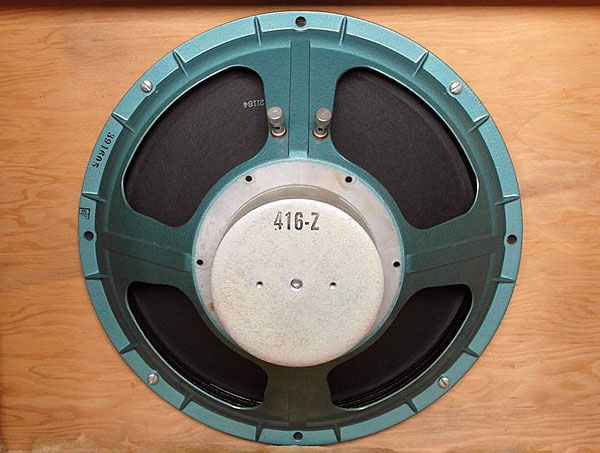
Monday, January 14, was a difficult day for the abandoned amusement park that is my body. In the morning, I packed two Lamm ML2.2 amplifiers into their wooden crates and wrestled them outside for collection by some unlucky air-freight courier. After that, I backed up my car to the tiny front porch of our house so I could unload a pair of 1966 Altec Valencia loudspeakers I'd collected the day before: in excess of 100 pounds each, just like the crated Lamms, but considerably larger.

Listening #124

Beethoven understood the pathos of the gap between idea and realization, and the sense of strain put on the listener's imagination is essential.—Charles Rosen


Bass, like sex, is something most young men desire in excess: To the novice, quantity trumps quality, and as long as he can hear from his playback system the deepest sounds of an orchestral bass drum or five-string electric bass (low string tuned to B-0 or C-1), he is completely satisfied.

Listening #123

Let's say you're lucky enough, or just plain old enough, to have bought a copy of Truman Capote's In Cold Blood on January 12, 1966. Let's say you're lucky enough or just plain smart enough to have held on to it and kept it in perfect shape for the past 47 years. And let's say it was one of the first 500 copies, which the author signed. If so, congratulations: For once in your life, even the smuggest collector can't claim that his copy of a book is "better" or more valuable than yours.

Listening #122

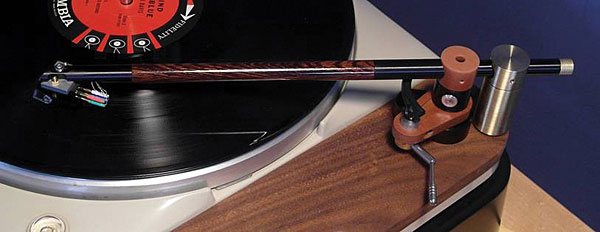
Sad though they may be, Flat Earthers endure in getting two things right: In any music-playback system, the source is of primary importance; and in a music system in which LPs are the preferred medium, the pickup arm is of less importance than the motor unit—but of greater importance than just about everything else.

Listening #121

By the end of last month's column I'd invested a total of $290 in acquiring and refurbishing a 55-year-old Rek-O-Kut Rondine Jr. turntable. In the weeks that followed I spent just a few dollars more on some small parts—one of which sprang from a technology that I don't believe existed in the 1950s—that made small but welcome improvements in the performance of this outwardly simple player. I'll come back to those improvements in a moment, but for now let's get started on putting Junior back together again.

Listening #120

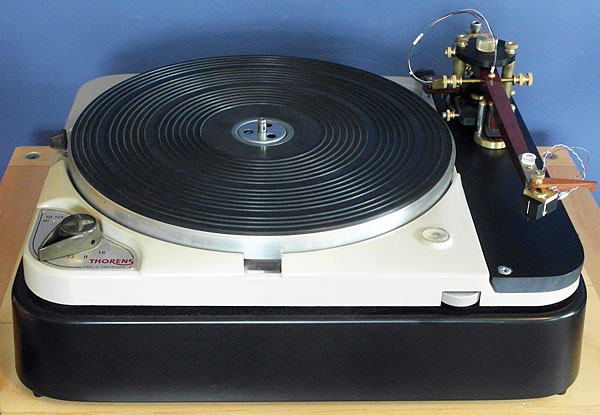
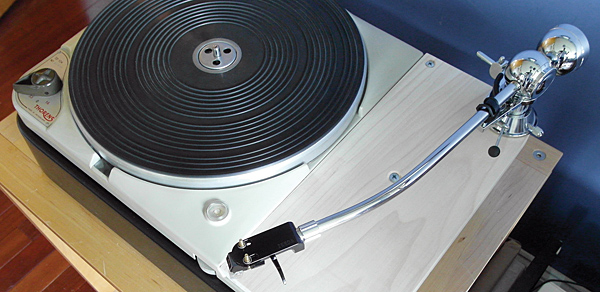
For the qualities I most value in a music system—impact, substance, texture, color, and, above all, the ability to play lines of notes with a realistic sense of momentum and flow—the venerable Garrard 301 and similar well-made turntables with powerful motors and idler-wheel drive are the sources to beat. Unfortunately, good-condition samples of the Garrard 301 and 401, the Thorens TD 124, and any number of exotic EMTs have become scarce and ever more expensive.
Advertisement
Advertisement
Advertisement