

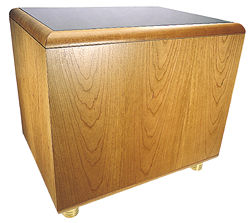
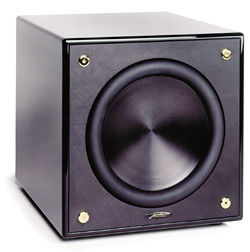
Revel Ultima Sub 30 powered subwoofer

It didn't seem like such a big deal. After all, when designer Kevin Voecks added a passive radiator to the bottom of Revel Loudspeakers' powerful Ultima">http://www.stereophile.com/loudspeakerreviews/90">Ultima Sub 15 subwoofer, no one expected that the resulting 6dB increase in bass output below 35Hz would be so audible. However, Revel's sophisticated double-blind listening tests (described in my review of their flagship Ultima">http://www.stereophile.com/loudspeakerreviews/96">Ultima Salon full-range loudspeaker in the March 1999 Stereophile, revealed that a big change had occurred. With now twice the radiating surface, the modified Sub 15 produced significantly deeper, more powerful bass.


 I should begin this review by confessing that I've never been a fan of subwoofers. Most subwoofer systems I've heard have been plagued by a familiar litany of sonic horrors: poor integration between subwoofer and main speakers, boom, bloat, tubbiness, slowness, excessive LF output, and an overall presentation that constantly reminds the listener he is hearing a big cone moving. To me, subwoofers often sound detached from the music, providing an accompanying thump that bears little relationship to the sound from the main speakers. Rather than revealing the music's harmonic underpinnings, subwoofers often obscure them in a thick morass of featureless boom. In addition, adding a subwoofer often destroys the qualities of the main speakers that made you buy them in the first placejust to name a few of my observations (footnote 1).