Subwoofer Reviews

Sort By: Post DateTitle Publish Date

REL No.31 powered subwoofer
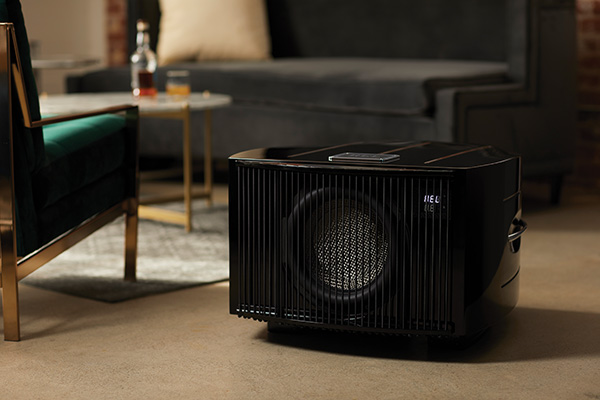
I have a love-hate relationship with subwoofers. They tend to bring out my tweaky alter ego. Perhaps one of these sorry personae lives within you too: the perennially neurotic Mr. Hyde to your more obliging Dr. Jekyll. Hyde is the tense, never-satisfied fault-sniffer who zeroes in on sonic details that are perhaps slightly off, even when other people in the room are enjoying themselves.


With subwoofers, he's at his worst. Did you hear that?, he'll exclaim when he worries that a low bass note received too much emphasis. He nags and niggles that perhaps the integration between the main speakers and the subwoofer leaves a crater somewhere in the low-frequency band. He harps, not always believably, that he can hear where the subwoofer is, even though deep bass is supposed to be impossible to localize. Most of all, he barely lasts a song without getting twitchy about the sub's gain setting, imagining that he has to dial in exactly the right amount of deep-bass presence with each track.
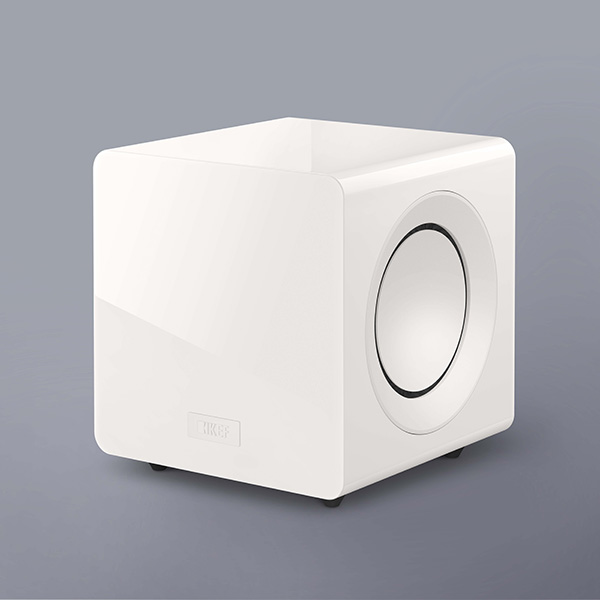
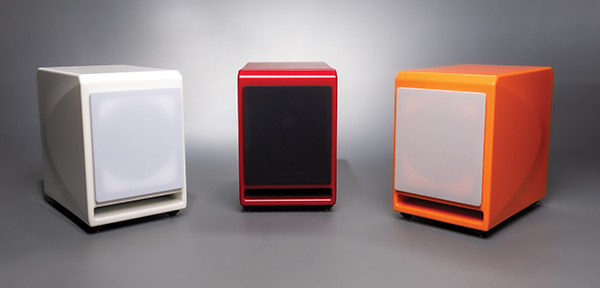
KEF KC92 powered subwoofer

I was fascinated by Herb Reichert's adventures with the KEF KC62 subwoofer, so I borrowed one. Beautifully engineered, contoured, and finished and chock-full of cutting-edge technology, it would be welcome in any room and easily integrated into any system. However, it struck me as not just small but miniaturized, like the meticulously functional samples made for the traveling salesmen of a century past. Since its two force-canceling 6.5" radiators were the same size as or smaller than the midrange drivers in my main speakers at the time, I had low expectations and returned it without comment. That was in 2021.


I asked for a pair of KEF KC92s in early 2024 in the hope that these two relatively small subs would improve my system. Like the KC62, the gloss white cube with radiused edges and white diaphragms is an aesthetic match to our redesigned room, and the KC92 ($1999.99) is chock-full of the same cutting-edge technology.

Wilson LoKe subwoofer

Piece of cake, thought I. All I needed to do to review Wilson Audio Specialties' smallest active subwoofer, the LōKē ($8950 each in standard finish), was describe how low a pair goes in my room and how cleanly they woof.


As I was soon to learn, though, there was a lot more to reviewing LōKēs than that. Why? Because a pair of LōKē subwoofers does more than reinforce the already deep bass extension of the Wilson Alexia V loudspeakers with which they are now paired in my system. Therein lies the tale.

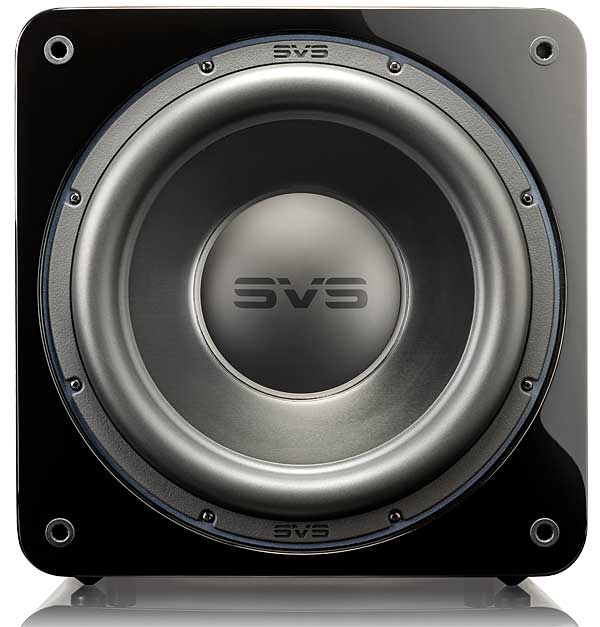
SVS 3000 Micro subwoofer


My incommodious room favors small standmount and panel speakers that some audiophiles would say require a subwoofer.


But I was never inspired to try one until a new category of subwoofer appeared: the "micro" (aka soccer-ball) subwoofer. The minute I saw the little KEF KC62, a 10" cube, I imagined it could do 0–100Hz and back to zero in record time. I reported on the KEF microsub last month, in Gramophone Dreams #49.

SVS SB-3000 powered subwoofer


SVS's recently introduced SB-3000 is a compact powered subwoofer that's $600 cheaper, a few cubic inches smaller, and 37lb lighter than the model it replaces, the SVS SB13-Ultra. Its amplifier is less powerful (800W vs 1000W), but its rated frequency response extends lower: a stygian 18Hz, compared to the SB13-Ultra's merely stentorian 20Hz.

MartinLogan Dynamo 800X powered subwoofer

In the late 1980s, when I began reviewing high-end subwoofers, they were big and heavy, difficult to move or find space for in a room. Their controls were always on an inconveniently positioned rear panel, and there were no built-in automatic room-optimization options or parametric equalizers. Velodyne's 105-lb, downfiring ULD-18 ($2570), ca 1989, was typical: Two people were needed to unpack and move it; it was powered by an outboard 400W amplifier, connected inconveniently with a speaker cable and an RCA-terminated interconnect for its servo control; and its controls were on the bottom of the cabinet. Changing its crossover frequency involved soldering new resistors onto a printed circuit board inside the amp.

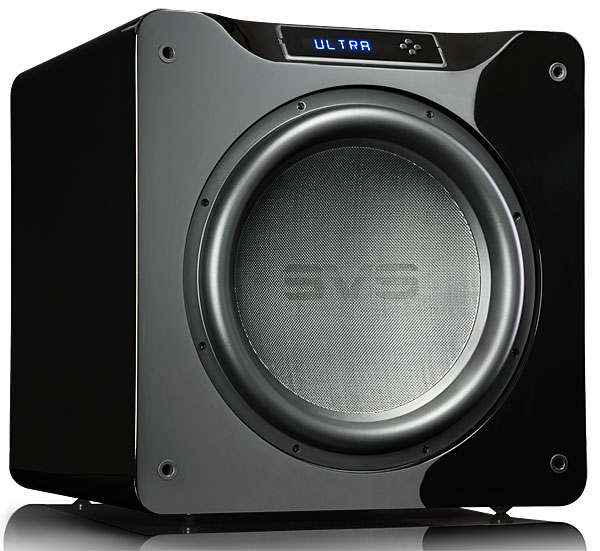
SVS SB16-Ultra powered subwoofer

This review began when I ran into Gary Yacoubian, president of SVS, in a crowded hallway at Las Vegas's Venetian Hotel, during the 2016 Consumer Electronics Show. He smiled and introduced himself. "Larry, I enjoyed your review of our SB13-Ultra. If you liked that subwoofer, we have something coming soon that should really interest you. I can't say anything more now."

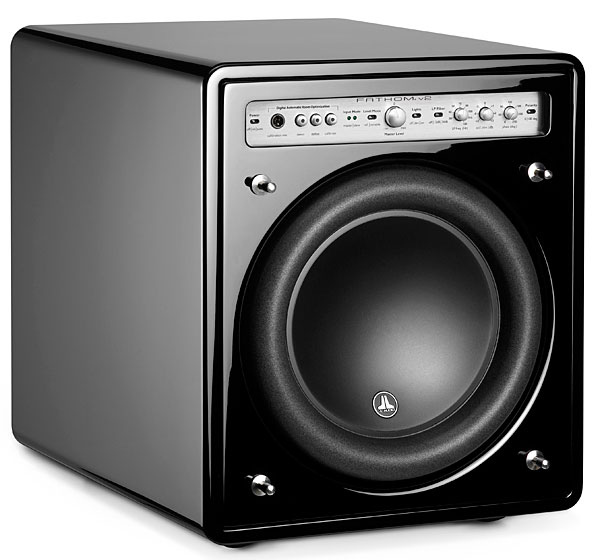
JL Audio Fathom f212v2 powered subwoofer & CR-1 crossover

It was all so familiar. In "Music in the Round" in the January 2016 issue, Kal Rubinson praised JL Audio's latest subwoofer, the Fathom f113v2. He raved about its amplifier's higher power over the original f113, its beefier 13" woofer, its improved, 18-band Digital Automatic Room Optimization (DARO), and its significantly improved deep-bass response in-room.


It was familiar because the same thing had happened when Kal reviewed the original Fathom f113 in his May 2007 column. As he would again nine years later, he'd extolled the sub's high power, small size, built-in single-band Automatic Room Optimization (ARO) software, and "remarkably powerful and clean" deep bass. Those were also my reactions to the Fathom f113.

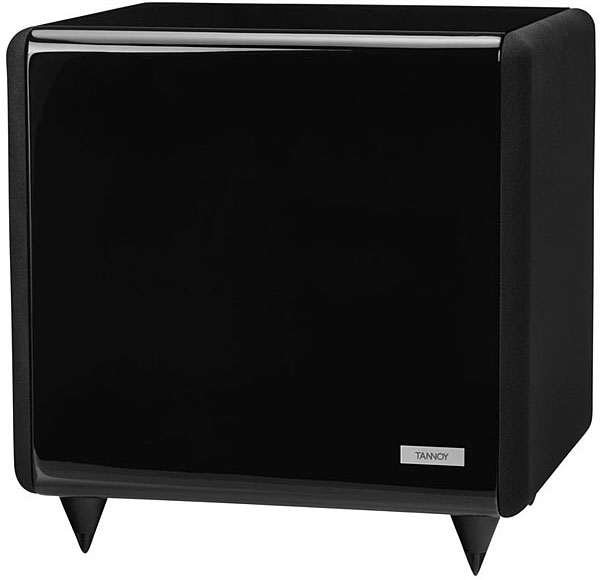
Tannoy TS2.12 powered subwoofer

Ten years ago, our family was joined by my son-in-law, who was raised in Dublin, and spent his university years in London. I was editing this review during a recent visit with our daughter and grandchildren, and Justin became interested in the fact that I was reviewing a subwoofer made by Tannoy. He reminded me that, in the UK and Ireland, Tannoy had long been a generic term for public-address systems, just as Hoover had come to describe any vacuum cleaner, regardless of manufacturer. Although Justin admitted that this usage was probably "old school," he teased me that I was reviewing a PA speaker for an audiophile magazine!
Advertisement
Advertisement
Advertisement