As We See It

Sort By: Post DateTitle Publish Date

The Moment of Truth

Well, it's that time. The time of reckoning, the moment of truth. It's renewal time.


Most of you have noticed the hyphenated numbers on your address labels, and most of you guessed what they were: Expiration codes. If your label has a 1-12 number on it (or no hyphenated code at all), the next issue of The Stereophile, Issue Number 12 [published in September 1966—Ed.], will be the last one that will arrive on your present subscription.
Observations and Prognostications for 1965

Well, the New York Hi-Fi wingding has come and gone once again, and now is the time when audio editors dutifully adopt the role of oracle, divining the future of high fidelity, and generally sketching out The Big Picture for those of us too blind to see the graffiti on the wall. So, who are we to shirk our duty? Herewith, The Stereophile's audio observations and predictions for 1965.

Don't Just Sit There!

Like every sensible publication, The Stereophile keeps track of the questions raised by readers who write to us, so we can get some idea of what most of you would like to see in future issues of the magazine. To date, the list looks like this, in order of diminishing interest: transistor amps and preamps, loudspeakers, pickups, tape equipment, tuners and, way at the bottom of the list, recordings. We are devoting most of the August 1964 issue to a discussion of commercial recording practices.

Merry Christmas Indeed

Editor's Note: The editorial leader for the seventh issue of what was then called The Stereophile, cover-dated April 1964, was the first to introduce a recurring theme to the magazine's first 20 years of publication: an apology to subscribers for being late.—John Atkinson


Those of you who have a mind for dates may have noticed that this issue of The Stereophile is very, very late. This, the seventh issue, was supposed to have been a Merry Christmas November–December issue, but as things worked out, it doesn't even deserve the title of January–February issue. So, we think a few words of explanation are in order.

In Praise of Imported LPs

By the time you read this in late 1963 (probably a month after it is written, judging by the speed with which the US mails speed second-class matter on its appointed rounds), Capitol Records will have announced the first bit of really good news for the high-fidelity perfectionist in years: the release of imported disc pressings—taped, cut, and stamped in Europe. London has been importing for years—all the Londons you buy are pressed by Decca in England. But this will be the first opportunity we will have of sampling the products of some of London's overseas competitors.

Down with Dynagroove!

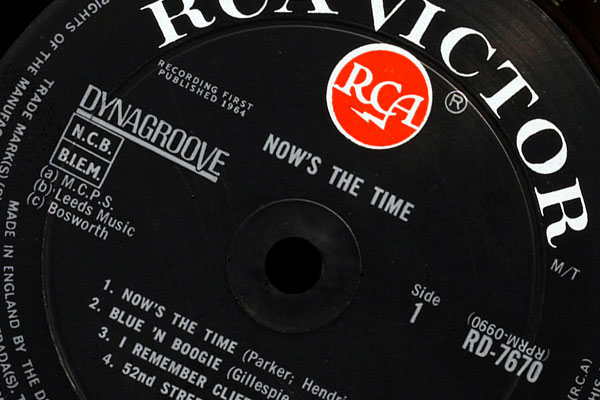
Editor's Introduction: In 1963, Stereophile's founder J. Gordon Holt published attacks on what he saw as the single largest step backward in high-fidelity sound reproduction at that time: RCA's introduction of "Dynagroove" LP records, where the recorded signal was pre-distorted and dynamically equalized to compensate for the poor performance of cheap phonograph players. "Issue 5...revealed most of RCA Victor's 'revolutionary' new system as nothing more than a sophisticated way of bringing higher fi to record buyers who don't care enough about hi-fi to invest in a decent playback system." Ten years later, Gordon wrote that, "As of 1974, the best we can say for Dynagroove is that there is no audible evidence of it on current RCA releases." (These articles were reprinted in June 1992, Vol.15 No,6, as part of Stereophile's 30th-anniversary celebrations.)John Atkinson

Why Hi-Fi Experts Disagree

Dateline: late August 1989. The scene: my palatial office in the Stereophile Tower. Present were the magazine's official technowizard Robert Harley, Circulation Kahuna Michael Harvey, and myself. The subject under discussion was the program for the Stereophile Test CD, launched in this issue, and Bob had been dazzling Michael and myself with a description of the sophisticated signal-processing power offered by the Digidesign Sound Tools music editing system with which he had outfitted his Macintosh IIX computer. (He had to fit it with a 600-megabyte hard-disk drive!) "It'll even do edits as crossfades as well as butt joins," enthused Bob. "Let me tell you about the crossfade I once did when editing a drum solo for a CD master that lasted ten seconds..."

The Weakest Link

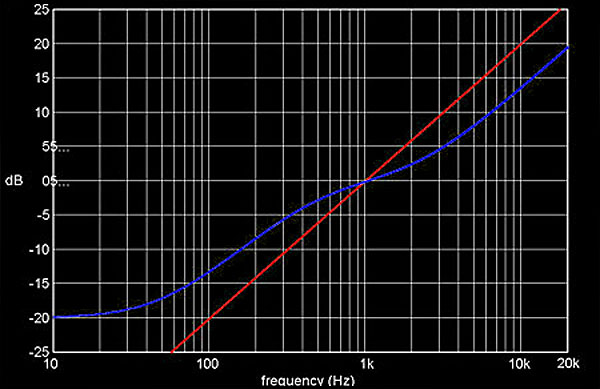
When the Record Industry Association of America adopted its standard disc playback equalization curve in 1954, hi-fi enthusiasts heaved a sigh of relief and bade fond farewell to years of confusion, doubt and virtual pandemonium. Before the RIAA curve there were six "standard" curves in use, and since nobody seemed to know who was using what, getting flat response from a disc was often more a matter of luck than anything else. The adoption of the RIAA standard playback curve heralded an end to all this.

Don't Tell Your Friends!

Stereophile's founder, J. Gordon Holt, photographed toward the end of his life by Steven Stone.


Editor's Note: The forthcoming August 2017 issue of Stereophile is No.451, but 55 years ago this summer, J. Gordon Holt was putting together the first issue of what initially was to be called The Stereophile. Here is Gordon's editorial leader from that issue, published in November 1962.

Advertisement
Advertisement
Advertisement