Aural Robert

Sort By: Post DateTitle Publish Date

Music Loses Two Legendary Producers: Steve Albini and Michael Cuscuna

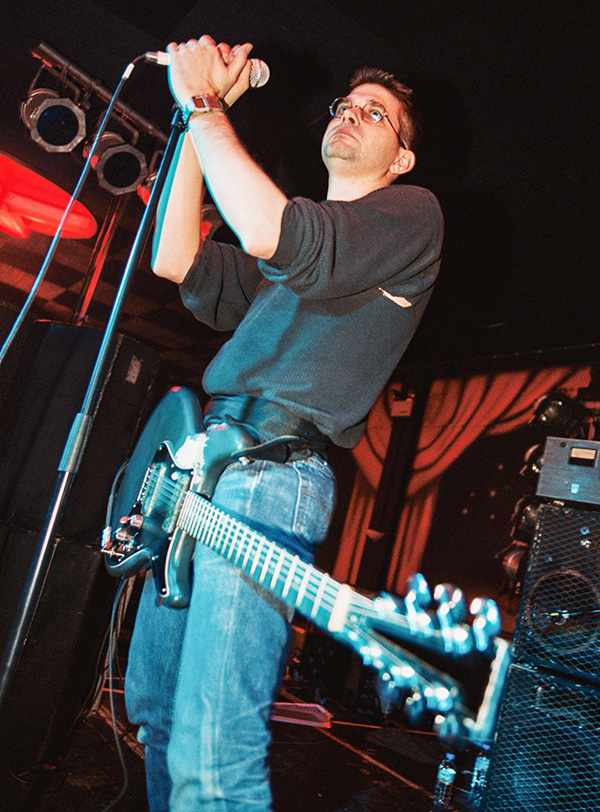
Steve Albini; photo by Edd Westmacott/Alamy Stock.


Recording music is complicated, and without the crucial assistance of producers and engineers, a lot of great records—not to mention successful musical careers—would not happen. Producers Steve Albini and Michael Cuscuna, two key figures from the music world who departed in recent months, richly deserve to be celebrated.


Though they worked in widely disparate genres—Cuscuna primarily in jazz, Albini in punk and noise rock—they are connected by their extraordinary efforts and unfailing taste. Both were exacting, dedicated, and supremely talented. Without the passion and obsessive nature of this one-of-a-kind pair, such records as Nirvana's In Utero and Mosaic Records' boxed sets, including The Blue Note Hank Mobley Fifties Sessions, to name just two examples, would not exist. Cuscuna and Albini were guides and molders, shaping music and our perceptions of it.

Cosimo Matassa, laissez les bon temps rouler in New Orleans

It's no secret that the musical history of New Orleans is rich and varied. From Buddy Bolden to a young Louis Armstrong being consigned to the Colored Waif 's Home for shooting off his stepfather's pistol on New Year's Eve, to the many pianists who accompanied the irresistible allure of Storyville, musicians and their music have forever been a key ingredient in NOLA's flamboyant DNA. Most elemental of all—did he facilitate the birth of rock'n'roll?—are those honeyed days at Cosimo Matassa's humble but groundbreaking studio J&M Recording on Rampart Street (1947–1956). There, his infallible ears and uncanny skill placing microphones somehow imparted a raw and very real sound to early recordings of Roy Brown, Little Richard, Fats Domino, Dave Bartholomew, Ray Charles, and my personal favorite, Smiley Lewis. Such labels as Atlantic, Mercury, Aladdin, Specialty, Chess, Savoy, and Modern sent artists to The Crescent City, hoping to glean some of Matassa's elusive magic.

Hilary Gardner's Pandemic Record of Cowhand Tunes

For all its insidious ferocity, the COVID ordeal also spawned a new musical genre: pandemic records. Stuck indoors like everyone else, some musicians found ways to express their creativity at home, often exploring new repertoire. While some of the resulting albums were myopic and indulgent, others—McCartney III for example—confirmed that artists who need to create will find ways. Trapped indoors, New York singer/actor Hilary Gardner found her musical muse wandering toward an unexpected place. "The songs I was initially drawn to—because I'm in this one-bedroom apartment in downtown Brooklyn—were about life on the trail, out in the natural world, generally being alone," she told me in a recent Zoom call, recalling the claustrophobia of that time. "They were songs that either embraced that feeling or were kind of rolling around in the melancholy of solitude. I wanted that thematic thread of being on the trail to connect all the tunes."

A Verve–Third Man collaboration

So, former White Stripe and Third Man label founder Jack White has now moved into jazz? It was a question that intrigued me when I first heard about the partnership between Universal Music and White's Third Man Records, a vinyl reissue series called Verve By Request. Was Universal just a client for Third Man's relatively new LP pressing plant in Detroit, or was this a genuine collaboration? And what the hell does Jack White know about jazz?

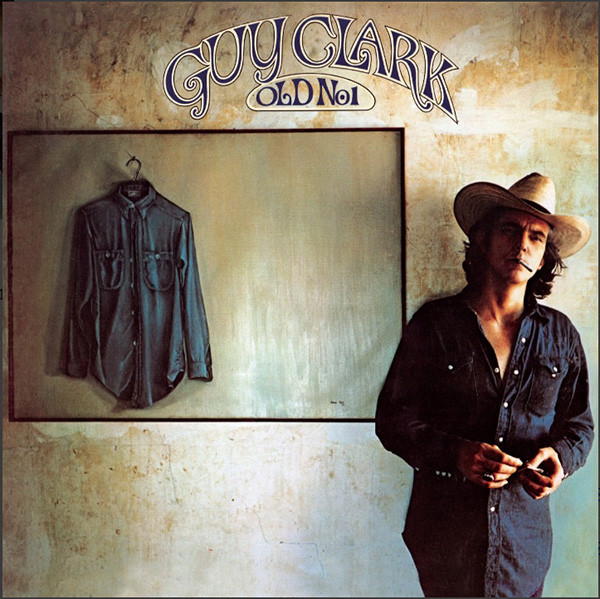
Vinyl Me Please Reissues Guy Clark's Old No. 1

Recently, a letter to the editor from Len Eggert arrived in Stereophile's digital mailbox that closed with a question: "How about coverage of other notable 'outlaw' singer-songwriters who shunned Nashville and put Austin on the musical map: Guy Clark? Kris Kristofferson? Jerry Jeff Walker? Waylon Jennings? Billie Joe Shaver? David Allan Coe? Are you listening, Robert Baird?"


Timely if nothing else, that email came just after I had serendipitously acquired a new-to-my-collection, first-pressing LP copy of the first Guy Clark album, Old No. 1.

Jazz Pianist Sullivan Fortner

Photo by Sabrina Santiago


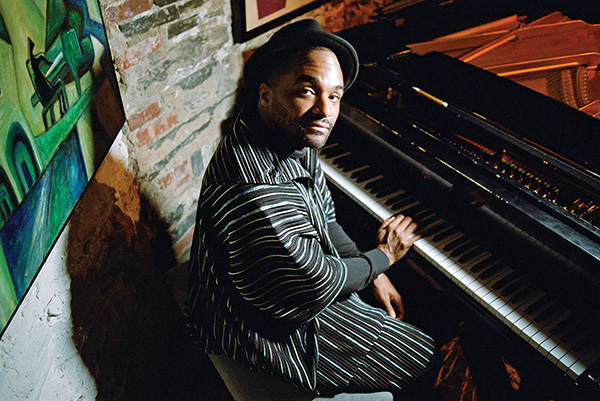
There's a fear out there, even among jazz cognoscenti, that the music's best years and true geniuses are all part of the past. Even in New York City, the richest magnet for live jazz on earth, it sometimes seems that experiencing generational talent, the kind that once drove the music forward, is now confined to gazing at the famous photos on the walls of the music's most revered shrine, the Village Vanguard. Yet, seeing pianist Sullivan Fortner at the Vanguard, as part of Cécile McLorin Salvant's band, convinced me that there's still jazz magic in the world. By turns playful, blindingly brilliant, and at times puppy dog goofy, Fortner was spectacular. He is clearly a star in the music's future.

Gram Parsons: The Last Roundup

"When I first listened to the tape I thought, this is so good that if I do anything else in my life, I have to make sure the world hears this," David Prinz says with obvious intensity. "That's how I really feel. It makes me happy that all these Gram fans are finally going to get to hear what he was really like live."


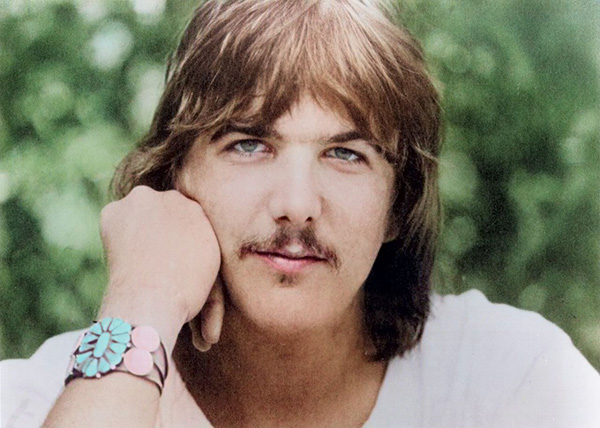
The love of music can drive human beings to astonishing lengths. For Prinz, cofounder/owner of California's Amoeba Music chain, that fervor revolves around the work of country-rock pioneer Gram Parsons. Despite the often-outlandish mythology that's grown up around this shooting star since his tragic 1973 overdose at age 26, Prinz has made it his quixotic mission to find, restore, and release unreleased Gram Parsons live shows.

The Replacements' Tim: Let It Bleed Edition

Having just finished this review of The Replacements' Tim: Let It Bleed Edition, I thought I'd glance at a couple of online forums to see what the collective verdict was on the sound quality of the set's main attraction: a remix of the album by Ramones engineer Ed Stasium. At Steve Hoffman's forums, I saw this in one of the first posts: "It sounded like I expected Tim to sound when it came out in the fall of 1985. I've also listened to the newly remastered original album that comes with the set, and while it sounds good and I'm glad to have it, it pales compared to the 2023 Stasium mix." Ticking down a post or two, exuberance gushed forth: "Well, IMO the [Stasium] version of Tim may be the greatest rock record of all time."

Nanci Griffith

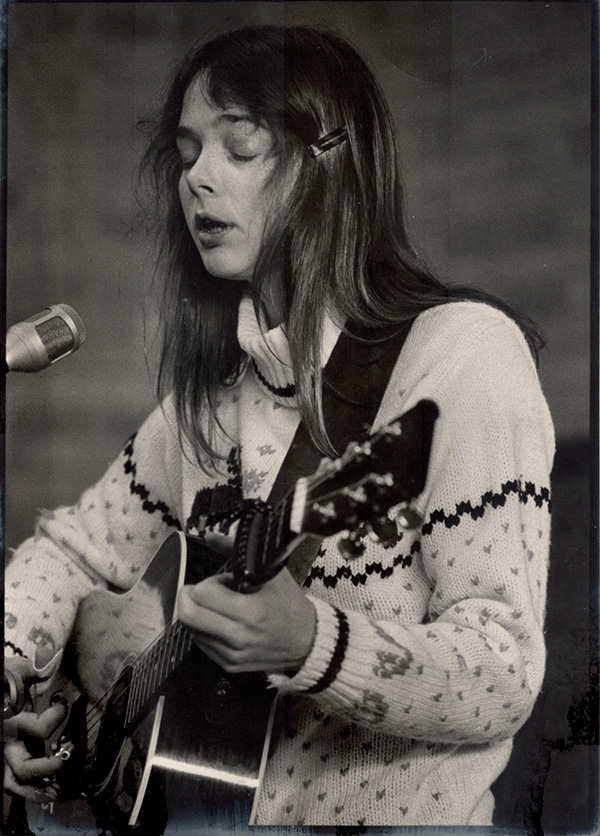
A vital member of the second wave of Texas singer-songwriters that emerged in the 1970s and included Lucinda Williams, Butch Hancock, and Lyle Lovett, Nanci Griffith was a product of a time when, to paraphrase a once-ubiquitous bumper sticker, Austin was still weird. Gifted with a delicate, sweet voice and fierce determination, she started playing out at the age of 12 and getting paid at 14. While never having the ability to project Joan Baez–like volume, she could certainly fill a room. And while her voice could at times take on a flat, almost-nasal resonance, her tight vibrato was strong and evocatory the more you listened.
Advertisement
Advertisement
Advertisement