J. Gordon Holt

Why Argue?

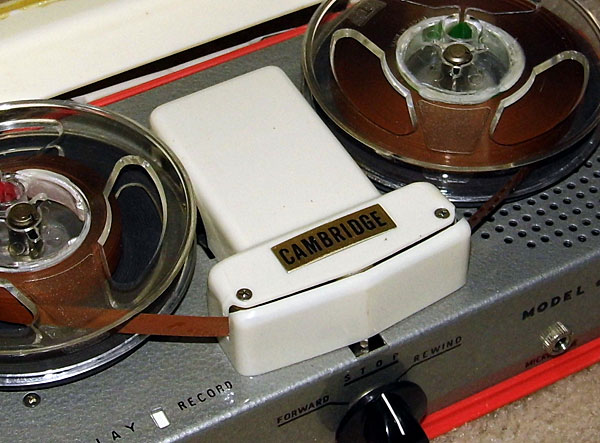
While we were preparing our list of specifications for our perfectionist's tape recorder discussed elsewhere in this issue, we suddenly came to a screeching halt at the spec which started "Scrape flutter less than . . ."

What, we wondered, was the scrape flutter percentage in a recorder in which scrape flutter is audible? Would it be 0.5%? Or 1%? Or even 5%? We perused the readily available literature, and were informed that "scrape flutter is caused by the tape's tendency to move past the heads in a series of tiny jerks in stead of in a smooth gliding motion." We were also told that scrape flutter is due to friction between the tape and the head surfaces, plus the slight elasticity of the tape that allows it to stretch slightly before being dragged along by another silly millimeter, and that it sounds like a rough edge riding on all signal frequencies between about 3kHz and 8kHz.
Continue Reading »

The Weakest Link

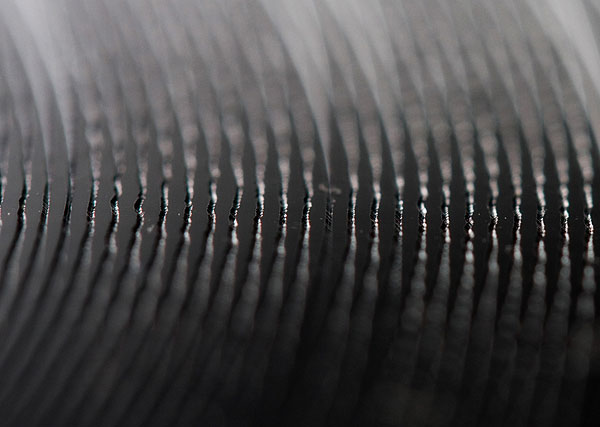
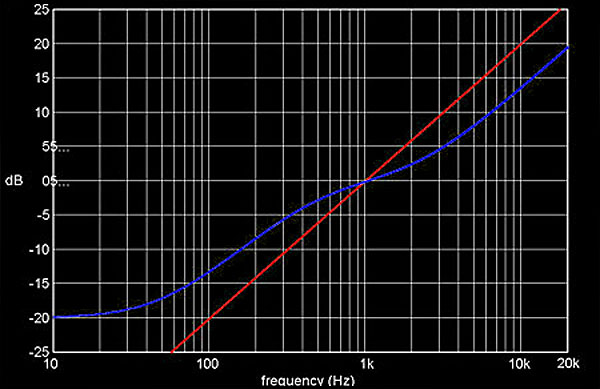
When the Record Industry Association of America adopted its standard disc playback equalization curve in 1954, hi-fi enthusiasts heaved a sigh of relief and bade fond farewell to years of confusion, doubt and virtual pandemonium. Before the RIAA curve there were six "standard" curves in use, and since nobody seemed to know who was using what, getting flat response from a disc was often more a matter of luck than anything else. The adoption of the RIAA standard playback curve heralded an end to all this.
Continue Reading »

Beveridge 2SW loudspeaker system

This is an electrostatic column speaker, 6' tall and costing $6000/pair. An integral, fan-cooled amplifier is located in the base. The 2SW is said to cover almost the entire frequency range and is based on a patent, number 3,668,335, issued to manufacturer/designer Harold Beveridge on June 6, 1972. Internal acoustic lenses in front of the electrostatic panels widen the speaker's dispersion: In the Beveridge literature, it says "This 6-foot high device consolidated the entire frequency range into a vertical line source, and uniformly disperses it over a horizontal pattern, 180 degrees wide. The beaming characteristics of the high frequencies are ingeniously translated into the same dispersive pattern as the low frequencies, creating a perfectly balanced cylindrical sound wave front."
Continue Reading »

Two More Channels?

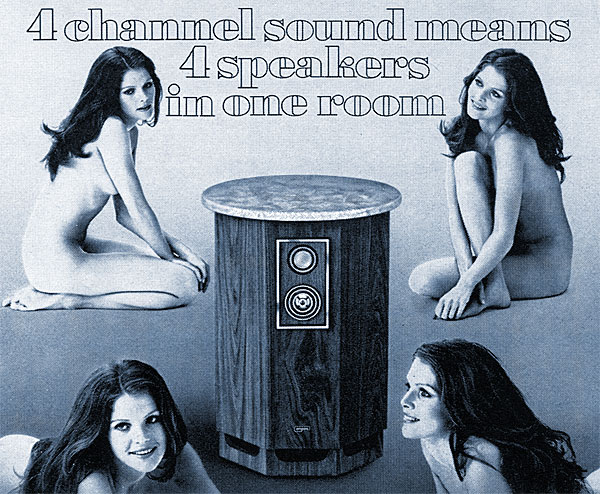
Four-channel stereo is here, but for how long? By the time this gets in print, it is extremely unlikely that any of our readers will have escaped being told that 4-channel stereo is here. "Two channels brought us direction," the announcements trumpet. "Now, four channels bring us dimension." Now, for the first time in the history of hi-fi, modern technology can bring us hall acoustics in stereo, to surround us with the sense of spaciousness that we hear in the concert hall.
Continue Reading »

A Measurement that Says Something

When we first heard rumors that Shure Brothers was about to unleash something called "trackability" on the audio world, our reaction was mainly one of indifference. We already had loudspeakers with listenability, tape recorders with portability, and amplifiers with stability and dependability. Trackability, we figured, was just another clever sales gimmick; a catchy word that the advertising department had thought up to describe what everyone wanted in a pickup.
Continue Reading »

The Missing Specification

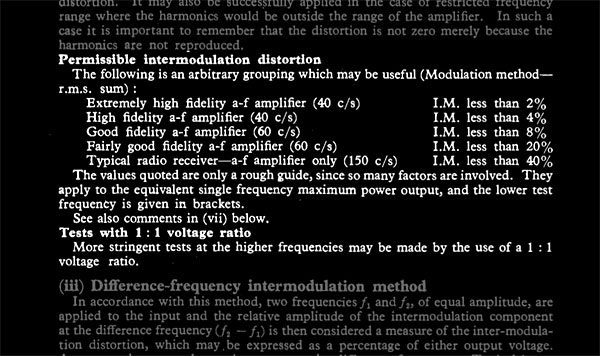
In the 1952 edition of the Radiotron Designer's Handbook, long recognized as the "bible" of the industry, the permissible level of IM distortion for a high-fidelity amplifier was given as 3%, with the alternate figure of 2% being cited as a "rather extreme" specification. We wonder what the author of that statement would think of today's solid-state amplifiers with their measured IM of 0.01% and less. And we wonder what he would think about the fact that these super-amplifiers still have audible distortion.
Continue Reading »
Advertisement
Advertisement
Advertisement