Phono Preamp Reviews

Sort By:  Post Date TitlePublish Date

Analog Corner #217: Sutherland Engineering Insight phono preamplifier
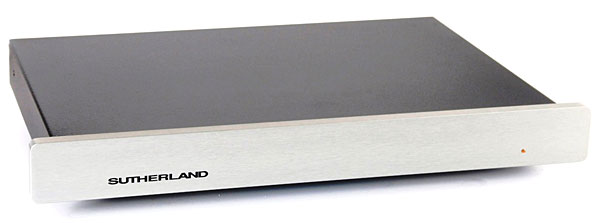
Veteran phono-preamplifier designer Ron Sutherland has been partial, of late, to battery power. Getting off the grid can produce superb results, as demonstrated by his Hubble phono preamp ($3800), powered by 16 alkaline batteries.

I favorably reviewed the Hubble in the February 2010 issue, and remember loving most everything about it—particularly its drop-dead-quiet backdrops, its solid, weighty bottom end, and its fully fleshed-out instrumental textures. I was less enthused by its somewhat soft, muted high-frequency transients, though of course tastes and associated gear will differ. I need more grit, particularly for rock; you may not.

The Entry Level #41

What I failed to make absolutely clear in my April column is that I really, truly, thoroughly enjoyed all three USB DAC–headphone amps that I auditioned: the Audioengine D3 ($189), the AudioQuest DragonFly v1.2 ($149), and the Cambridge Audio DacMagic XS ($199). Each offered a slightly different perspective on the music, but none could be accused of closing lanes on the George Washington Bridge, dumping several feet of snow on top of our car, or doing anything especially wrong.

Listening #137

Except for a few titles I've combined with the ones in my listening room, and a few others that I intend to sell, the record collection I bought last year remains in three rows of boxes on the floor of our guest room. Because that room is spacious and comfortable, and equipped with a small refrigerator and a flat-screen TV, it is also the place where my 16-year-old daughter and her friends have their slumber parties and Dr. Who marathons. Thus, as you can imagine, I must sometimes explain to our young guests the Tao of collecting records.

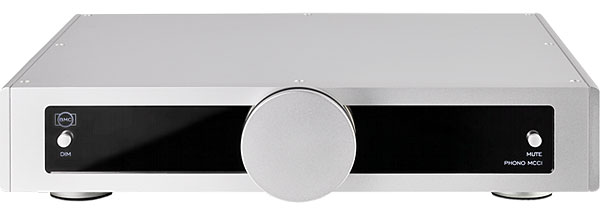
Analog Corner #215: B.M.C. Phono MCCI phono preamplifier

In July 2008 I reviewed the intriguing Phono 2Ci moving-magnet/moving-coil phono preamplifier from Aqvox Audio Devices. Though it then cost only $1400, the Phono 2Ci's current-input circuitry represented a high-tech departure from the typical voltage-gain circuits used by almost everyone else. Although keeping its retail price so low resulted in some sonic compromises, it sounded remarkable, and tough to beat at the price.

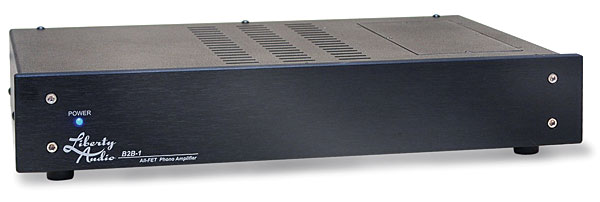
Liberty Audio B2B-1 phono preamplifier

The all-FET, class-A, B2B-1 phono preamplifier ($1749), made in the US by Liberty Audio, is beautifully built inside and out, and comes in a heavy-duty aluminum chassis with a baked-on crackle finish and a 3/8"-thick, black-anodized faceplate. The overall build quality and physical appearance suggest something that costs more than $3000, which is probably what it would cost were it sold through retailers and not factory direct. It comes with a two-week return policy.

The Entry Level #17

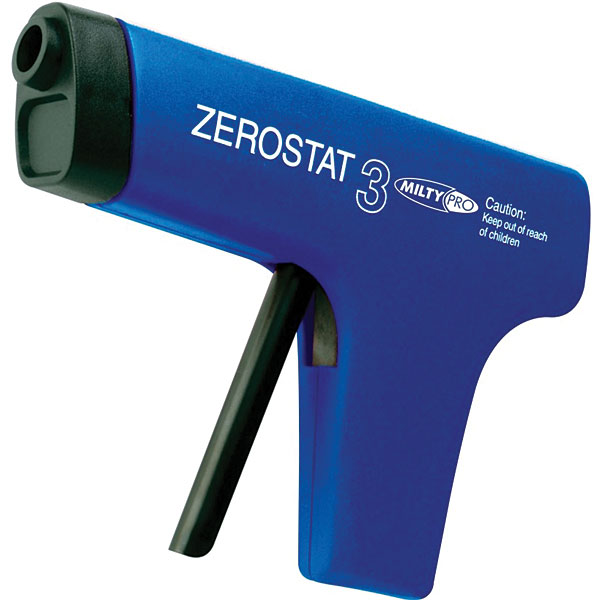
The Milty Zerostat: Sold for prevention of disease. And other things.

Before dropping the needle onto Christine's copy of Sold for Prevention of Disease Only, I shot the record a few times with the Milty Zerostat 3 ($100), a blue, gun-shaped gadget that helps eliminate static. Squeezing the Zerostat's thin black trigger releases positive ions; relaxing the trigger produces negative ions. A complete squeeze cycle results in a neutral static condition—one perfectly in balance, neither too heavy nor too light—and my LPs play quietly. This step in my LP-playing routine grew out of necessity and has become a habit. The process is especially important in the cold winter months, when the air in my small apartment is dry, and debris stubbornly clings to my LPs and my cartridge's stylus.

The Entry Level #15

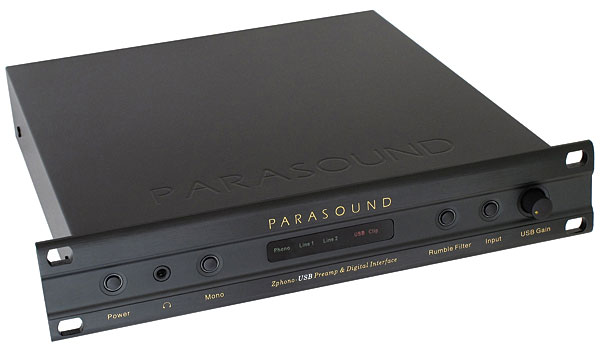
Parasound introduced their affordable Z series in 1996, the year Lisa Marie Presley filed for divorce from Michael Jackson. I was 19 years old and could have used a good stereo in my dorm room, but I didn't then know anything about hi-fi. If you're reading this in your dorm room, you're way ahead of where I was at your age. If you're reading this in your mansion, you're way ahead of where I am now.

Precision Transducer Engineering MMMC Phono Preamplifier

The phono preamplifiers reviewed this month are both affordable ($400–$1960) and highly accomplished, and the most expensive of them offers versatility that's unprecedented in my experience. Three of them are designed to be used only with moving-magnet, moving-iron, and high-output moving-coil cartridges, so I installed Shure's V15VxMR cartridge in VPI's Classic 3 turntable and listened in MM mode to all of them, beginning with the least expensive.

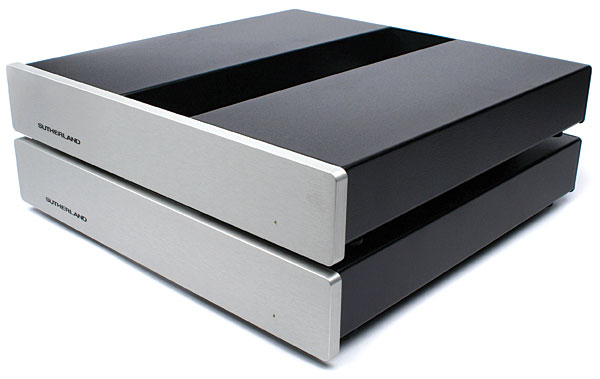
Sutherland Engineering Phono Block monoblock phono preamplifier

Saying that Sutherland Engineering builds a nice line of phono stages is like saying that the Porsche 911 Carrera is a nice line of sports car. The Sutherlands all share common design philosophies, features, and sonic attributes—but just as ramping up from Porsche's classic Carrera Coupe ($78,000) to the GT3 ($115,000) or the Turbo S Cabriolet ($172,000) increases the level of performance and distills the Porsche experience down to its essence, ascending the Sutherland line from the PH3D ($1000) to the 20/20 ($2200) to the Hubble ($3800) buys more of what Ron Sutherland is all about.

Leben RS-30EQ phono preamplifier

The Leben RS-30EQ phono preamplifier ($2695) incorporates a pair of common dual-triode tubes (12AT7) for phono gain, but breaks with tradition by using a CR-type equalization circuit rather than the more common negative-feedback type. Total gain is specified as 23.5dB, which is sufficient for moving-magnet pickups; an external transformer is recommended for use with moving-coil types. A silicon full-wave rectifier supplies heater voltage, while the rail is supplied by a 6X5GT rectifier tube.
Advertisement
Advertisement
Advertisement