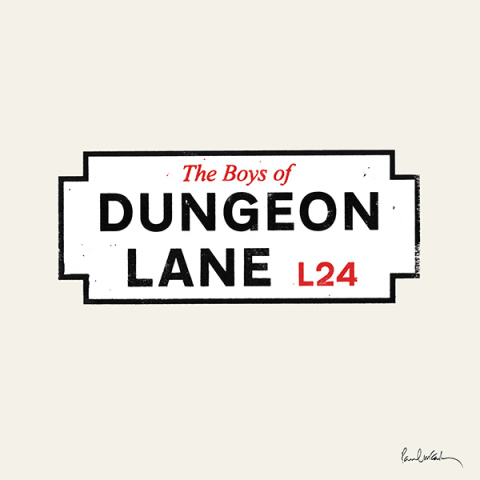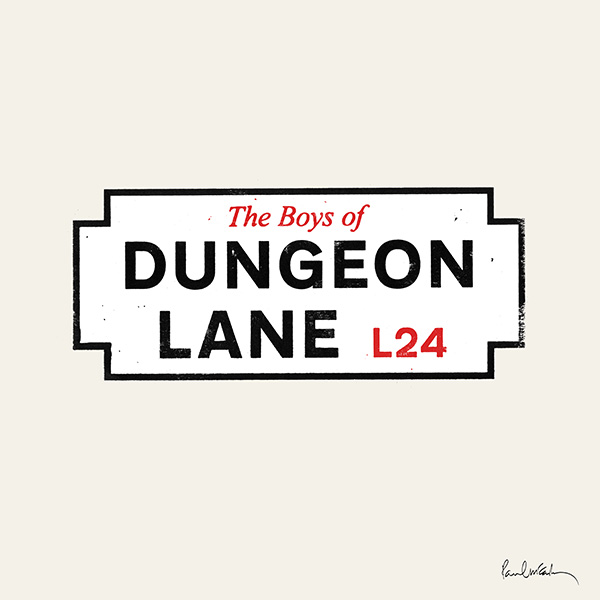
Paul McCartney: The Boys of Dungeon Lane
MPL/Capitol Records 578853 (LP). 2026. McCartney, Andrew Watt, prods. and engs.
Performance ****½
Sonics ****½ When it was announced that Sir Paul McCartney was about to release a nostalgic, autobiographical new album, named after a Liverpool street, outsize hopes sprang anew. The surviving half of the most influential songwriting duo in popular music ever was releasing his 18th solo album. What would The Boys of Dungeon Lane add to that rich story? At the very least, it was hoped, listeners might gain some insight into one of the world's most celebrated musicians, now in his ninth decade. The Boys of Dungeon Lane, Sir Paul's first album since his surprisingly pleasing COVID woodshed project, 2020's McCartney III, does offer bits of what's in the heart of his seemingly inextinguishable creative engine. Yet this nostalgic look back at humble beginnings in Liverpool is less revealing than many had apparently hoped it would be. A slight but audible sepia emotional tone hovers over these 14 tracks. Paul's usual energies toward making pop music are more subdued. His voice has aged. But while he can't stretch vocally quite like he used to, there's enough of the old fire to make certain vocal turns work. His screams in the opening track, "As You Lie There," still have some of the fire he employed in "Twist and Shout" and "Why Don't We Do It in the Road?" And when he dials his voice back to tender, as in "Days We Left Behind," it may not be "The Long and Winding Road," but that creaky, wistful whisper still communicates the deep emotion he feels.
What's here suggests that Paul isn't haunted by the past, or that he isn't willing to expose doubt. The closest he comes is in "Lost Horizon," where he sings, "That sound—can lift me up/That sound—can do my head in/That sound—can take me back to the lost horizon/Where every memory we shared/Brought us closer together/and every day we spent there/Was the start of the/first day of forever."
One obvious question surrounding any project that's assumed to look back at Macca's glorious past is, are there any references to the Fab Four? Well, maybe. "Down South" seems to describes a early meeting with John Lennon: "The morning bus was where we two would meet/I sat beside you on an empty seat/We'd talk about guitars and Rock and Roll/They were the subjects that/Would never grow old." More subtly, there's the rewinding tape at the close of "We Two," reminiscent of his former band's tape manipulation on "Tomorrow Never Knows" and "Rain," from the Revolver sessions.
To put a modern production sheen on tracks where McCartney plays every instrument, he brought in Andrew Watt, whisperer to aging rock stars, who produced recent albums by Iggy Pop (Every Loser), Elton John and Brandi Carlile (Who Believes in Angels?), and The Rolling Stones (Hackney Diamonds). Some aspects of the mix—drums pushed too far forward, buzzy guitars overused—are less than ideal, but the sound is mostly good, gently compressed, not overly flattened.
The solo careers of Paul and his mate John prove that the sum was indeed greater than its two very different parts. McCartney's solo career rates a solid B+, though there have been some rocky moments. For every triumph like Ram, Band on the Run, or the wonderful One Hand Clapping (recorded in 1974, released in 2024), there have been less successful moments such as Back to the Egg or [gasp!] Liverpool Oratorio. And that's without mentioning his unfortunate addiction to releasing unnecessary live albums. This new collection ranks somewhere in the middle of the pack.
On The Boys of Dungeon Lane, there is no obvious knockout single. The most fully realized track is "Home to Us," McCartney's first-ever vocal duet with Ringo Starr, with backing vocals from Chrissie Hynde and Sharleen Spiteri. The delicate chorus of the closer, "Momma Gets By," is a potent reminder that McCartney, whose straining vocals add pathos, always had a soft spot for poignant love songs and unequaled skill at writing them.
Macca is still a master craftsman of irresistible pop melodies. His songwriting—displayed on "Life Can Be Hard," which sounds like a Tin Pan Alley showpiece—remains classy and appealing. This album, like several of his others, seems pieced together from an endless pool of ideas. Always a savant in the studio, he's gotten better at being a one-man band, artfully playing everything himself.
That Paul McCartney's drive to create new music still gets him up in the morning at age 83 flies beyond admirable to astonishing. Perhaps, as he says in the 2025 documentary Man on the Run, it is just a simple matter of "You strum a chord then kind of see where it leads you, like breadcrumbs, memories, maybe like regrets, or even the future."—Robert Baird
MPL/Capitol Records 578853 (LP). 2026. McCartney, Andrew Watt, prods. and engs.
Performance ****½
Sonics ****½ When it was announced that Sir Paul McCartney was about to release a nostalgic, autobiographical new album, named after a Liverpool street, outsize hopes sprang anew. The surviving half of the most influential songwriting duo in popular music ever was releasing his 18th solo album. What would The Boys of Dungeon Lane add to that rich story? At the very least, it was hoped, listeners might gain some insight into one of the world's most celebrated musicians, now in his ninth decade. The Boys of Dungeon Lane, Sir Paul's first album since his surprisingly pleasing COVID woodshed project, 2020's McCartney III, does offer bits of what's in the heart of his seemingly inextinguishable creative engine. Yet this nostalgic look back at humble beginnings in Liverpool is less revealing than many had apparently hoped it would be. A slight but audible sepia emotional tone hovers over these 14 tracks. Paul's usual energies toward making pop music are more subdued. His voice has aged. But while he can't stretch vocally quite like he used to, there's enough of the old fire to make certain vocal turns work. His screams in the opening track, "As You Lie There," still have some of the fire he employed in "Twist and Shout" and "Why Don't We Do It in the Road?" And when he dials his voice back to tender, as in "Days We Left Behind," it may not be "The Long and Winding Road," but that creaky, wistful whisper still communicates the deep emotion he feels.