Brian Damkroger
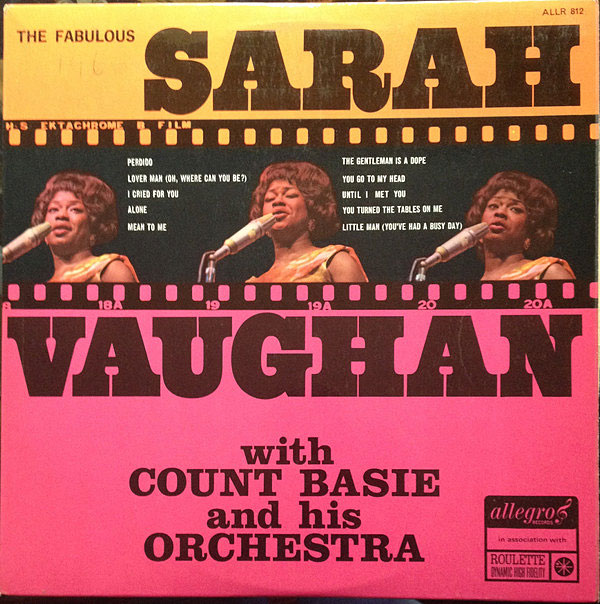 Sarah Vaughan With Count Basie And His Orchestra: Count Basie/Sarah Vaughan
Sarah Vaughan, vocals; Freddie Green, guitar; Sonny Payne, drums; Edward F. Jones, Jr., bass; Chas. Baker Fowlkes, Frank Wess, Billy Mitchell, Frank Foster, Marshall Royal, saxophone; Thad Jones, Joe Newman, George Cotton (Sonny Cohn), Eugene E. Young, trumpet; Albert T. Grey, Henry Coker, Benjamin Powell, trombone; Kirk Stewart, piano (not credited)
Roulette Birdland Series R 52061 (LP). 1961. Teddy Reig, prod.; Bob Arnold, eng. Count Basie/Sarah Vaughan isn't Sarah Vaughan's best performance or that of the Count Basie Orchestra, but when combined, they're magic. Vaughan's vocals have her usual layered richness, but the lyrics are delivered in a softer, far more nuanced way than with the arresting strength she's known for. Count Basie's orchestra, on the other hand, is typically dynamic and bouncy, but Teddy Reig's production has it far enough down in the mix to work perfectly. It's there and engaging on its own but never draws attention from the vocals. The original 1961 mono release is the one to get.
 The Del-Lords: Johnny Comes Marching Home
EMI America ST-17183 (Promotional LP). 1986. Neil Geraldo, prod.; Michael Frondelli, George Tutko, engs.
Robert Deutsch
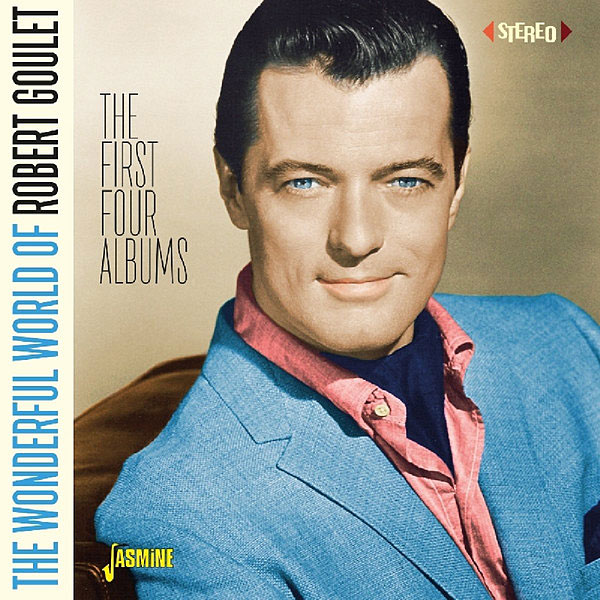 Robert Goulet: The Wonderful World Of Robert Goulet
Jasmine JASCD 841 (2CDs). 2017. Jim Foglesong, prod. "Camelot! Camelot! In far off France, I heard your call." I still remember the first time I heard "C'est Moi!" sung by Robert Goulet on the original cast album of Camelot. What a voice! An aspiring musical theater performer myself, I decided that this was a singer I would like to emulate. Alas, although I later sang much of Goulet's repertoire (including "C'est Moi!") and was adept at copying Goulet's singing style, I never came close to matching his sound. That sound is fully in evidence in this two-CD collection that encompasses four LPs Goulet recorded in 1962. His singing is more relaxed than in Camelot, but there is always a sense that he is using only a small part of the power he has at his disposal. And when he unleashes that power, he shows that if he'd wanted to go in that direction, he could have had a career in opera. The songs in this collection are mostly classic pop, which hardly tax his resources, but he gives them all his full attention. My favorites are the songs that hearken back to his roots in musical theater; if you're like me, when you listen to Goulet's rendition of "Make Someone Happy," you're likely to think, "So this is how this number should be done." The keys are generally on the low side, but, as if to show that this was by choice rather than necessity, at the end of "It Was Always You," he sings a lovely, floating G-flat (or, if you like, F-sharp).
 Karin Plato: This Could Be The One
Karin Plato, vocals; James Danderfer, clarinets; Chris Gestrin, piano; Laurence Mollerup, bass; Joe Poole, drums; Rebecca Shoichet, Jim Byrnes, vocals; Rod Murray, trombone
Stikjazz Music KPO0418 (CD. 2018. Karin Plato, prod.; Sheldon Zaharko and Nick Civiero, engs.; Graemme Brown, mastering eng. I first heard Karin Plato sing at the 2019 Audiofest in Toronto and was struck by her phrasing and the beauty of her voice, an impression that was reinforced listening to her CD This Could Be The One. Like all great singers, she has the ability to make each song sound as if it were written for her—and, given that she wrote most of the songs on the recording, we can be sure that they were written for her. In her own songs, she has a knack for coming up with melodic lines that sound like something you've heard before, and then she goes in a direction you did not anticipate. The three songs that are covers are an interesting assortment: "I've Just Seen a Face" (Lennon/ McCartney), "I'm So Lonesome I Could Cry" (Hank Williams), and "Heart and Soul" (Hoagy Carmichael/Frank Loesser). I've always thought of "Heart and Soul" as a novelty/party piece, in the same category as "Chopsticks," but Plato takes it seriously and makes a convincing case that it is really a lovely song. Oh, and all the arrangements in this recording are by Karin Plato. Talented woman. The technical quality of the recording is excellent.
Art Dudley
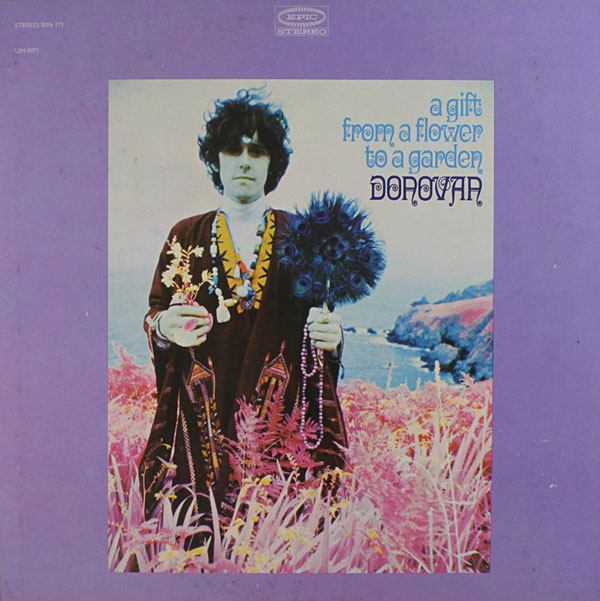 Donovan: A Gift From a Flower to a Garden
Epic B2N 171 (2 LPs). 1967. Mickey Most, prod.; Michael Ross Trevor, eng. The time has come for the rehabilitation of Donovan Leitch, not just because he scored his second Top-Ten hit with a song about a vibrator ("Mellow Yellow") and taught fellow guitarist John Lennon the fingerpicking pattern that would become the framework for some of his own best songs ("Dear Prudence," "Julia," "Look at Me"), but for creating a body of work that is at once innocent, original, and almost indescribably lovely: high art that is perfectly artless, and thus almost perfectly childlike. Without Donovan there'd be no T. Rex and perhaps even no Nick Drake (my friend Ken Kessler would rejoice at that last one), and Led Zeppelin, whose Jimmy Page once made a living decorating Donovan's hippy hits with his buzzsaw guitar, would never have had their redeemingly flowery mien—which is to say, there'd be no "Stairway . . ." Think of it! There is no better example of Donovan's brilliance than A Gift from a Flower to a Garden, the artist's first double album and, arguably, rock music's first box set: It comes packaged with a folder filled with lavishly illustrated single-song lyric sheets, although their suitability for framing is open to debate. The album's 22 songs are spread between two differently themed discs: The first, referred to by most fans with the title of the album's best-selling and most conspicuous single ("Wear Your Love Like Heaven"), was described by the artist as a gift to fellow flower children who were, by 1967, of child-rearing age. On this LP the songs are given either elaborate arrangements, in the manner of other Donovan hits up to that point, or played with electric guitar, bass, and drums, the latter courtesy of John Carr, who would go on to join Donovan's short-lived Open Road band.
Michael Fremer
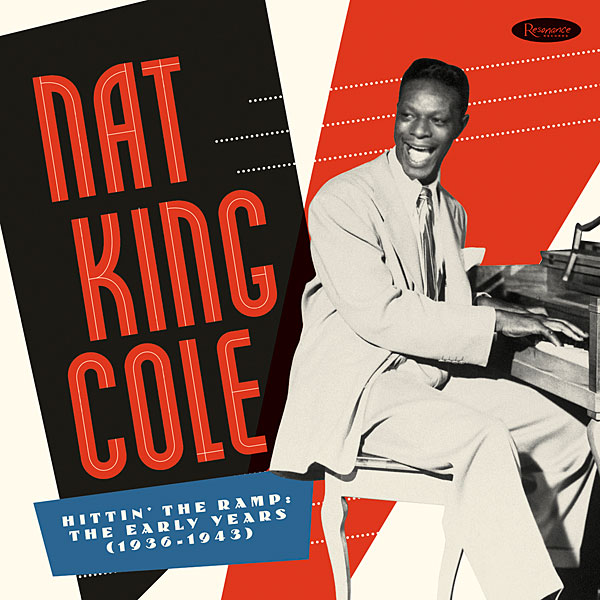 Nat King Cole: Hittin' The Ramp: The Early Years (1936–1943)
 Nat King Cole, piano; Oscar Moore, guitar; Wesley Prince, bass; others
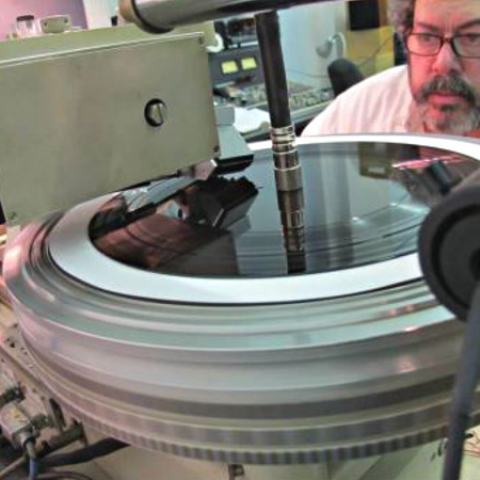
Resonance HLP 9042 (10 LPs/ 7CDs). 2019. Zev Feldman, others, prods.; Matt Lutthans, lacquer cutting.
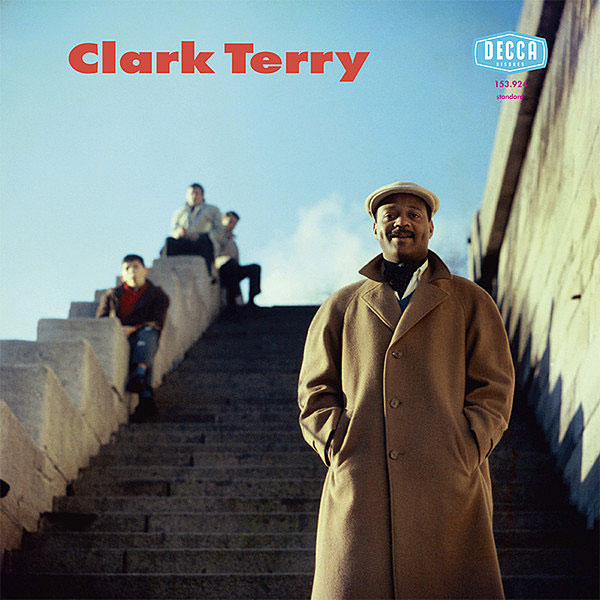 Clark Terry: Clark Terry And His Orchestra Featuring Paul Gonsalves
Clark Terry, trumpet; Paul Gonsalves, tenor saxophone; Raymond Fol, piano; Jimmy Woode, bass; G.T. Hogan, drums
Sam/Decca 153.924 (LP). 1960/2019. Anders Stefansen, prod. Near the end of his 8-year stint with the Duke, trumpeter Clark Terry led a small group of fellow Ellington Orchestra members in this small session set recorded for the French Decca label during a European tour in 1959. "Satin Doll" is the only Ellingtonia on the date, which also includes Monk's "Pannonica ou Les liaisons dangereuses 1960-No 2" plus three Terry originals. Terry and Gonsalves tangle memorable musical lines throughout much of the cool, sophisticated set.
Tom Gibbs
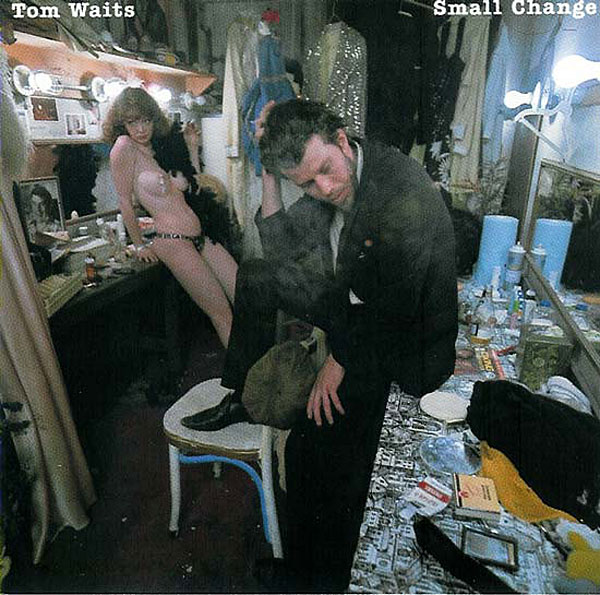 Tom Waits: Small Change
Epitaph/ANTI Records 045778756865 (CD). 2018. Bones Howe, prod.; Bill Broms, Geoff Howe, engs. On 1976's Small Change, Tom Waits wheezes and boozes through a travelogue of skid-row classics like "The Piano Has Been Drinking (Not Me)," "Invitation to the Blues," "Bad Liver and a Broken Heart," and "The One That Got Away." Shelly Manne's legendary drums and Lew Tabackin's sax add jazzy authenticity. The great news is that the remastered sound is miles beyond the lackluster Asylum original. The soundstage literally oozes whiskey and cigarette smoke; this is Waits at his early best, and one of the last clear glimpses of the iconic hipster before he headed down the dark path of the Island years.
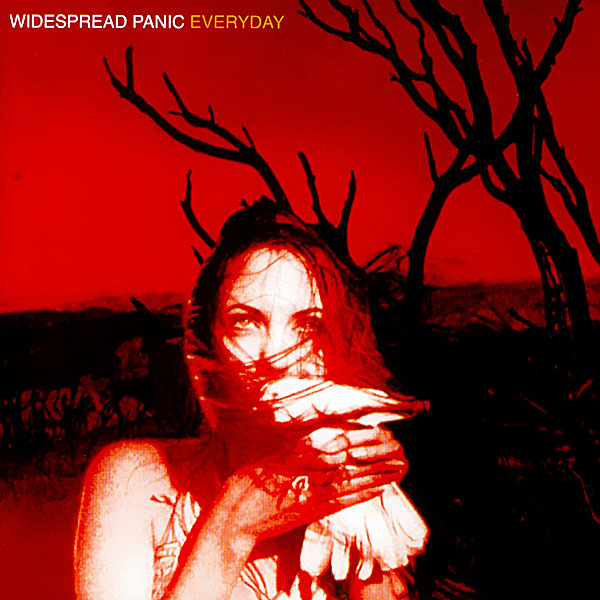 Widespread Panic: Everyday
Capricorn Records 789394201346 (CD). 1993. Johnny Sandlin, prod.; Kent Bruce, eng. With Everyday, their third album on the Capricorn imprint, Athens, Georgia, jam band Widespread Panic took the music to a significantly higher level of complexity. This CD stayed in my car's player for two solid weeks; how long has it been since you heard an album that you just couldn't get enough of The late Michael Houser's inimitable guitar playing is chameleon-like here; he displays a shockingly diverse range of styles from song to song and was an amazingly gifted guitarist. Every aspect of this album clicks perfectly, and many of the songs eventually became extended-jam staples of the band's live concerts.