Kalman Rubinson
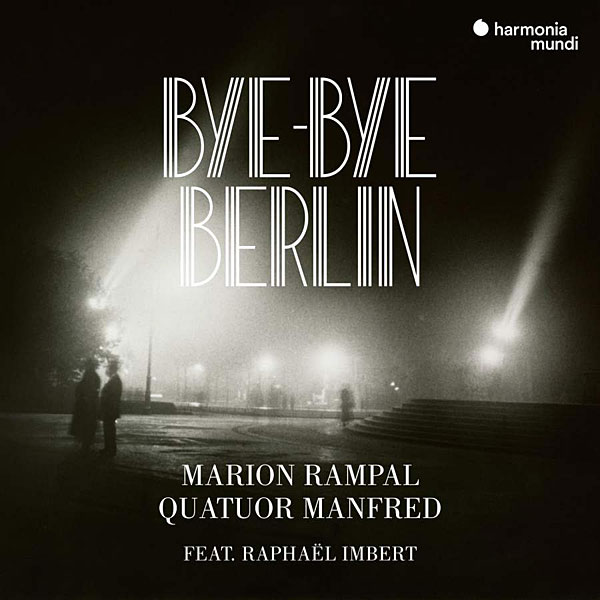 Kurt Weill, Et Al: Bye Bye Berlin
Marion Rampal, vocals; Raphaël Imbert, saxophone and bass clarinet; Quatuor Manfred
Harmonia Mundi HMM 902295 (CD). 2018. Alban Moraud, artistic dir. and prod. A gentle bass clarinet introduction, Rampal's soft and breathy voice, and a plucked bass in a habanera rhythm set us up for the entry of her full voice, with strings, as they launch into the eager, longing tango of Weill's "Youkali." Rampal, the quartet, and—importantly—Imbert's low winds share a moderately dry acoustic whose subtle ambiance is just enough to let the music breathe The 17 tracks range from familiar—Friedrich Hollaender's "Falling in Love Again (Can't Help It)" and other cabaret songs—to Hindemith's startling arrangement of Wagner's Overture to The Flying Dutchman. In between, there is delight, wit, and a lot of sadness. The disc is generous but, at the end, I always long for more of this clear, uncolored window into that distant time and space of a Berlin between the World Wars. (Vol.41 No.9)
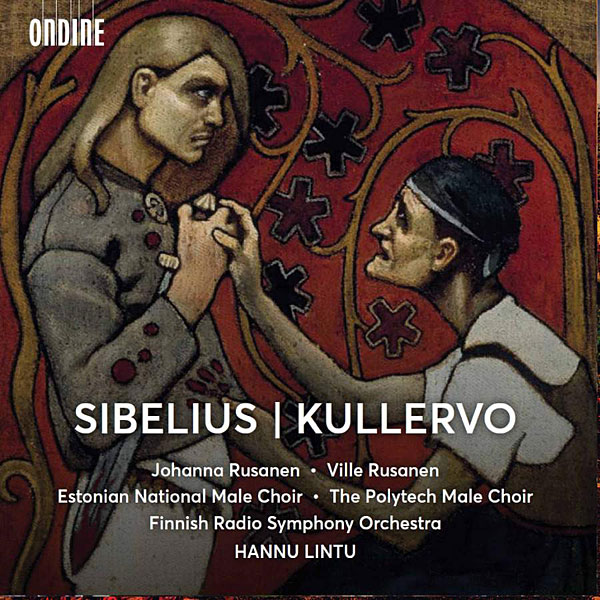 Sibelius: Kullervo, Op.7 (1892)
 Johanna Rusanen, soprano; Ville Rusanen, baritone; Estonian National Male Choir; the Polytech Choir; Finnish Radio Symphony Orchestra, Hannu Lintu, cond.
Ondine ODE 1338-5 (SACD/CD). 2019. Reijo Kiilunen, Laura HeikinHeimo, prods.; Anna-Kausa Kempi, Enno Mäemets, engs. Formerly obscure among Sibelius's early works, Kullervo has moved into the limelight. In 2017, I singled out for praise Osmo Vänskä's performance with the Minnesota Orchestra (BIS BIS-9048, SACD) from the six in my collection. It is the slowest of the lot, at 80:00, but the determination of its bardic declamations makes it special. Hannu Lintu's new version is refreshingly different. Lintu's performance is faster, at 72:26, and from the first note, one feels the irresistible momentum. It also has a lyrical flexibility and by far the most revealing and impressive recording. The soundstage is forward and immediate but deep enough to encompass the orchestra, a male chorus of 90, and 2 soloists. Many who have not connected with Kullervo before will be swept away by Lintu's drama and pacing.
Rob Schryer
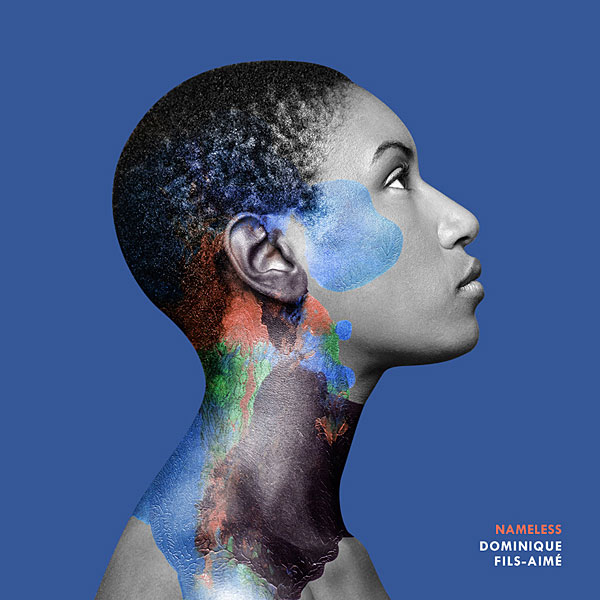 Dominique Fils-Aimé: Nameless
Dominique Fils-Aimé, vocals, arr.; Jacques Roy, bass; Laurent Saint-Pierre, drums and percussion; Jean-Michel Frédéric, keys; étienne Miousse, guitar; Laurence Möller, violin; Kevin Annocque, didgeridoo
Ansoul Records (CD). 2018. Jacques Roy, prod. and eng.; Harris Newman, mastering. Montreal-bred Haitian-Canadian singer Dominique Fils-Aimé has one of those comforter-like voices I want to wrap myself in at the end of a long, hard day: warm, soothing, maternal, but also strong, seductive, and sensuous. What it might lack in absolute power it makes up for in magnetism. An audiophile favorite, 2018's Nameless is Dominique's debut LP, whose eight jazz/ soul-straddling, blues-tinged gems are performed in an intimate-sounding, reverberant setting. Instrumental accompaniment is sparse and well defined, delivered most noticeably by double bass and percussion, leaving room for Dominique's closely miked vocal inflections and harmonies to pierce straight into your heart.
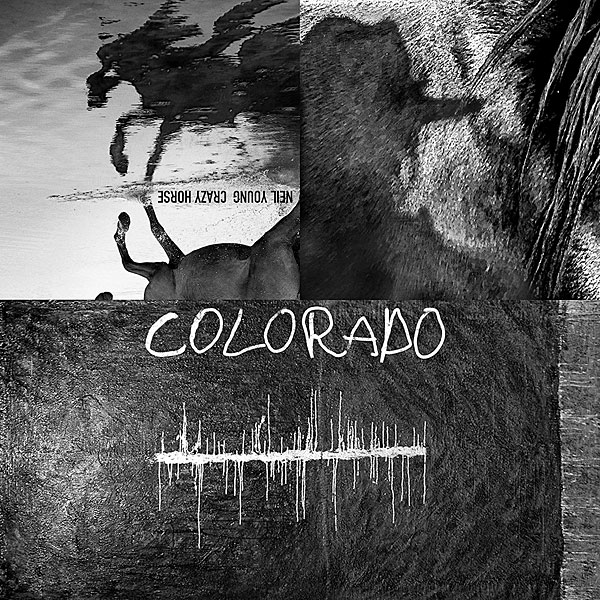 Neil Young With Crazy Horse: Colorado
Reprise Records 2 599670 (CD). 2019. Neil Young, John Hanlon, prods.; John Hanlon, eng.
Jason Victor Serinus
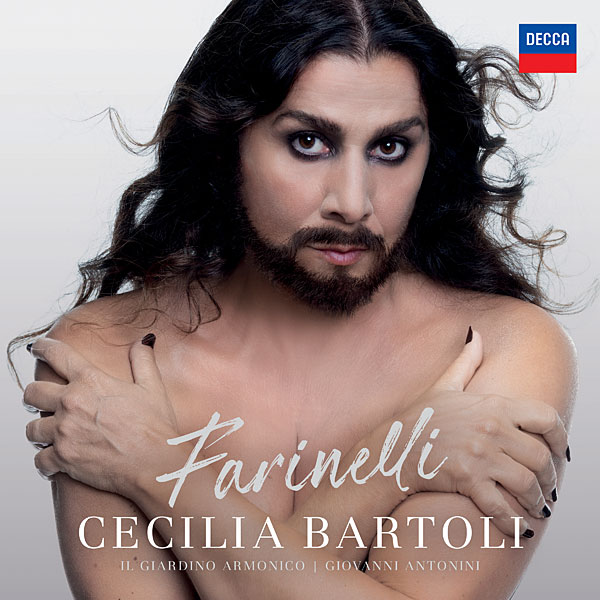 Cecilia Bartoli: Farinelli
Cecilia Bartoli, mezzo-soprano; Il Giardino Armonico, Giovanni Antonini, cond.
Decca 4850214 (24/96 download). 2019. Arend Prohmann, prod. and ed.; Philip Siney, eng. It's hard to believe that in her 53rd year, the voice and technique of Cecilia Bartoli, the incomparable coloratura mezzo-soprano, remain as fresh, free, and flawless as when I first heard her live 30 years ago. If anything, her range has increased—she spans considerably more than two octaves on this recording of impossibly florid baroque music written for the three-octave range of Italian castrato Farinelli—and her coloratura has smoothed out just enough to make her pinpoint precision seem more natural. Not every aria on this recital may be as artistically exalted as on Bartoli's recent Vivaldi recital, but her breath-defying spans of rapid-fire notes and ability to shift from boiling fury to tender fragility confirm that she remains the finest exponent of baroque singing on the planet.
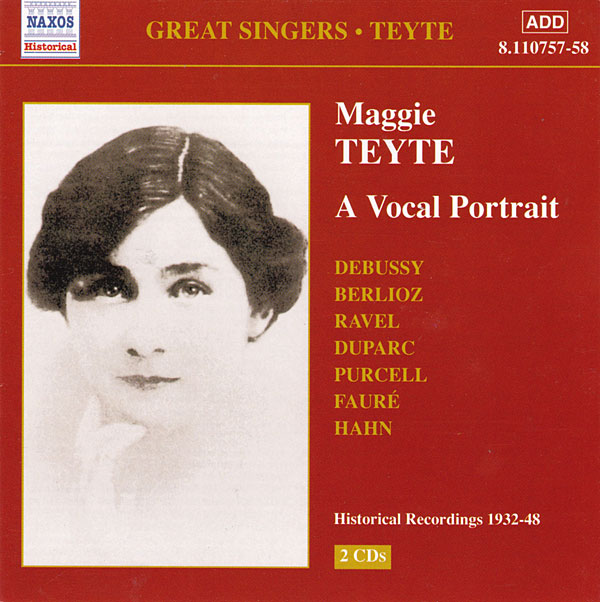 Maggie Teyte: A Vocal Portrait
Maggie Teyte, soprano; various accompanists and orchestras.
Naxos 8.110757-58 (2 CDs). 2002. Ward Marston, prod. and eng. One of British soprano Maggie Teyte's claims to fame arrived in 1908 when, not long after she had "Francosized" her name from Margaret Tate, she spent six months coaching the role of Mélisande with Debussy. Her unique artistry, with its famed downward portamento tinged with sadness, exquisite phrasing, low tones that speak from the depth of her being, and pure highs, was ideal for many of the songs of Debussy, Fauré, and Hahn. After her career stalled in the aftermath of WWI, Teyte re-emerged at age 48 with recordings of 14 songs by Debussy, accompanied by the great Alfred Cortot. All these, along with many more unforgettable performances recorded between 1932 and 1948, fill this anthology, whose superbly remastered sound trumps EMI/ Warner's efforts. Has anyone ever sounded as nakedly sensual and honest as Teyte when, in her recording with Gerald Moore of Hahn's love song "L'heure exquise," she sings "Un vaste et tendre apaisement semble decendre du firmament . . ." (A vast and tender calm seems to descend from the sky . . .) before rising to a high A on the line "C'est l'heure exquise" (It is the exquisite hour)?
John Swenson
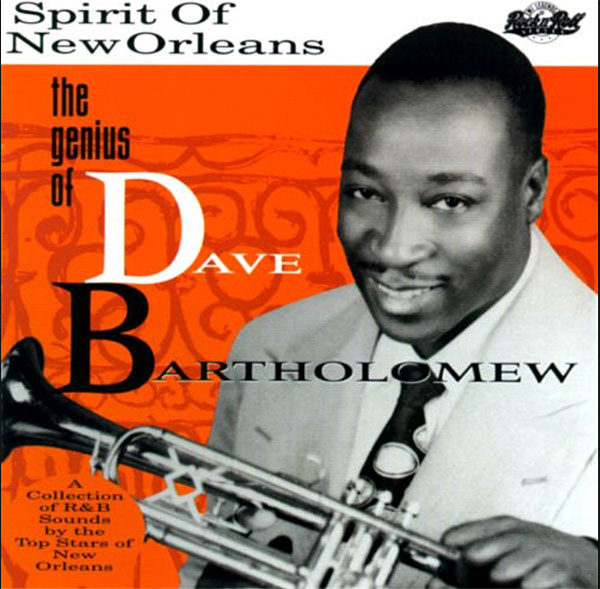 Dave Bartholomew: Spirit Of New Orleans: The Genius Of Dave Bartholomew
EMI USA 07777-80184-21 (2CD). 1950–62/1992. Dave Bartholomew, prod.; Cosimo Matassa, others, engs.
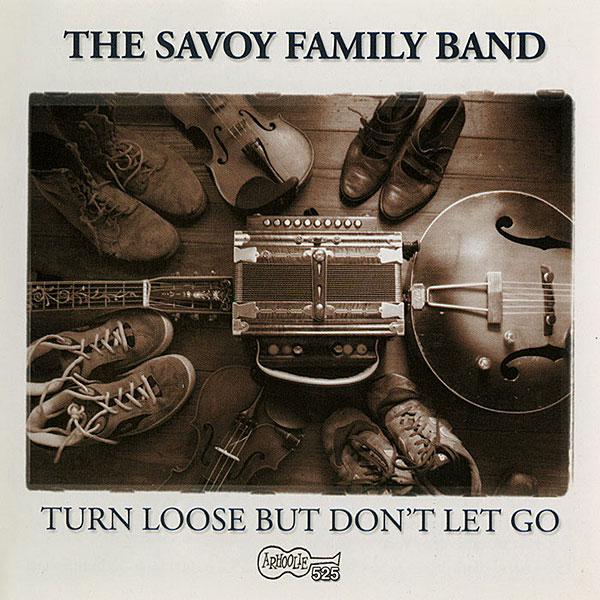 The Savoy Family Band: Turn Loose But Don't Let Go
Arhoolie 525 (CD). 2007. The Savoy Family, prod.; Joel Savoy, eng. The music of Louisiana Acadians, one of the deepest folk traditions in the US, is best expressed in family-band contexts where singers harmonize with instinctive surety and the music is handed down generation to generation. The Savoy Family Band is one of the greatest exponents of this genre, and this 2007 release on roots-music–oriented Arhoolie Records is their crowning achievement, a carefully chosen showcase of great songs from Cajun music history. Fiddler Dennis McGee, a cornerstone of Cajun influence, is recalled on "Valse Des Reeds," and "Rosa, Tomorrow Is Not Sunday" is a twin-fiddle performance by Joel and Wilson Savoy. Accordionist Marc and guitarist Ann Savoy play a barnstorming version of the great Amédé Ardoin stomper, "Two Step De Prairie Soileau."