Larry Greenhill
 Felix Mendelssohn: Six Organ Sonatas, Op.65, Andante with Variations in D.
 Thomas Murray, organ
Raven Recordings OAR-390 (CD). 1996. Lincoln Mayorga, William T. Van Pelt, prods. David Griesinger, Edward Kelly, Stephen Fassett, engs. I learned about this recording from Kal Rubinson's 2017 review of the Kii Audio Three, which used the fourth movement of Organ Sonata No.1—his "go-to for low-frequency articulation and extension"—to evaluate the speaker's bass response. In 1973, Lincoln Mayorga recruited Thomas Murray to perform the Sonatas on two 19th century pipe organs. In 1996, this Sheffield Town Hall recording was rereleased on CD. It excels in overall balance throughout the audio spectrum, featuring well-articulated bass with surprising extension. The fourth movement of Sonata No.1, on the 1854 E. & G.G. Hook organ, reproduced the music's descending pedal notes and the focused sound of a "single 42Hz throbbing column of air" and even greater extension in the fourth movement of Sonata No.4 in B-Flat. The last chord of Sonata No.2, marked "Fuga," played on the 1857 W.B.D. Simmons organ, includes a solid 31Hz note that pressured my room and rattled objects on shelves. This recording captures the extension, solidity, and superb pitch definition of the deep pedal notes, balanced evenly with the instruments' other ranks. Definitely a Record to Die For. (Vol.40 No.9)
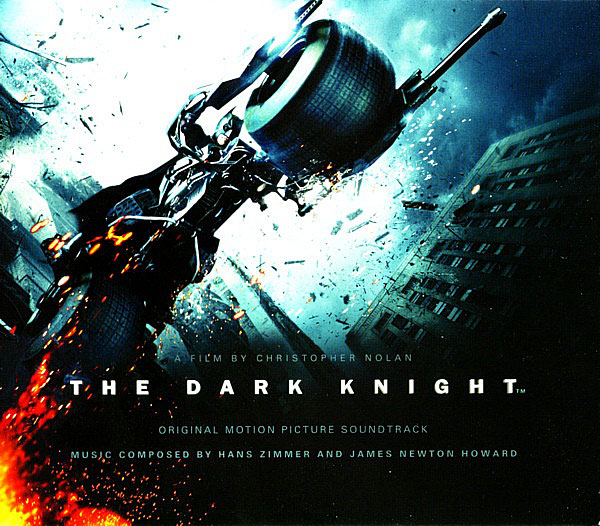 Hans Zimmer And James Newton Howard: The Dark Knight: Original Motion Picture Soundtrack
Matt Dunkley, Bruce Fowler, Gavin Greenaway, conds.; Peter Lale, principal viola; Mary Scully, principal double bass; Owen Slade, tuba; Maurice Murphy, trumpet; Pete Davies, trombone; Frank Ricotto, Gary Kettel, Paul Clarvis, percussion; Richard Watkins, horn; Hans Zimmer, synthesizers
Warner Sunset/Warner Brothers Records 9362049860-0 (CD). 2008. Various engs. Edgy, unsettling, disturbing, dysphoric, overpowering, enveloping: Hans Zimmer and James Newton Howard's 2008 film score for The Dark Knight has it all and more. Take the album's "Why So Serious" track: It opens with a faint, static-like, ripped 294Hz note, bursts into loud, crashing heavy-metal bursts, falls into a silence punctuated with ticking clock sounds mixed with jarring 31Hz jackhammer synth notes, and ends in a concussive meld of synth pulses and heavy metal chords. The album's "I'm Not a Hero" grows out of a sustained 24.9Hz synth note, then dissolves into dissonant unsettling chords. The liner notes quote producer Christopher Nolan's first impression of the music as "the harshest, most incomprehensible sounds ever to enter my ears," which was able to convey "the sound of the joker, his threat screaming out from the quietest and most delicately painful slides." Distressing and dystopian, The Dark Knight soundtrack's terrifying chaos compels me to listen again and again during reviews, wondering how such disturbing music can be so compelling.
Jon Iverson
 Iron Butterfly: In-A-Gadda-Da-Vida
Atco/Mobile Fidelity Sound Lab UDCD 675 (CD). 1968/1996. Jim Hilton, prod., eng. It's time for this monster molten metal masterpiece to get the respect it deserves. Don't expect this album to be more than it is, hoping for the fluid guitar of Hendrix or the concise hits of the Beatles. Instead, immerse yourself in the newfound freedom and exploration of what was suddenly musically and sonically possible in 1968. The title track is 17 minutes of pure pounding phuzz-tone pleasure, and back in the day every kid I knew could perfectly paddle the drum solo with two fingers on their school desk. Some of us still can. (Vol.20 No.3)
 John Paul White: The Hurting Kind
Single Lock Records (Bandcamp Digital Download, CD, LP). 2019. John Paul White, Ben Tanner, prods. As I wrote in my Stereophile review (Vol.42 No.9), "the songwriting is stellar throughout." With time, I've become more certain of this observation, as I've looked for albums to equal or top it. If you haven't bought it yet, here is your second reminder. It's an R2D4 near–triple threat: great music, great performance, and almost great sound. White is currently credited as part of the resurgence of folk/countrypolitan/ Americana, but when he finally gets his due, he'll be regarded simply as one of our greatest songwriters.
Fred Kaplan
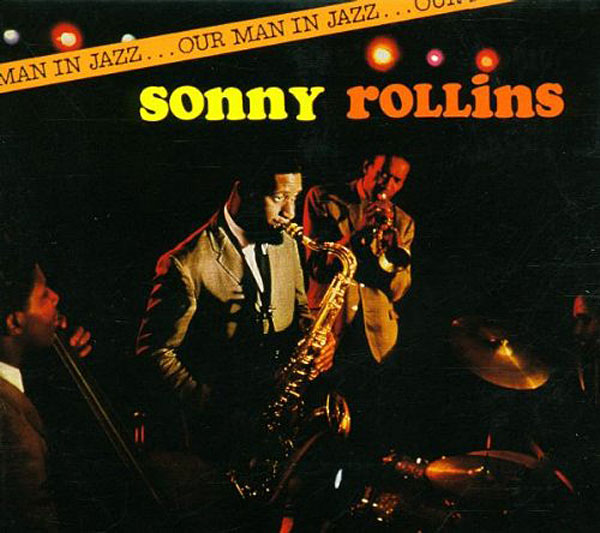 Sonny Rollins: Our Man In Jazz
Sonny Rollins, tenor sax; Don Cherry, cornet; Bob Cranshaw, bass; Billy Higgins, drums
RCA LSP-2612 (LP). 1963. George Avakian and Bob Prince, prods.; Paul Goodman, eng.
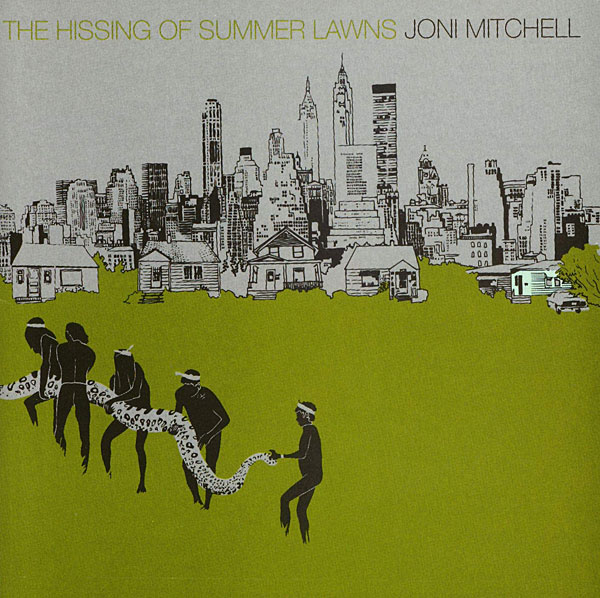 Joni Mitchell: The Hissing of Summer Lawns
Asylum Records 7E-1051 (LP). 1975. Joni Mitchell, prod.; Henry Lewy, eng. My previous dozen outings in this game, in which I (and others) put life and limb at risk to save a couple of slabs of aluminum or vinyl, have favored undisputed classics or meditative reveries. This time I'm going for more jagged fare: great mainstream artists stepping out more adventurously than usual, music to hum while stepping into a blazing fire. Our Man in Jazz was recorded live at the Village Gate in July 1962, soon after Sonny Rollins's return from a three-year hiatus during which he firmed up his chops and explored outward-bound music. This is about as outward as he got, teaming up with two players from Ornette Coleman's quartet (Cherry and Higgins), the leading lights of the era's avant-garde.
Richard Lehnert
 Keith Jarrett: La Fenice
ECM 2601/02 (2 CDs). 2018.
 Keith Jarrett: Munich 2016
ECM 2667/68 (2 CDs). 2019. Both: Keith Jarrett, piano
Keith Jarrett, prod.; Manfred Eicher, exec. prod.; Martin Pearson, eng.; Christoph Stickel, mastering eng.
Robert Levine
 Hovhaness: Mysterious Mountain
Royal Liverpool Philharmonic Orchestra, Gerard Schwarz, cond.
Telarc CD-80604 (CD). 2003. Robert Woods, prod.; Jack Romano, eng. Much of Hovhaness's work is so beautiful and accessible that one wonders if it can be any good. His spirituality, as it comes across in his music, is cinematic—think Ben Hur or The Ten Commandments. These three symphonies—Mysterious Mountain, Hymn to Glacier Peak, and Mount St. Helens—all have elements of that religiosity, along with stunning orchestration, magnificent use of counterpoint, and, in the case of the eruption of Mount St. Helens (the symphony's third/final movement), something akin to awe. It might be obvious to score a volcanic eruption with wild timpani, ferocious brass, and what might be heard as panic-stricken strings and winds, but it's still enormously effective, especially when it's not just noise: Hovhaness has sculpted a triple canon in 20 voices for the event. And the central, exquisitely placid central movement, titled "Spirit Lake," features dazzling bells and winds. Mysterious Mountain too, evokes huge expanses; Hymn to Glacier Peak (No.66) opens with a hymn-like passage and leads to a big brass crescendo, which in turn works its way into a three-flute riff. The work ends in gigantic glory. Post-Romanticism, vitally recorded. (Vol.26 No.7)
 Mozart: La Clemenza Di Tito
Mark Padmore (tenor), Alexandrina Pendatchanska, Sunhae Im (soprano), Bernarda Fink, Marie-Claude Chappuis (mezzo-soprano), Sergio Foresti (bass); Freiburg Baroque Orchestra, RIAS-Kammerchor, René Jacobs, cond.
Harmonia Mundi 801923.24 (3 CDs). 1999. Barbara Valentin, prod.; Mark Hohn, eng. This, Mozart's penultimate opera, retains its stepchild status, mostly because its form—opera seria—is stilted, and so is its plot. Emperor Titus is so magnanimous that he forgives his best friend, Sesto, who tries to kill him, and Vitellia, who, spurned by Tito, goaded Sesto on. Sesto is torn between passion for Vitellia and friendship and loyalty to Tito, and Vitellia is jealous, vindictive, in love, and crazy. They have the opera's most remarkable music: complex arias with wind obbligatos and dramatic accompanied recitatives, all requiring huge ranges and superb coloratura. A minor couple, Annio and Servilia, have music that is merely gorgeous; Tito's arias are all noble and elegant. Mark Padmore's Tito is fluent and well-accented; Alexandrina Pendatchanska is a spectacular Vitellia, taking the role's 2-1/3–octave range in stride and singing with a Slavic edge to her voice that brings out the jealousy and looniness. Bernarda Fink brings great passion—and superb coloratura—to Sesto.